| Not a fan of Fred? Unsubscribe here. |

Tariffs, Checks, and the White House’s Economic Message
How Tariffs and Cash Payments Are Entering the Economic Debate
December 18, 2025
|
| MorningBullets is the fastest way to catch up on the market and political news that matter most to your money. Quick takes, sharp insight, and curated opportunities—served fresh every weekday morning. |
Sponsored Content
Inside Crypto’s Q4 2025 “Point of No Return”From 600 interviews: the catalyst to watch, the hidden pattern top earners use, and why this cycle could outpace 2017 and 2021. Get Crypto Revolution free—plus bonus guides. 📥 Download Free + BonusesBy clicking the link above you agree to receive periodic updates from our sponsor. |
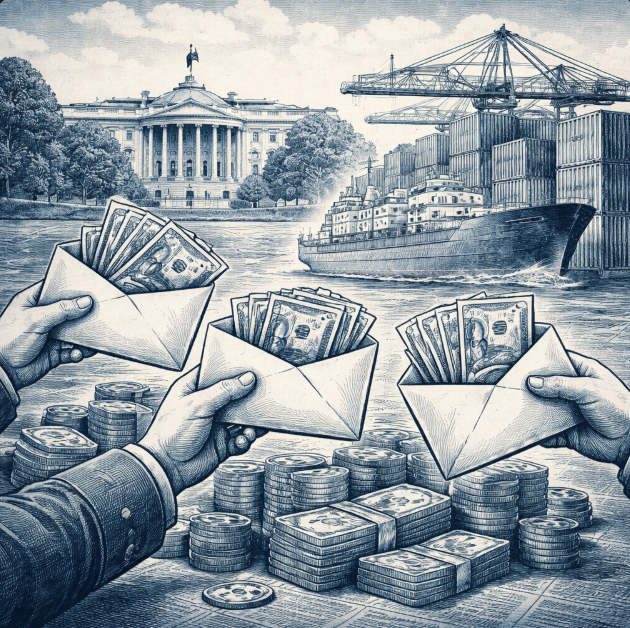 An illustration of tariff revenue, global trade, and direct payments intersecting in U.S. economic policy.
|
Good Morning, Markets are digesting a new twist in U.S. economic messaging, as tariff policy moves from the trade ledger into household wallets. The White House is highlighting direct payments funded by tariff revenue while signaling confidence in growth ahead — a combination that raises fresh questions about prices, policy, and what really drives near-term demand. We break down what was announced, why it matters for inflation and markets, and where the follow-through will matter more than the headlines.Despite rising AI focus, most Fortune 500 boards remain unprepared to operationalize it effectively, Rivian advances its autonomy strategy with a new in-house chip and subscription model to challenge Tesla, and Trump’s GENIUS Act supercharges the stablecoin market—but critics warn of systemic risk without regulatory safeguards. Don't forget to voice your opinion in my polls below. Here are your Morning Bullets. – Truly yours, Fred Frost |
📉 Yesterday's Market RecapYesterday, markets took a hit with a tech-led sell-off, particularly in AI stocks, dragging the S&P 500 down 1.2% and Nasdaq 1.8%. The Dow fared better, dipping just 0.5%, while oil prices ticked up on geopolitical moves. Here’s what drove the action.
|
📉 Daily Performance Snapshot
|
🔭 What to Watch TodayToday’s calendar is packed with data and decisions that could nudge markets. Keep your eyes on these pivotal events for potential ripples. |
💡 Opportunity WatchAmidst market volatility and policy shifts, a few trends stand out as potential winners. Here are three opportunities to consider as the landscape evolves.
|
Sponsored Content
Tariffs, Debt & Inflation: Why Gold Is Back in Focus
Gold continues to attract capital amid uncertainty. Our latest report covers:
By following the link above, you're choosing to opt in to receive updates from Investing Ideas Daily + 2 free bonus subscriptions. Privacy Policy |
🔥 The Big BulletTrump touts an “economic boom” as tariff-funded checks go outWhat happened: President Trump said the U.S. is close to a big upswing in growth and jobs, calling it an “economic boom” during a White House address that framed the start of the 2026 campaign. In the same stretch of messaging, the administration pointed to recent actions as proof that conditions are improving. Separately, the president said service members would receive “Warrior dividend” checks this holiday season. He tied those payments to government revenue, saying they were made possible by money raised from tariffs. The checks were described as a direct payout to military families, not a long-term program change. The announcement landed alongside broader claims that the economy is turning the corner. Together, the updates put trade policy and direct payments in the center of the week’s economic story. Why it matters: Direct checks can lift short-term spending because households often use extra cash quickly, especially around the holidays. If the payouts are funded by tariff revenue, that still matters for prices, since tariffs can raise the cost of imported goods over time. Markets also pay attention to whether the government leans on tariffs more heavily, because it can shift which companies win or lose in global trade. Investors may watch for inflation pressure if higher import costs show up in everyday items, which can affect interest-rate expectations. The bigger point is signal: the report that dividend checks are linked to tariff revenue ties trade policy to consumer cash in a very visible way. That kind of link can raise uncertainty for businesses planning prices and inventory. It can also move bonds and stocks if traders think policy will push growth up, or push prices up, or both. For conservative investors, this is mainly a reminder to separate headlines about “boom” from the hard data that confirms it. What’s next: Watch the next few inflation prints and consumer spending updates to see if prices or demand are actually changing. Keep an eye on tariff-related announcements, since any new or expanded tariffs could hit certain sectors fast. Also track labor and government staffing changes, because they can affect spending and service delivery. A court fight over federal staffing is still in play after a judge ordered the administration to halt reductions in force and rehire fired workers. If that ruling stands or expands, it could change near-term federal payrolls and related spending. Markets may react more to follow-up details than to the first headlines, especially if numbers replace slogans. Investors should also watch for how Congress responds if payouts or tariff plans become part of a bigger policy package. The clearest signal will be whether upcoming data matches the strength implied by the public messaging.
|
Reader Feedback
Yesterday, I asked you: Do you think quantum computing will really become a $198 billion industry?
The majority of you at 43% said "Yes, it’s the future”
Samantha from Oregon replied: "I think quantum computing will be huge one day because it can do things regular computers can’t."
Here's what I'm asking you today:
As always if your opinion is not here, or you want to throw your two cents at me, reply to the E-mail, and let me know your exact thoughts.
🧭 Policy & Market Ripples
|
📜 This Day in History – December 18December 18 has a lab-bench tempo — new ways to measure reality, package culture, and route energy at scale. The common theme: once something becomes reproducible, it stops being a novelty and starts being an economy.
|

Today's Trivia
Yesterday, 83% of you chose the right answer to the trivia question: They raise the price of imported goods, often protecting domestic producers
|
