Today’s Sponsor
The Fed held rates, inflation is still above target, and uncertainty is rising — that means the "buy anything AI" trade is over. Smart money is rotating fast toward the companies actually building AI infrastructure: chips, cloud capacity, and mission-critical data tools. Big Tech alone is projected to spend $635B–$665B on AI in 2026 — and not all of it is going where most investors are looking.
We've identified 9 AI stocks worth watching right now — including a lesser-known chip name tied to U.S. AI infrastructure, a cloud player with improving setup, and a data analytics company with government exposure. This isn't hype. It's about following where capital is actually being deployed.
Get the Free Report NowBy clicking the link above, you will receive this free report and a free subscription to the StockEarnings daily email newsletter. You are also agreeing to the terms of our Privacy Policy. Unsubscribe at any time.

Friday tape: geopolitics is trying to de-risk itself just enough to keep markets levitating. Don’t confuse photo ops and court filings with done deals.
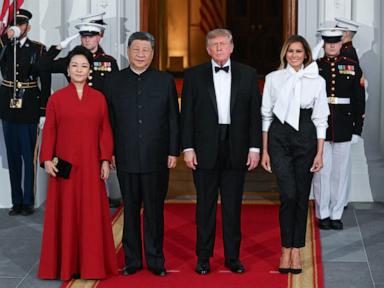
Image via ABC News
Trump rolls out the red carpet for Xi. Markets hear one word: de-escalation.
Trump hosting Xi for a state dinner is optics with a purpose: lower the temperature without admitting anyone blinked. The agenda is the whole board: AI safety rules, Taiwan red lines, trade enforcement, and the Iran war. Translation: the two largest economies are trying to prevent a geopolitical headline from turning into a risk-off gap.
Wall Street doesn’t need a grand bargain. It needs fewer surprises. If this meeting produces even thin agreements like a tariff standstill, a Taiwan incident hotline, or a framework on AI export controls, you’ll see it immediately in semis, mega-cap tech multiples, and Asian FX. If it goes sideways, the first tells will be USD/CNH, defense stocks ripping, and long-end Treasurys catching a safety bid.
📈 Fred's Take: This is a volatility trade before it’s a diplomacy story. Best-case outcome is a boring communique and a quiet week for supply chains, which is bullish for cyclicals and tech beta. Worst-case is a tough-talk leak that re-prices China risk overnight; keep hedges tight if you’re long semis or anything with China revenue sensitivity.
📎 ABC News
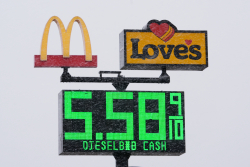
Image via RealClearMarkets
Diesel at record highs: ugly for margins, not a kill shot for growth
Diesel is the bloodstream of the real economy: trucking, rail, construction, agriculture. Record highs hit the P&L fast, and small operators feel it first. But the market keeps learning the same lesson: energy price spikes are inflationary and uneven, not automatically recessionary.
The key is pass-through and timing. If diesel stays elevated, you get margin compression in transport and industrials, and a second-wave push in goods inflation. If it mean-reverts, it’s just another temporary tax that the consumer and corporate pricing power partially absorb. The equity market tends to look through the first spike unless it triggers a credit event or a demand collapse.
📈 Fred's Take: Don’t short the economy just because diesel looks scary on a chart. The better trade is micro: underweight low-pricing-power transport names, be picky in industrials, and don’t fade quality energy cash flows while supply risk remains high. If diesel stays sticky, the bigger market implication is rates: fewer clean disinflation prints, more pressure on the front end.
Trump to SCOTUS: greenlight "safe third country" deportations. Labor market is the quiet subtext.
The administration is asking the Supreme Court to restart deportations to so-called "Safe Third Countries" when migrants can’t be sent home. This is the legal machinery of border policy: not a slogan, a throughput system. If the Court allows it, removals accelerate by removing logistical bottlenecks.
Markets should care because immigration flows are labor supply. Tighter enforcement can tighten parts of the low-wage labor market, especially in services, agriculture, and construction. That feeds straight into wage growth, services inflation persistence, and the Fed’s comfort level on cuts.
📈 Fred's Take: If SCOTUS gives them runway, it’s modestly inflationary at the margin via labor supply, not instantly recessionary. Watch it through wages and shelter-adjacent services, not cable-news heat. For portfolios: less confidence in fast disinflation means keep duration exposure disciplined and avoid getting cute with aggressive rate-cut bets.
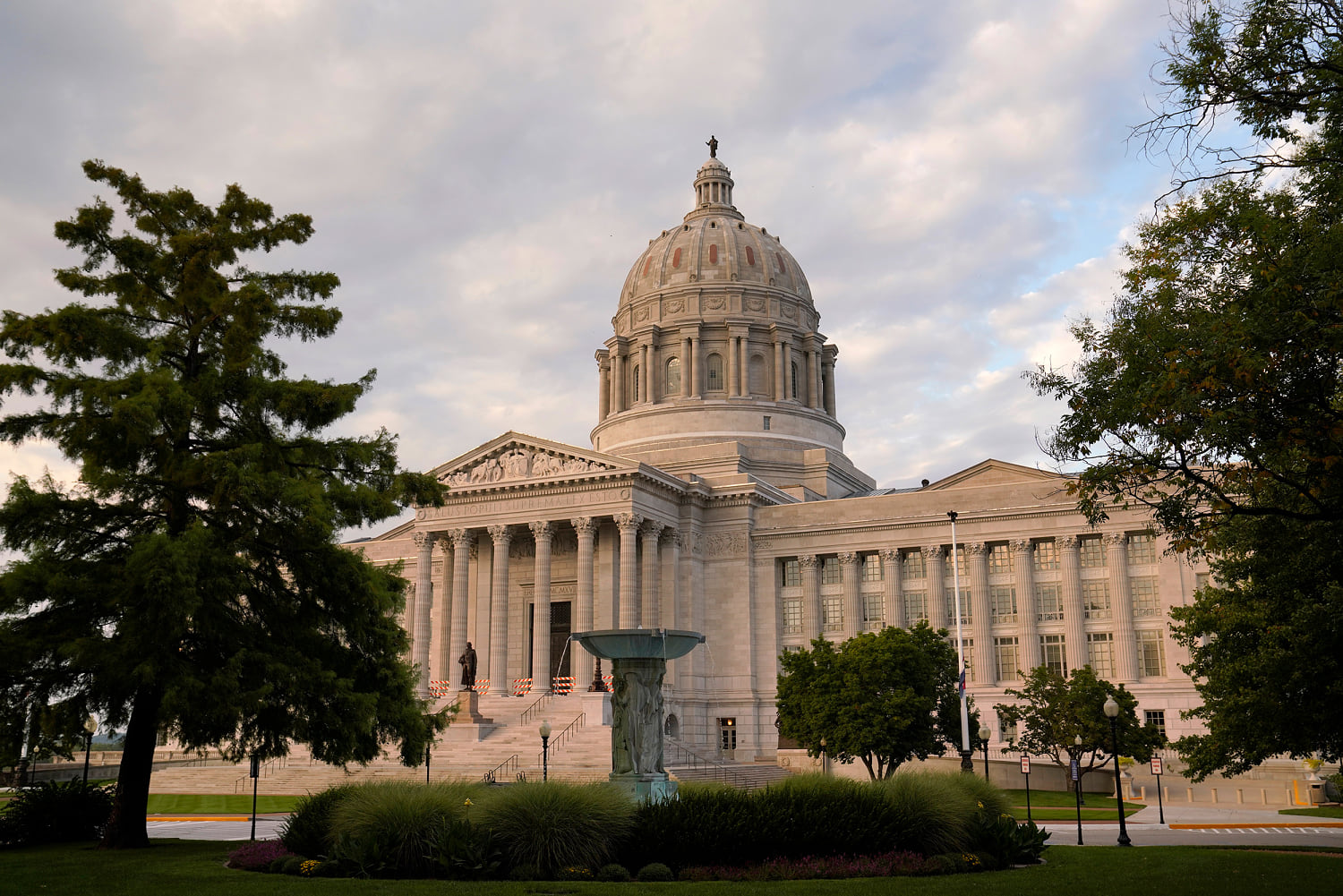
Image via NBC News
Missouri map limbo: courts can move seats, and they can move money
Conflicting rulings have Missouri’s congressional map stuck in a legal vise. Republicans tried to get the Supreme Court to allow a new map designed to wipe out a Democratic-held seat, but the process is tangled between state and federal courts. Net effect: uncertainty heading into the midterms about what the battlefield even looks like.
Gridlock risk is a market input. If map fights like this stack up across states, probability distributions for House control widen. Wider distributions mean more headline-driven vol in sectors exposed to policy: health care reimbursement, defense procurement, energy permitting, and anything tethered to tax policy.
📈 Fred's Take: This isn’t about Missouri. It’s about the market’s ability to handicap 2027 fiscal and regulatory trajectories. More uncertainty raises the value of balance-sheet quality and pricing power, and it puts a bid under "policy hedges" like defense and parts of energy until the electoral math firms up.
📎 NBC News
Iran says Hormuz can reopen in 7 days and nuclear talks can restart. The market wants proof, not promises.
Iran is floating a timeline: reopen the Strait of Hormuz within a week and resume nuclear talks. The offer lands as the Houthis launch another wave of missiles and drones at Saudi targets, keeping the regional risk premium alive. Everyone is trying to trade words for time.
Hormuz is the oil market’s throat. Any credible reopening path hits crude risk premium, diesel, shipping rates, and global inflation expectations. But credibility is everything: one drone swarm can turn a "7 days" headline into a "7 months" reality, and markets will stop giving the benefit of the doubt fast.
📈 Fred's Take: Treat this as a conditional bearish catalyst for oil, not a green light to short energy into the floor. If shipping lanes actually normalize, inflation breather equals bullish for long duration and growth multiples. Until we see verifiable de-escalation, keep energy exposure as geopolitical insurance and expect intraday whipsaws in crude, defense, and Middle East-linked FX.
📎 CNBC
That’s the tape. Keep your positions sized for headlines, but build your portfolio for cash flows.
— Fred Frost
