Today’s Sponsor
Tax season creates hidden market shifts that can mislead investors. Refunds hit accounts, portfolios get rebalanced, and positions move to cover obligations — creating liquidity changes that make small-cap moves appear more meaningful than they actually are.
Our 2026 Market Flow Briefing reveals how tax-season liquidity affects market action, why current moves seem disconnected from fundamentals, and exposes one profitable setup emerging under these exact conditions.
Get the Free Briefing*We encourage readers to perform their own research and due diligence on any information we provide. By clicking the link you will automatically be subscribed to the Stock Wire News Newsletter.

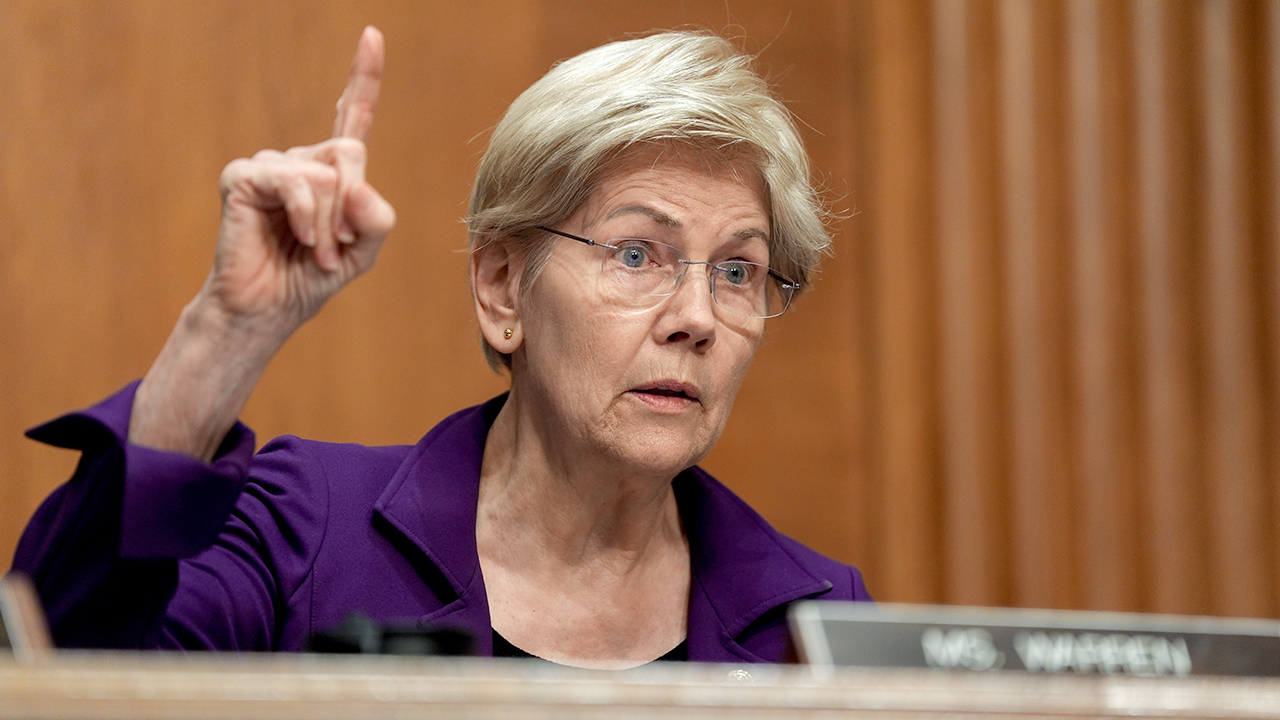
Image via Fox Business
WARREN WANTS AN “AI TAX” — START WITH THE DATA CENTERS
Sen. Elizabeth Warren is floating a targeted tax on the AI industry, specifically aiming at the energy usage of AI data centers. It’s being packaged as “invest in people,” but the mechanism is simple: if you’re running big compute, you’re getting a meter slapped on you.
This isn’t just a rhetorical shot. It’s a roadmap for how Washington will monetize the AI buildout: treat compute like a utility, then regulate/tax it like one. The second-order effect is the real one: it raises the hurdle rate for marginal training runs, pushes demand toward efficiency, and increases the value of scarce power, grid access, and on-site generation.
📈 Fred's Take: This is a tax proposal, but it’s also a signal: AI is now big enough to be “harvested.” If this gains traction, the winners aren’t the model labs — it’s power infrastructure, grid equipment, and anyone selling efficiency (cooling, chips, optimization). Multiple expansion on “AI at any price” gets capped when the government starts charging by the kilowatt-hour.
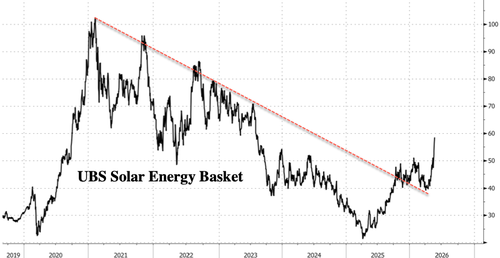
Image via ZeroHedge
SOLAR STOCKS BREAK A 5-YEAR DOWNTREND — AND TARIFF TALK IS THE CATALYST
Solar names are ripping through long-term technical resistance after years of bleeding out. The setup being flagged: a clean breakout above a multi-year downtrend line, with tariff escalation chatter adding fuel.
Tariffs matter here because the solar supply chain is still a geopolitical object, not a pure market. If the U.S. tightens screws on imports (or even just threatens it credibly), domestic and non-China-aligned manufacturers get repriced immediately — not on earnings today, but on optionality. The move is also telling you something broader: investors are rotating back into “real economy” industrial policy trades when policy risk rises.
📈 Fred's Take: Respect the tape. A five-year downtrend break is not a day trade — it’s a regime change *if* it holds on retests. But don’t confuse a tariff bid with a durable margin story; this sector can round-trip fast when Washington changes its mind or financing costs tick higher. Trade it like a policy-driven momentum complex, not a widows-and-orphans compounder.
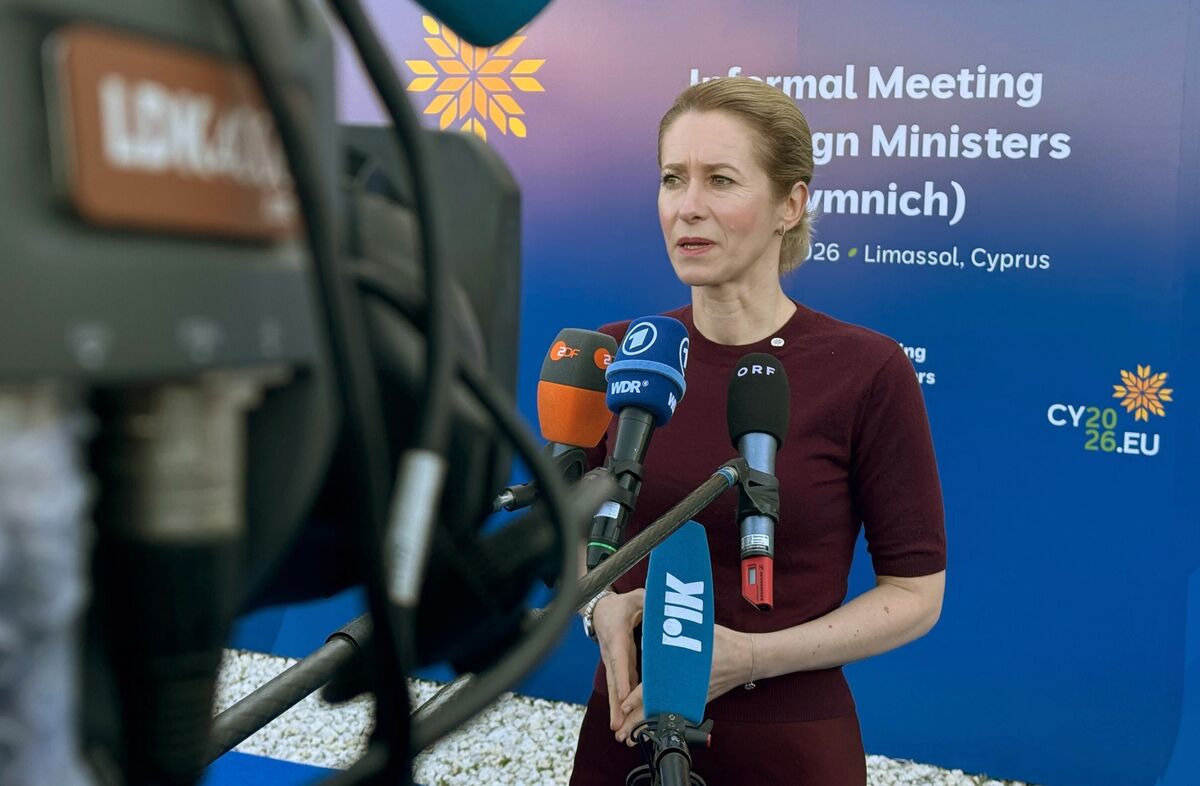
Image via Bloomberg
EUROPE FLIRTS WITH A PUTIN “CHANNEL” — EU DIPLOMATS WARN IT’S A TRAP
EU foreign ministers are debating whether to open a special channel to Putin, while the bloc’s top diplomat is warning that Moscow will use any opening as leverage — a classic “talks as tactics” setup.
Markets care because Europe’s Ukraine posture is not just a moral stance; it’s an energy/risk premium engine. Any perceived softening triggers an immediate repricing across European gas, defense equities, EUR risk sentiment, and the tails around sanctions. Even the *discussion* of an envoy tells you war fatigue is rising — and Moscow will try to arbitrage it.
📈 Fred's Take: Negotiation headlines can rally risk for a day, but they also increase the probability of a messy halfway outcome that drags for years. The durable trade isn’t “peace dividend,” it’s prolonged uncertainty: defense spend stays sticky, energy hedging stays relevant, and Europe’s growth discount doesn’t vanish on a press conference. Watch EUR crosses and European credit spreads — they’ll sniff out the real direction before politicians do.
Image via RealClearMarkets
ANTHROPIC’S OWNERSHIP MAZE — “DO YOU OWN WHAT YOU THINK YOU OWN?”
Investors have been chasing exposure to Anthropic through every available vehicle — direct stakes, structured deals, SPVs, and side-door access. Now the uncomfortable part: some holders are realizing their claim may be diluted, subordinated, restricted, or simply not what the marketing deck implied.
This is the private AI boom’s dirty secret: governance structures, preference stacks, liquidation waterfalls, and opaque side letters can turn “exposure” into theater. In hot private markets, the product isn’t equity — it’s *access*. And access trades at a premium right up until someone reads the docs or the next round resets terms.
📈 Fred's Take: If you can’t model the cap table and the preference stack, you’re not investing — you’re donating liquidity. The public market implication is straightforward: this is why public AI proxies (chips, power, networks) keep winning flows — at least you know what you own. When the private paper finally meets a down round, the “AI exposure” trade will migrate hard back to listed balance sheets.

Image via The Hill
IRAN FIRES ON KUWAIT — CENTCOM CALLS IT A CEASEFIRE VIOLATION
U.S. Central Command says Iran launched a ballistic missile attack aimed at Kuwait, labeling it an “egregious ceasefire violation.” That’s not a diplomatic phrasing — it’s a setup for retaliation logic and a widening rules-of-engagement risk.
Kuwait is not a random target. It’s a critical node for Gulf logistics, U.S. basing, and regional energy infrastructure confidence. The market doesn’t need barrels offline to move — it needs perceived vulnerability in shipping lanes, terminals, and political stability. This is how crude risk premium re-enters: not via inventory data, but via missiles.
📈 Fred's Take: This is the kind of headline that lifts oil even if nothing is physically disrupted — and it bids defense while hitting airline/travel and risk sentiment. If this escalates, you’ll see it first in front-month crude, then in breakevens, then in rates as the market re-prices inflation tail risk. Don’t fade geopolitical energy risk when the U.S. military uses language this blunt.
📎 The Hill
That’s the tape. Protect your downside, press your edge, and don’t let politicians set your cost basis.
— Fred Frost
