Today’s Sponsor
Most retail traders are getting chopped up in 0DTE SPX options — not because they lack effort, but because they have no rules-based system. Pro trader Michael Love has taught 15,000+ traders his "Convert The Vert" method: one strategy, one ticker, and about a week of practice. He's breaking it all down — including his Time Of Day Secret and the Holy Shift pivot signal — in a completely free live webclass.
Michael demonstrates the entire approach live, so you see it working in real time — not just on a slide deck. Seats are limited and it costs you nothing to show up. If SPX options have ever felt chaotic or unpredictable, this is the session that changes that.
Reserve My Free Seat NowRisk Disclosure: Trading options involves substantial risk and is not suitable for all investors. You can lose some or all of your invested capital, and certain strategies can result in losses exceeding the initial investment. 0DTE options carry heightened risk due to rapid price movement and time decay, and positions can lose their entire value within a single session. Before trading options, read the OCC's Characteristics and Risks of Standardized Options at theocc.com. This webclass is for educational purposes only and is not investment, financial, or trading advice. Trade With Me Now is not a registered investment adviser or broker-dealer. Past performance is not indicative of future results. Examples are for illustration only. Testimonials reflect individual experiences and are not typical; results will vary. Never trade with money you cannot afford to lose. This is an advertisement for Trade With Me Now. Privacy Policy

Florida sells a low-tax playbook, Israel votes under war fatigue, France cracks under bond stress, tech climbs a rebuilt wall of worry, and Trump’s midterm machine keeps revving. Here’s what moves money before the bell.
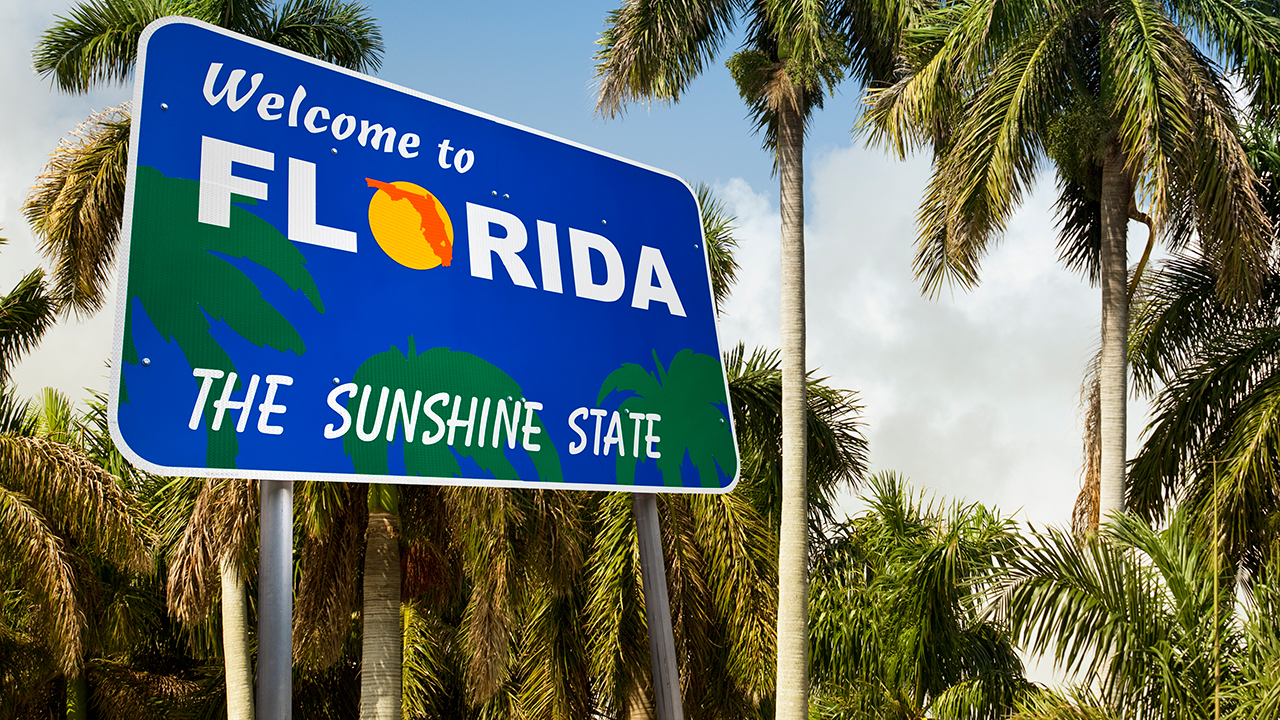
Image via Fox Business
Florida’s $1.8T flex: low taxes, light regs, and the migration trade
Sen. Ashley Moody is pitching Florida as proof-of-concept: no state income tax, aggressive deregulation, and a political culture that treats balanced budgets like a religion. The headline number is the one investors care about: a $1.8 trillion state economy that kept compounding while other big states fought outmigration and higher tax burdens.
What’s really being sold isn’t a sunshine story. It’s an operating model: make it cheap to hire, build, and move capital; keep the tax code predictable; let housing and infrastructure absorb the inflows. If Washington tries to copy-paste this nationally, the market translation is straightforward: lower expected tax drag, higher domestic capex confidence, and a renewed bid under pro-cyclical sectors—industrials, regional banks, homebuilders, insurance, and anything tied to population growth corridors.
The political fight will be redistribution versus growth, same as always. But the investment angle is that state-level policy competition is becoming the real “laboratory,” and capital is voting with U-Hauls and corporate domicile forms.
📈 Fred's Take: Florida’s model is bullish for real assets and local credit because it pulls people, payrolls, and small-business formation into one place. National replication is harder, but the direction of travel matters: every point off the expected tax trajectory pushes equity multiples up at the margin. If you want the clean trade, follow the migration map: Sun Belt banks, property-casualty insurers with pricing power, and builders with land inventory in the right ZIP codes.
Israel votes with missiles still flying: markets price continuity, then tail risk
Israel’s electorate is making a wartime call: keep Netanyahu or pivot after three years of conflict. The vote isn’t just about personalities—it’s about the next phase of security doctrine, fiscal priorities, coalition stability, and whether the country leans toward prolonged mobilization or a path that tries to normalize.
For markets, Israel elections usually mean a quick pop of noise and then a return to the real drivers: defense spending, tech exports, currency confidence, and foreign capital flows. The shekel’s sensitivity is the tell. If the outcome signals political paralysis or an unstable coalition, FX and local rates take the hit first, then equities.
Energy traders will be watching more than Israelis are: any perceived shift in escalation probability changes regional risk premia, shipping insurance, and ultimately crude’s “fear premium.” The Middle East doesn’t have to blow up for oil to move; it just has to look less governable.
📈 Fred's Take: Base case is continuity in security posture no matter who wins, which means the market’s first move may fade quickly. The real risk is not an electoral surprise—it’s governing incapacity that drags on investor confidence and keeps a permanent wartime fiscal footprint. If you’re positioned for calmer geopolitics, keep it hedged: long quality energy and defense as insurance, not as a religion.
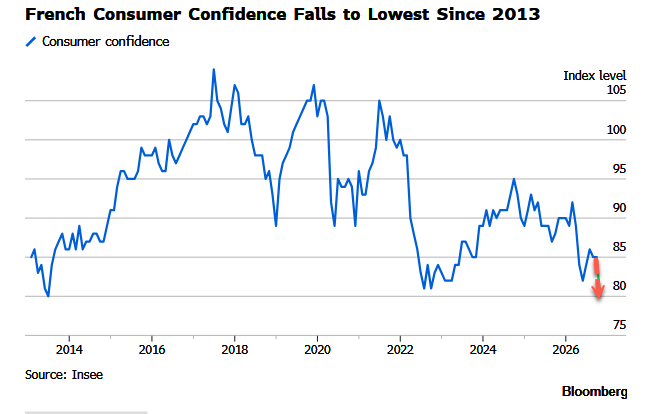
Image via ZeroHedge
France’s bond stress meets street chaos: confidence breaks, spreads widen
French consumer confidence just sank to a multi-year low as the bond market keeps throwing rocks at the government’s financing plan. Add far-left riots and you get the toxic combo investors hate: fragile social order plus rising sovereign borrowing costs.
This isn’t just “France being France.” When confidence cracks at the household level while yields push up at the state level, the economy starts eating itself: less spending, weaker growth, worse deficits, higher yields, tighter credit. The feedback loop is the story.
Europe’s broader risk is contagion through spreads. If OAT-Bund spreads widen meaningfully, the next trade is pressure on banks holding sovereign paper and a renewed argument for the ECB to choose between inflation purity and political reality.
📈 Fred's Take: France is the eurozone’s stress test because it’s too big to shrug off and too political to “austerity” on command. If spreads keep widening, expect European financials to underperform and the euro to trade heavy on every flare-up headline. I’d rather own US duration selectively than pretend European sovereign risk is “contained” when the street is literally on fire.
Image via RealClearMarkets
Tech’s wall of worry is back—and that’s why the trend still works
The tech tape doesn’t need euphoria; it needs skepticism. The argument making the rounds is simple: sentiment has cooled from the prior AI-capex mania, the wall of worry has been rebuilt, and that’s historically when leadership sectors keep grinding higher.
The key is the composition of fears: valuation chatter, regulation threats, data center power constraints, and “what if the next quarter isn’t perfect.” That’s healthy. It forces positioning to stay under-owned and makes pullbacks buyable instead of cascading.
What changes the math is rates. If bond yields behave, long-duration cash flows get room to breathe and mega-cap tech can levitate even with middling macro. If yields re-accelerate, the same companies remain quality—but the multiple stops doing the heavy lifting.
📈 Fred's Take: The best tech rallies don’t happen when everyone agrees—they happen when the market keeps finding reasons not to own it. As long as capex is real and earnings revisions aren’t collapsing, the path of least resistance is higher, with violent dips that reset positioning. The tell today isn’t the headlines; it’s the 10-year yield—keep your tech exposure, but watch duration like a hawk.
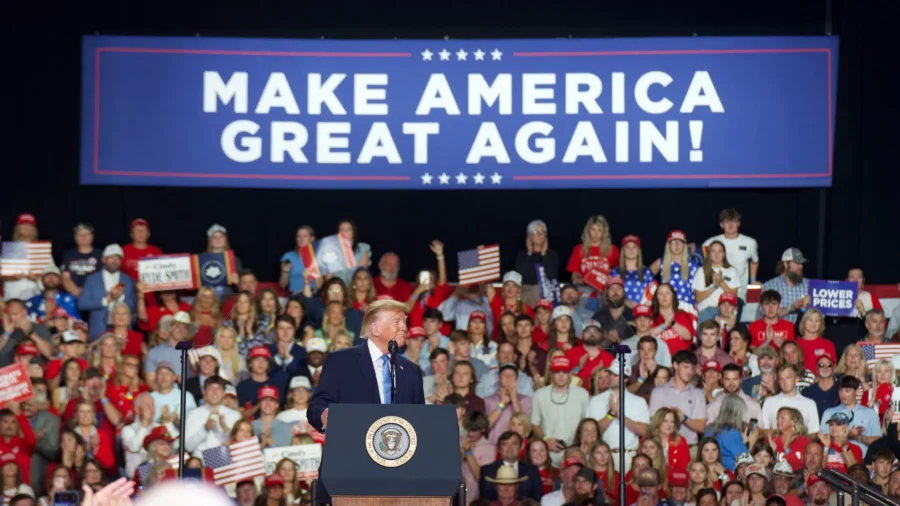
Image via NTD
Trump’s midterm tour hits Mississippi: the policy tape is the trade
Thousands showed up in Mississippi as President Trump’s midterm campaign tour keeps rolling. The rally circuit is more than optics—it’s message discipline: immigration, law-and-order, energy production, and a pledge to keep leaning on the executive branch where Congress stalls.
Markets don’t trade applause lines; they trade probabilities. This tour is about turnout engineering and framing the midterm referendum early. The closer the midterms look like a mandate, the more investors start front-running policy continuity: tougher border enforcement, a friendlier posture to hydrocarbons, and an instinct to pressure the Fed verbally if growth wobbles.
The other angle is fiscal. Campaigning on prosperity usually comes with tax talk, spending promises, or both. That’s where rates come in: if fiscal impulse expands while inflation is sticky, Treasury supply becomes the quiet villain and long-end yields stay jumpy.
📈 Fred's Take: The only part that matters for your portfolio is whether Washington shifts toward pro-growth deregulation or back toward gridlock. A stronger Trump midterm setup is bullish energy, defense, and domestically levered cyclicals—but it can be bearish duration if it reignites the deficit narrative. Trade it with pairs: own the beneficiaries, hedge the long bond.
📎 NTD
That’s your tape: politics sets the probabilities, markets set the price. Stay liquid, stay hedged, and don’t marry a narrative. — Fred Frost
— Fred Frost

