In partnership with

Yes, that Arnold Schwarzenegger.

He has a newsletter on beehiiv. So do Codie Sanchez, Jay Shetty, David Begnaud, Colin & Samir, and Joanna Stern.
They could publish just about anywhere. They chose beehiiv to build a direct connection with the people who want to hear from them most. And you can do the same, whether you’re world-famous or just at the start of your plan for world domination.

War hits logistics, leadership risk hits semis, North America argues with math, metals flash shortage, and crypto tries to put a floor in.

Image via NBC News
Ukraine hits the Kerch Bridge again — Russia’s Crimea supply line takes a gut punch
Ukraine struck the Kerch Bridge linking occupied Crimea to mainland Russia, leaving visible, significant damage and forcing Moscow back into emergency logistics mode. This is not just symbolism. It’s throughput: fuel, ammo, rotations, spare parts, everything that turns a map line into a functioning front.
Every time that bridge gets degraded, Russia pays twice: first in direct repair and rerouting costs, then in battlefield friction as supply chains stretch and slow. The market angle is the same one it’s been since 2022: shipping risk premia pop first, then energy and insurance follow if escalation spirals or if Russia chooses retaliation that touches broader infrastructure.
Watch what happens next: Russia’s response matters more than the strike itself. If retaliation targets Ukrainian energy or Black Sea routes, you’ll see it in crude time spreads, European nat gas volatility, and defense names catching another bid.
📈 Fred's Take: This is a logistics trade masquerading as a headline war story. If you’re long risk, you want this contained; if it spreads to shipping lanes or energy infrastructure, volatility is underpriced. I’d treat any knee-jerk dip in defense and energy strength as a buy-the-second-day setup, not a one-candle chase.
📎 NBC News
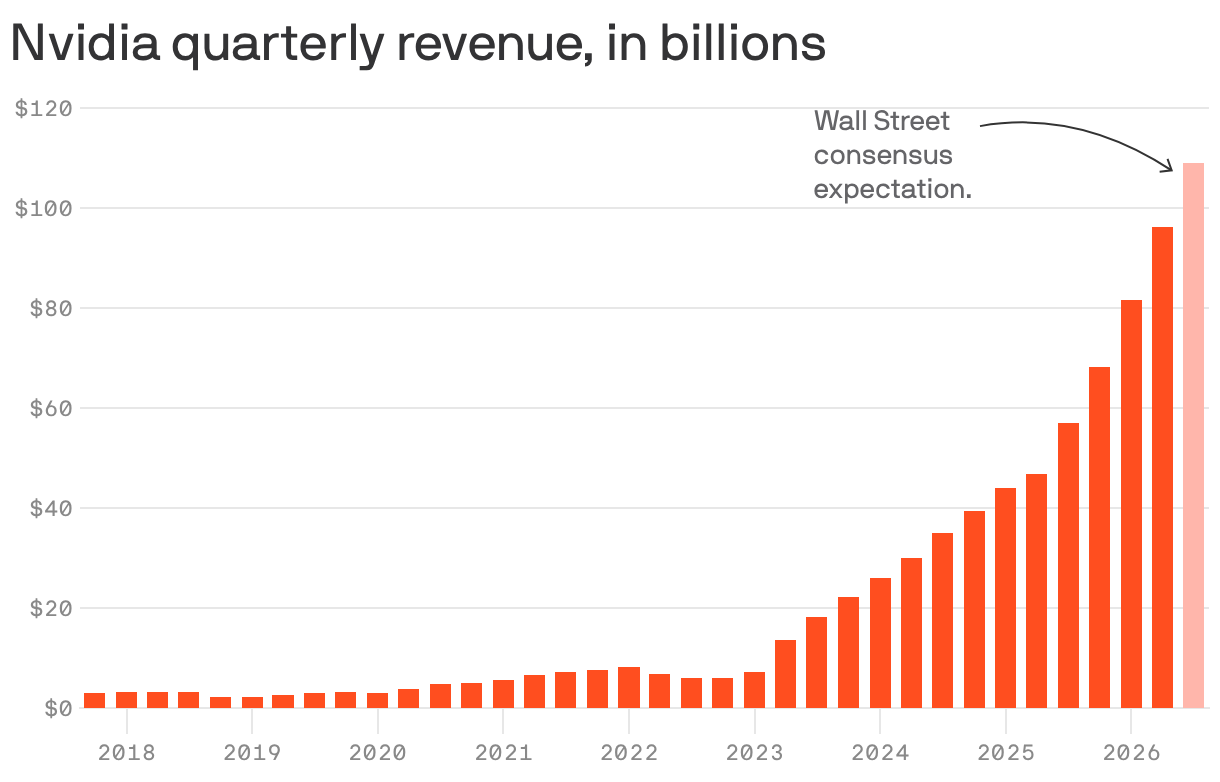
Image via Axios
Nvidia earnings in the post-Jensen era: the multiple will now live and die on execution
Nvidia reports after the close, and the framing is different now: investors are pricing a world where Jensen Huang is no longer the single gravitational force holding the story together. That shifts the market’s obsession from vision to process: margins, supply commitments, product cadence, customer concentration, and how clean the transition looks inside the org chart.
The AI buildout is no longer a question of “if.” It’s “who captures the economics as the stack commoditizes.” Nvidia still sits at the center, but leadership transition is when competitors smell blood and big customers get bolder about pricing and alternatives.
In tape terms, this is a volatility event for the whole complex: semis, hyperscalers, power/utilities tied to data centers, and the second-derivative names that have been riding the capex wave. Guidance quality will matter more than the quarter.
📈 Fred's Take: This is no longer a cult-of-CEO multiple; it’s a business multiple, and that’s a tighter leash. If guidance is anything short of surgical, the market will punish the entire AI chain, not just Nvidia. My playbook: don’t front-run the print; trade the reaction, and respect that leadership transitions can compress valuations even when fundamentals stay strong.
📎 Axios
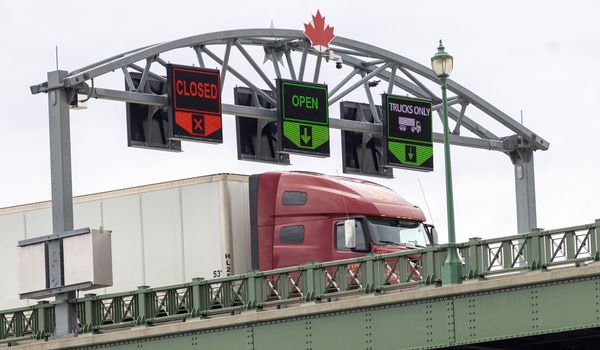
Image via National Review
U.S.-Canada trade isn’t optional — it’s a supply chain cheat code we keep trying to politicize
The argument for deeper U.S.-Canada trade is simple: geography beats ideology over time. Canada needs the U.S. market, yes, but the U.S. also benefits massively from reliable energy, critical minerals, industrial inputs, and a secure border relationship that lowers the cost of doing business.
The market implication is that North American integration is anti-inflationary and pro-resilience, especially as supply chains keep “regionalizing.” When Washington or Ottawa throws sand in the gears with symbolic fights, the cost shows up quickly: higher input prices, delayed projects, and more capex spent on redundancy instead of productivity.
If policymakers want to talk tough about China exposure while keeping prices contained, the math points north. This is the unsexy backbone behind manufacturing policy, energy security, and defense logistics.
📈 Fred's Take: Fighting your best supplier is how you import inflation on purpose. The investing angle is straightforward: deeper North American integration favors rails, pipelines, grid buildout, industrials, and the boring midstream plumbing that politicians love to ignore. The risk is policy-driven disruption; the opportunity is buying quality North America infrastructure on headline-driven dips.
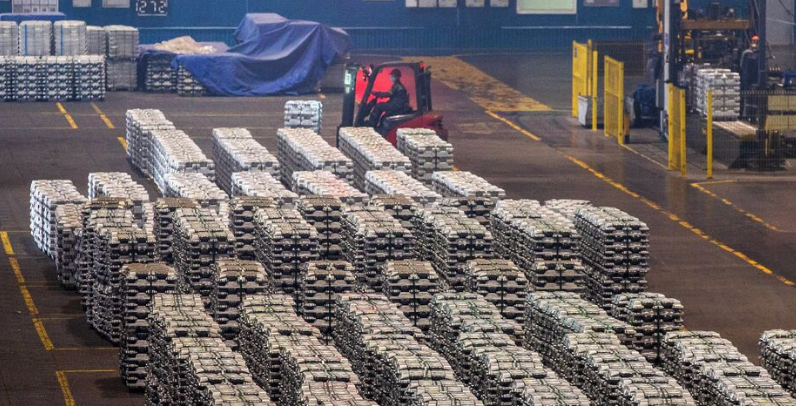
Image via ZeroHedge
Aluminum backwardation is screaming: physical is tight and the smart money is paying up now
Reports of Trafigura scrambling for aluminum as backwardation hits the steepest levels in years is the kind of market tell that matters. Backwardation is not a think-piece; it’s a price signal that says immediate supply is scarce and buyers are willing to pay a premium to get metal in hand today.
Draining stockpiles turn a calm paper market into a real-world constraint. Aluminum sits everywhere: autos, packaging, construction, transmission lines. When inventories slide and spreads invert, the pain shows up downstream as margin pressure and “surprise” input costs.
This also ties directly into the electrification build: grid upgrades, data centers, and industrial re-shoring all lean on the same metal pool. If physical stays tight, the market won’t wait for economists to update a model.
📈 Fred's Take: Backwardation is the market yelling that inventories are wrong and procurement is late. If you’re in manufacturers or consumer packaging, you hedge now or you eat it in margins next quarter. For traders: tight physical plus inventory draw is the setup where aluminum can move faster than the equity market wants to believe.

Image via Benzinga
Grayscale calls $64K Bitcoin an “attractive entry” — here’s what actually matters from here
Grayscale says Bitcoin around $64,000 looks like an attractive entry for long-term investors after a rough start to November. The pitch is familiar: zoom out, ignore the chop, and focus on adoption and the long-run monetary narrative.
But the real driver in this zone isn’t vibes. It’s flows, liquidity, and macro. When real yields ease and the dollar stops tightening like a vice, Bitcoin breathes. When liquidity drains or risk gets de-rated, Bitcoin trades like a high-beta asset with a 24/7 tape.
$64K is a level traders will respect because it’s psychologically clean and technically crowded. Expect violent moves around it as leverage resets and spot demand either shows up or doesn’t.
📈 Fred's Take: $64K can be a long-term entry if you size it like an adult and assume you’ll be wrong before you’re right. The signal isn’t a research note; it’s whether spot demand absorbs sell pressure without needing a leverage bounce. If you need this to go straight up to feel good, you’re not investing — you’re renting dopamine.
📎 Benzinga
That’s the board. Trade the reaction, respect the spreads, and don’t confuse headlines with positioning.
— Fred Frost

