Today’s Sponsor
Forget trendy tech — the biggest income opportunities right now are hiding in plain sight. Our newest research has uncovered three high-yield dividend powerhouses generating billions in free cash flow: an energy infrastructure leader paying a 7.3% yield, a tobacco giant delivering an 8.6% dividend, and a consumer-finance specialist posting a massive 9.2% yield — all with conservative payout ratios built to last.
These cash machines are built to thrive even when markets turn choppy — and smart income investors are positioning right now, before this report goes public. Don't miss your window.
Download Your Free Report NowBy clicking the link above you agree to receive emails from StockEarnings and our affiliates. You can opt out at any time. Privacy Policy.

Five moving parts before the bell: bond vigilantes are back, oil is hostage to geography, and election-year trade policy is getting rewritten in real time.
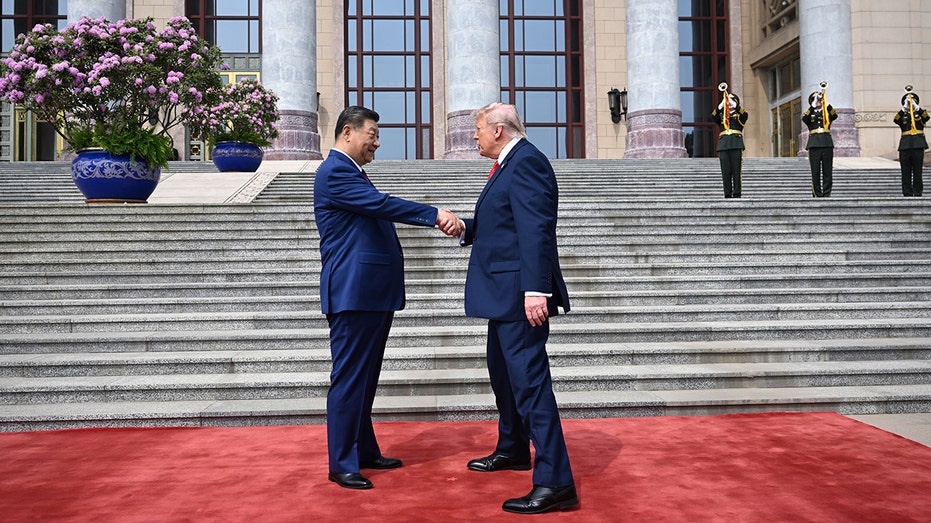
Image via Fox News
Trump-Xi Summit: The White House Wants Beijing To Help Cap Your Gas Bill
House GOP voices are floating a neat chain: Trump leans on Xi, Xi leans on Tehran, Tehran cools it in the Gulf, and the risk premium comes out of crude and gasoline. The pitch is that Chinese pressure could reduce Iranian adventurism and weapons flows, lowering the odds of Hormuz disruptions that feed straight into U.S. pump prices.
Markets don’t price speeches. They price shipping lanes and insurance costs. If China actually restrains Iran, the first visible move won’t be a headline in Washington. It’ll be a tighter range in Brent, cheaper freight, and fewer “war risk” surcharges getting baked into refined product prices.
Politically, this is also a midterm message: “we can lower prices without draining the SPR again.” Investors should hear it as: the administration is prioritizing energy optics, and will use diplomacy to try to substitute for barrels.
📈 Fred's Take: If a Trump-Xi meeting produces even a modest de-escalation signal that insurers believe, oil can drop $5-$10 fast, and that flows into CPI prints within weeks. But don’t confuse intent with control: Beijing can nudge Tehran, not manage every proxy with a rocket launcher. Trade it like optionality, not certainty: long U.S. consumers, short the extreme Hormuz tail only when you see shipping/insurance spreads compress.
📎 Fox News

Image via The Hill
Iran At The UN: Legitimacy Is The Real Commodity That’s Running Out
A critique circulating after Iran’s UN appearance makes a blunt argument: the regime speaks as “Iran,” but it isn’t Iran, and the gap between nation and ruling system is widening. The piece frames the speech as theater and hints that we may be nearing an inflection point where the world stops treating the Islamic Republic’s messaging as durable statecraft.
For markets, legitimacy isn’t academic. It’s credit risk, sanctions risk, and disruption risk. When regimes lose internal coherence, they compensate externally: more escalation, more hostage-taking, more asymmetric shocks aimed at changing the conversation.
Energy traders have lived this movie. When the regime feels cornered, it reaches for the one lever the world can’t ignore: the Gulf. That’s why every “rhetorical” UN moment can still matter to oil, rates, and risk assets.
📈 Fred's Take: A weakening regime doesn’t automatically mean peace; it often means volatility. The base case for portfolios is a fatter geopolitical premium, not a clean resolution, until you see verifiable de-escalation around shipping and proxies. Own hedges you can live with: energy exposure as insurance, and avoid pretending the tail risk is free.
📎 The Hill

Image via Politico
Beef Imports Backpedal: Election-Year Inflation Management In Work Boots
Politico reports Trump officials are considering rolling back a beef import plan as pressure rises from farm-state and battleground Republicans ahead of November. Translation: policy is being recalibrated not for efficiency, but for votes, and the ag lobby is being treated like a swing constituency.
Food is political because it’s frequent. Voters buy groceries more often than they refinance mortgages, and beef prices show up in everyday anger. Restrict imports and you usually support domestic producers but risk higher retail prices. Allow imports and you ease price pressure but anger producers and rural lawmakers.
For investors, this is the real story: trade and tariff-like decisions are now a tactical inflation tool. That pushes uncertainty into food CPI, restaurants, and the margins of packaged food names that can’t reprice fast.
📈 Fred's Take: Rolling back imports is bullish domestic cattle economics and bearish the “disinflation is easy” narrative at the margin. If Washington chooses farm-state politics over price relief, the Fed’s job gets harder, not easier, and long-duration assets pay the price. Watch it through yields and consumer staples margins, not through the culture-war noise.
📎 Politico
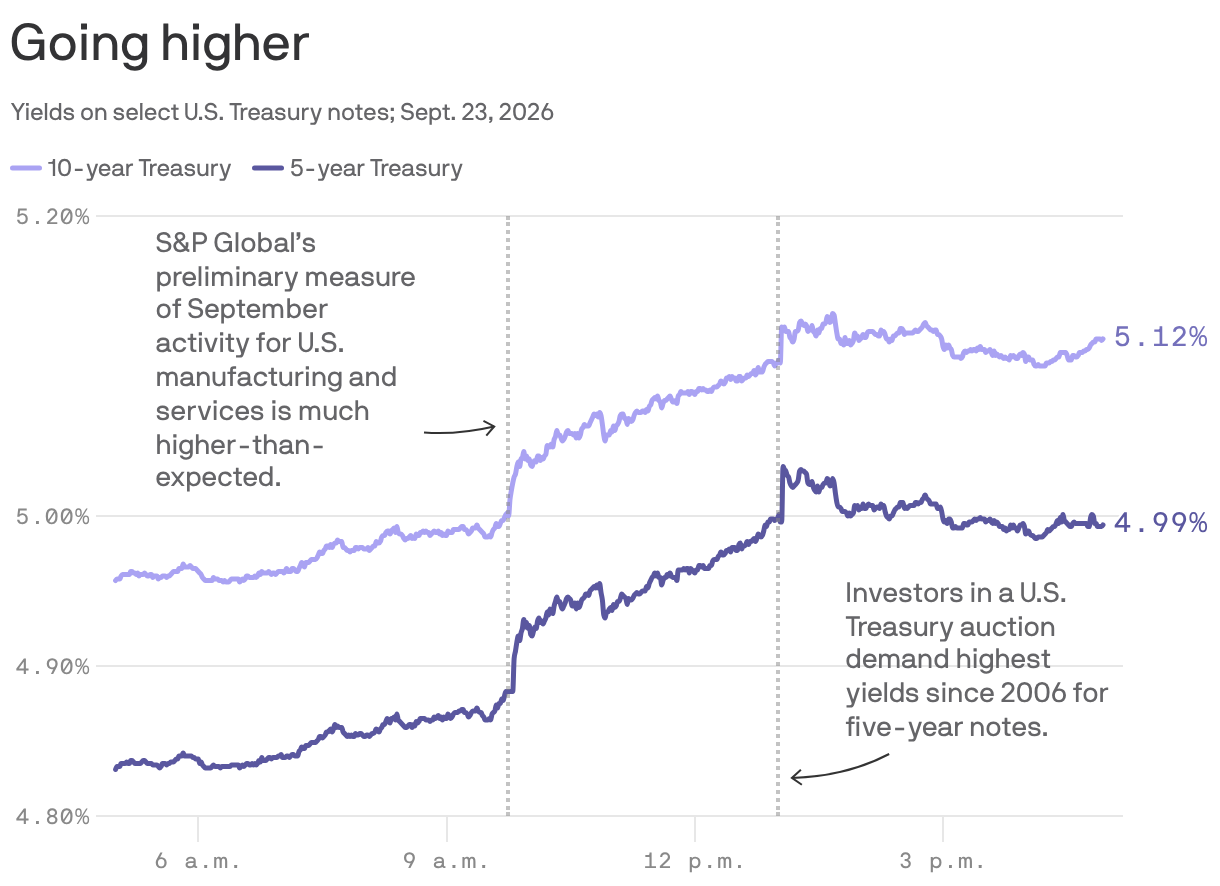
Image via Axios
Yields Are Ripping: The Bond Market Is Rewriting The Growth-And-Inflation Script
Axios flags a major move: the long end is selling off hard, with the 30-year Treasury pushing to levels not seen since 2004. That’s not a “one hot print” reaction. That’s investors demanding more compensation for duration risk, fiscal risk, and inflation uncertainty.
When the long bond breaks out, it hits everything at once. Mortgage rates stay sticky, equity multiples compress, private equity math gets uglier, and IPO windows narrow. The most important cross-asset signal isn’t the S&P on any given day; it’s whether real yields are rising alongside term premium.
This also tells you the market is less confident in the soft-landing glide path. If the government keeps issuing and the buyer base keeps demanding a bigger concession, you get structurally higher yields even if growth cools.
📈 Fred's Take: This is a duration washout, and it’s doing the Fed’s tightening for them. In portfolio terms: stop fighting the tape with long-duration tech and long bonds at the same time; pick your battles. Until issuance dynamics and term premium calm down, rallies in long duration are trades, not investments.
📎 Axios
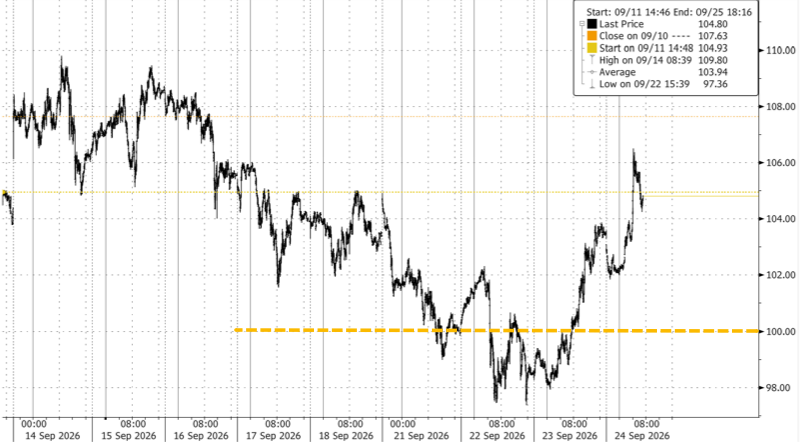
Image via ZeroHedge
Aramco Wants New Export Routes: The Market Is Pricing Hormuz Like A Permanent Tax
ZeroHedge highlights comments tied to Aramco’s push to explore additional export routes to reduce reliance on the Strait of Hormuz, as Brent pops back above $104 with fresh Iranian threats. The underlying point is straightforward: geography has become the chokepoint premium, and producers want an escape valve.
Multiple routes matter because they change the distribution of outcomes. Today the market is paying for a single failure point. If Saudi can credibly diversify export pathways over time, it lowers the probability-weighted severity of a Hormuz event, even if it doesn’t eliminate it.
Near term, don’t overthink it: building routes takes years, while threats reprice in minutes. That’s why crude spikes on headlines and drifts on engineering.
📈 Fred's Take: New pipelines and routes are long-term bearish volatility, not an immediate fix for $104 Brent. For the next few months, the “Hormuz premium” stays, and that feeds straight into inflation expectations and higher yields. Energy stays the cleanest geopolitical hedge on the board; just size it like insurance, because the headline reversals are brutal.
That’s the board. Rates are the gravity, oil is the optionality, and politics is the catalyst. Trade accordingly.
— Fred Frost
