Today’s Sponsor
That "Trump Bump" Social Security raise? Already gone. Medicare premiums, gas, groceries — they've swallowed every penny before it hits your account. Meanwhile, your benefits have already lost 13.7% of their purchasing power since 2016, and the system would need to raise checks by 15.7% just to break even. You're getting $81. You needed $296.
Central banks have been quietly buying one specific asset at the fastest pace in 50 years — and JP Morgan now sees it hitting $8,000. Smart retirees aren't waiting on the next COLA. They're protecting what's left right now. Get the free guide and see the 3 steps disciplined retirees are using to outrun the inflation Washington can't stop.
Get the Free Wealth Preservation GuideThis is an advertisement from First Ballot. If you no longer wish to receive First Ballot promotionals, please let us know. Or write to: 5005 Lyndon B. Johnson Fwy. Suite 350, Dallas, TX 75244

Politics is stimulus, tax, tariff, or risk premium. Today: Trump leans into tariffs and factories, Wall Street wants a cleanse, Republicans fight a clawback, OpenAI prints enterprise money, and a maritime rescue that matters more than you think.

Image via Fox Business
Trump Hits a Texas Truck Plant: Tariffs Back on the Front Burner
Trump is making a surprise stop at a Peterbilt truck factory in Texas Thursday to sell the manufacturing story: domestic production, tariff leverage, and the White House’s claimed gains from the economic agenda.
This is messaging, but it’s also policy signaling. Every time tariffs get paraded as a win, markets should price a higher probability of escalation, retaliation, and supply-chain inflation getting re-lit just as services inflation refuses to die.
📈 Fred's Take: Tariff theater isn’t harmless. It widens the distribution of outcomes: better optics for industrial jobs, worse inputs for everyone downstream. If this turns into a renewed tariff push, think upside pressure on breakevens and long-end yields, relative winners in U.S. industrial automation and defense-adjacent manufacturing, and a headwind for retailers and anything margin-thin that relies on imported components.
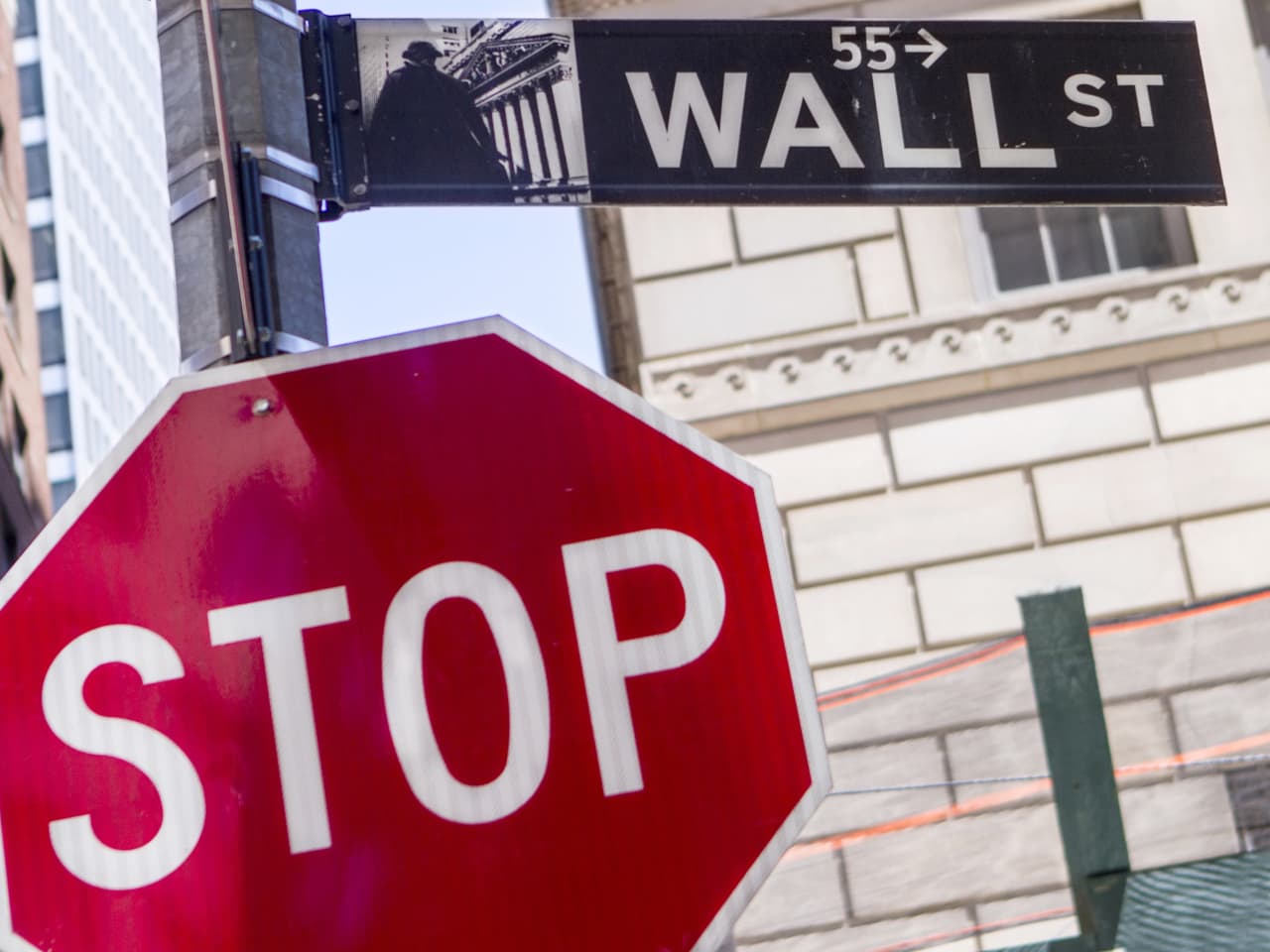
Image via MarketWatch
Mike Wilson Wants a Correction: The Market’s Detox Cycle
Morgan Stanley’s Mike Wilson says an S&P 500 correction may be exactly what this market needs. His framing: a pullback clears positioning, resets expectations, and re-rates leadership toward large-cap quality.
This fits the tape. Narrow leadership has been doing the heavy lifting, and every “soft landing” narrative gets priced like it’s guaranteed. A correction isn’t bearish by itself; it’s the market forcing a new entry price for earnings that aren’t accelerating fast enough to justify infinite multiples.
📈 Fred's Take: A correction is bullish if it comes with falling junk credit spreads and stable earnings revisions. If you’re running money, you don’t fear a 7–10% reset; you use it to rotate into cash-flow compounders and away from story stocks that only work when liquidity is free. Watch the 10-year yield and high-yield OAS: if both rise during the drawdown, it’s not detox—it’s regime shift.

Image via The Hill
Republicans vs. Trump on a $1B Clawback: The Party-of-One Problem Shows Up in Budget Math
GOP lawmakers are challenging Trump’s move to cancel nearly $1 billion in federal funding via a rescission-style clawback. The fight isn’t just about the dollars—it’s about Congress defending its power of the purse against a White House that wants unilateral control.
Markets care because this is the micro version of a macro truth: fiscal governance is getting messier, not cleaner. When intraparty friction rises, you get more headline risk, more continuing resolutions, and a bigger volatility bid on rates around funding deadlines.
📈 Fred's Take: This is small money and big signal. If Republicans can’t align on a $1B clawback, don’t bet on smooth budgeting when the next real fiscal stress hits. That keeps a floor under term premium and makes long-duration assets more fragile—especially anything trading like a bond: high-multiple tech, unprofitable growth, and frothy private-to-public hopefuls.
📎 The Hill
Image via Axios
OpenAI Nears $70B ARR: That’s Not Hype, That’s a Tax on Every Knowledge Business
Axios reports OpenAI’s annual recurring revenue is nearing $70 billion, with enterprise sales more than doubling since July, per sources familiar with the financials. Translation: the monetization engine is moving from consumer novelty to corporate budget line item.
If the number is even directionally right, it changes how investors should think about the AI stack. The value is consolidating at the model-and-distribution layer, and everyone else—from software incumbents to IT services to data vendors—has to defend pricing power against “AI inside” commoditization.
📈 Fred's Take: A $70B ARR run-rate forces a rethink of who captures the margin pool. If OpenAI is printing enterprise revenue at this speed, the next trade is second-order: which companies see accelerating productivity and margin expansion, and which get their moats bulldozed. In public markets, don’t just chase chip beta—hunt for software names with real usage leverage and measurable headcount substitution, and be ruthless on anyone selling “AI transformation” without proof in the numbers.
📎 Axios

Image via NTD
40 Rescued Off Puerto Rico: Shipping Risk Is Quiet Until It Isn’t
The Coast Guard rescued 40 people after a boat capsized off Puerto Rico near Mona Island, with a merchant vessel pulling people from the water and alerting authorities. It’s a human story first, and a reminder that maritime routes around the Caribbean can flip from routine to crisis fast.
For markets, maritime incidents matter through a simple channel: insurance, enforcement, and disruption. When authorities surge patrols or insurers reprice risk, costs ripple into regional shipping, energy logistics, and ports—usually in a way that shows up in data weeks later, not the same day.
📈 Fred's Take: Don’t trade the headline, track the second derivative. If incidents like this cluster, you’ll see tighter maritime enforcement, higher insurance premia, and friction in regional flows—small individually, additive over time. In an inflation-sensitive market, “friction costs” are how you get upside surprises to prices when everyone thinks goods are fully normalized.
📎 NTD
That’s the tape: politics sets the range, markets pick the level. Trade the incentives, not the slogans. — Fred Frost, Morning Bullets
— Fred Frost
