Today’s Sponsor
Most traders ignore flat, quiet charts — but one trader hunts for them. He waits for four specific indicators to align, then strikes. Using that method, a $10,000 practice account reportedly grew to $46,479 in just a few months — no new capital, no exotic leverage.
Jim Archer has pulled together the free report that breaks down exactly how it works — the four indicators, the chart setup, and when to pull the trigger. It's yours at no cost, delivered straight to your inbox.
Get the Free ReportPaid advertisement for TradeWins Publishing. By clicking above, you're opting in to free updates from Jim Archer Breakout Alerts; the report is delivered by TradeWins. Results described are the trader's own claims from a practice account. They are not typical and include losing trades. Trading involves risk and you may lose money. Nothing here is investment advice. Unsubscribe any time. See our privacy policy for details.

It’s the same movie: politicians pull the pin, markets price the blast radius. Today is tariffs, sticky growth, and two new security alignments that matter more than the headlines suggest.
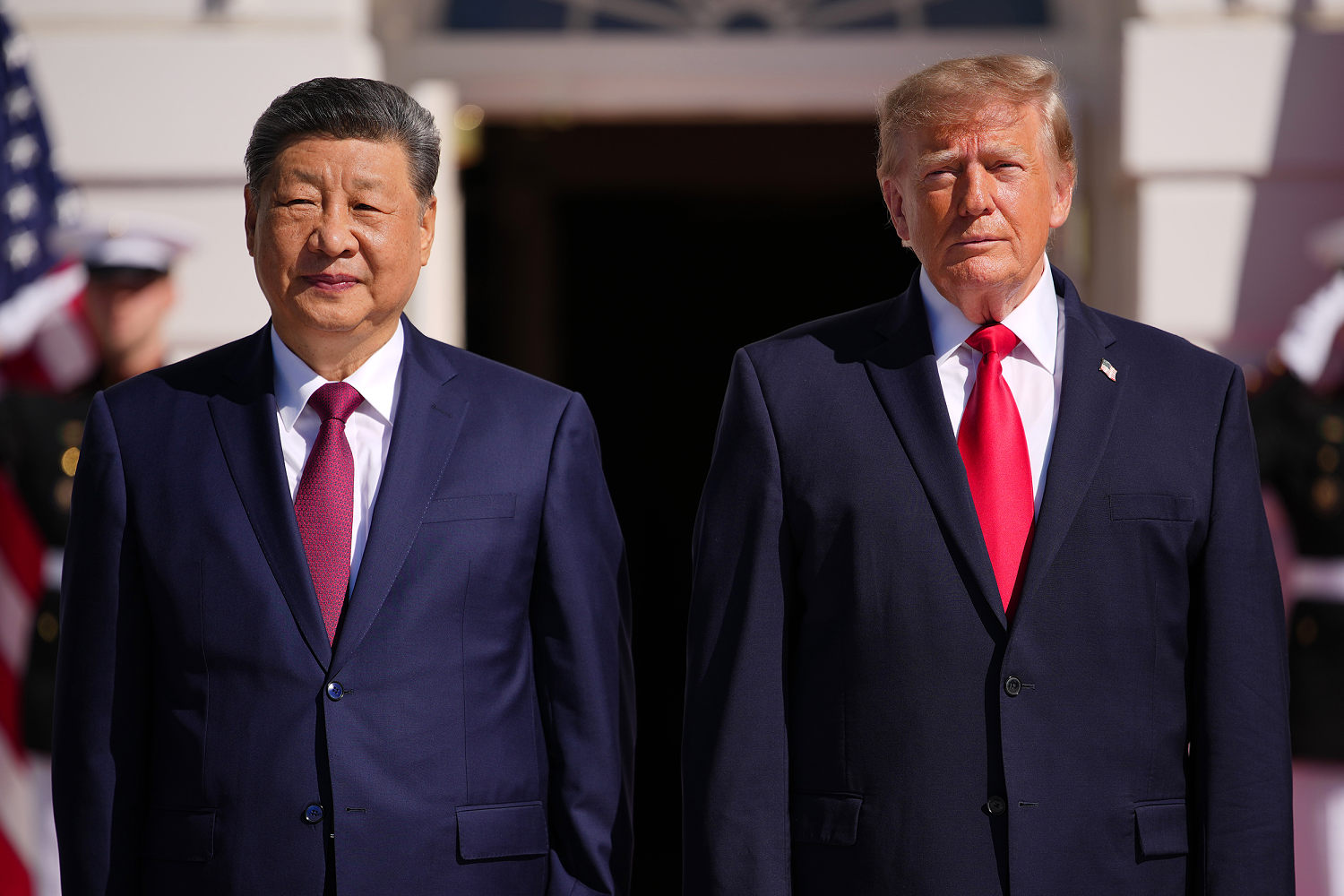
Image via NBC News
Trump Reloads the Tariff Gun on China, Europe, and Everyone Else
Trump is floating a fresh round of country-specific tariffs aimed at China, the E.U., and other trade partners. The framing is “excess capacity” and industrial policy, but the translation for markets is simple: higher landed costs, more retaliatory risk, and messier supply chains.
Tariffs are a tax you don’t see until you do. Companies either eat margin, pass it through, or re-route sourcing at a cost. That’s inflationary at the margin and it hits the exact categories that leak into core goods, which is the last place the Fed wants renewed heat.
The second-order effect is uncertainty. Capex pauses, inventory hoarding, and FX hedging all pick up when the rules of trade get rewritten on a campaign stage. That’s not “recession now,” but it is a volatility premium that equities and credit spreads will have to pay.
📈 Fred's Take: If tariffs move from talking point to policy, you’re looking at a mini-stagflation impulse: growth friction plus higher prices. That’s bearish long duration and a headwind for consumer discretionary margins, while it’s supportive for U.S. industrials with domestic pricing power and for commodities that ride restocking cycles. Don’t overthink it: the first market reaction is higher inflation breakevens and a firmer dollar, then the earnings revisions show up later.
📎 NBC News
Image via Fox Business
Q3 GDP Prints 4.3%: Good News That Keeps Rates Mean
Commerce revised third-quarter GDP to a 4.3% annualized pace. That’s not “soft landing,” that’s still-hot demand, and it matters because policy is already tight and the economy is refusing to cool on schedule.
Strong growth forces the bond market to stop daydreaming about easy cuts. It also shifts the conversation from “when does the Fed pivot” to “how long does restrictive stay restrictive.” That’s the setup where the front end stays pinned and the back end sells off on term premium.
The equity market likes growth until the bond market vetoes the multiple. When GDP runs hot, earnings may hold up, but valuations get kneecapped if real yields grind higher.
📈 Fred's Take: 4.3% GDP is not a risk-on green light; it’s a rate-volatility warning label. The trade is barbell: quality cash-flow equities and short-duration credit, not speculative long-duration stories that need falling yields to justify the math. If you’re betting on aggressive cuts, you’re early, and early in rates is the same as wrong.

Image via MarketWatch
JPMorgan Sees S&P 500 at 8,200: The Bull Case is Adoption, Not Hype
JPMorgan is out with a punchy target: S&P 500 at 8,200, arguing that downturns like this are part of the pathway higher. Their core point is that AI shouldn’t be judged solely on capex headlines anymore; it needs to be evaluated on adoption and productivity traction.
That’s the right framework. Capex is the easy story because it’s measurable and immediate. Adoption is slower, messier, and shows up as operating leverage, headcount restraint, faster cycle times, and better pricing decisions.
But a big index target doesn’t mean a straight line. The market can be structurally bullish and still punish you with drawdowns if you pay any price, chase leverage, or confuse “theme” with “earnings.”
📈 Fred's Take: 8,200 is plausible if AI turns into margin expansion instead of just a hardware arms race, but the path is volatile and leadership stays narrow until breadth proves it can earn. My playbook is simple: own the toll collectors and the adopters with measurable ROI, and fade anything whose entire thesis is multiple expansion on falling yields. The next leg up won’t be gifted; it’ll be bought with earnings.

Image via Washington Examiner
Libya Threatens Reprisal After Ukrainian Strike Kills Libyan Officers in Benghazi
Libya’s eastern-based military leadership says it will retaliate after two of its officers were killed in a Ukrainian drone attack targeting a Russian warship at a naval base in Benghazi. That’s a sentence you wouldn’t have believed a few years ago, but this is the current map: Ukraine’s war spilling into third countries, with local factions attaching themselves to major-power patrons.
For markets, Libya isn’t a headline risk because of GDP; it’s a headline risk because of barrels and disruption probability. When fighting, sabotage, or political fragmentation rises, Libyan production reliability becomes a question mark again, and crude prices reprice on fear before fundamentals.
The other angle is escalation math. Any move that widens the theater increases shipping and insurance premiums, tightens risk tolerance for energy infrastructure, and keeps defense spending on a one-way ratchet.
📈 Fred's Take: This is oil-volatility fuel, even if barrels don’t drop today. The smart positioning is to treat energy as insurance: you don’t need to be a permabull crude, you need exposure that pays when geopolitics breaks supply confidence. And yes, defense stays a durable bid because the world is normalizing cross-border strike logic.
Solomon Islands Tightens to Canberra: A Quiet Win for Australia, a Loud Signal to Beijing
The Solomon Islands signed a new security deal with Australia that requires consultation with Canberra before making new security or infrastructure agreements. That’s a major constraint on the country’s ability to cut separate deals, and it’s a direct response to the region’s growing strategic tug-of-war.
This is about sea lanes, basing rights, and influence architecture in the Pacific. Investors should read it as incremental de-risking for Australia’s backyard and incremental frustration for China’s outward push.
Markets don’t price this as a one-day trade, but it’s part of a slow realignment that impacts defense procurement, critical minerals diplomacy, and regional infrastructure financing. It’s the kind of “small” agreement that compounds into big capital flows over years.
📈 Fred's Take: This nudges the geopolitical risk premium away from Australia and toward China’s perimeter strategy, and that matters for FX and capital allocation. Over time it supports Australian strategic leverage, which is bullish for defense and selective infrastructure, and it keeps China’s external playbook under pressure. The market won’t ring a bell, but the map just changed a notch.
Trade the world you’ve got, not the one politicians promise. See you before the bell tomorrow.
— Fred Frost

