Today’s Sponsor
While the crowd chases the same tired names, RushTheStreet is tracking the stocks that could move before the headlines hit — small caps on the verge of a breakout, AI plays building momentum, biotech approaching major milestones, gold & silver explorers, and companies with market-moving catalysts on the horizon.
October volatility creates opportunity — but only if you're watching the right names first. Don't let the next big mover disappear into the shadows before you even knew it existed.
Sign Up for RushTheStreet FreeBy clicking the link above, you agree to receive emails from rushthestreet.com. You can opt out at any time. — Privacy Policy

Friday, October 16, 2026: Markets are trying to levitate on silence from policy heavyweights while politics keeps tossing real-world grenades into rates, tech capex, and risk premia.

Image via ABC News
Bend school shooting: the political clock starts now
Police say a teen shooter killed three children and a teacher at Silver Rail Elementary in Bend, Oregon. This is the kind of headline that freezes a country and instantly unfreezes Washington.
Markets hate two things: uncertainty and rushed legislation. The near-term setup is familiar: renewed pressure for gun-control packages, school security funding, and a social-media blame cycle that drags platforms and gaming back into the crosshairs.
Expect a fast pivot to budgets and enforcement: more federal grants, more state mandates, more procurement. That’s not philosophical. That’s cash flow for security hardware, surveillance software, access control, and local government contractors.
📈 Fred's Take: The trade isn’t “gun stocks up or down.” The trade is risk premium rising in anything politically touchy, while security and municipal tech quietly get a demand tailwind. Watch for headline-driven volatility in large social platforms and videogame names if Congress starts grandstanding about online radicalization. If you want to be boring and right: security spend is sticky, and it shows up in earnings long after the cable-news cycle moves on.
📎 ABC News

Image via BBC
West Bank violence hits the risk tape when nobody’s positioned for it
BBC footage shows Israeli settlers attacking Palestinian farmers during the olive harvest, including burning olive trees. It’s a localized flashpoint with a global consequence: it thickens the geopolitical fog around Israel-Gaza and the broader region.
Markets don’t price morality; they price spillover. Every escalation adds probability weight to disrupted shipping lanes, energy supply anxiety, and a higher defense-spending baseline across US allies.
It also feeds the diplomatic grind: more pressure on Israel, more regional political volatility, and more chances for miscalculation. That’s a slow drip into higher commodities convexity and a bid under havens on bad days.
📈 Fred's Take: Don’t overtrade the headline, but don’t ignore the distribution shift. This kind of footage raises the odds of retaliatory cycles that force insurers, shippers, and energy traders to reprice risk. Keep an eye on crude term structure and freight costs; if they start creeping, that’s your tell the market is moving from “incident” to “trend.”
📎 BBC
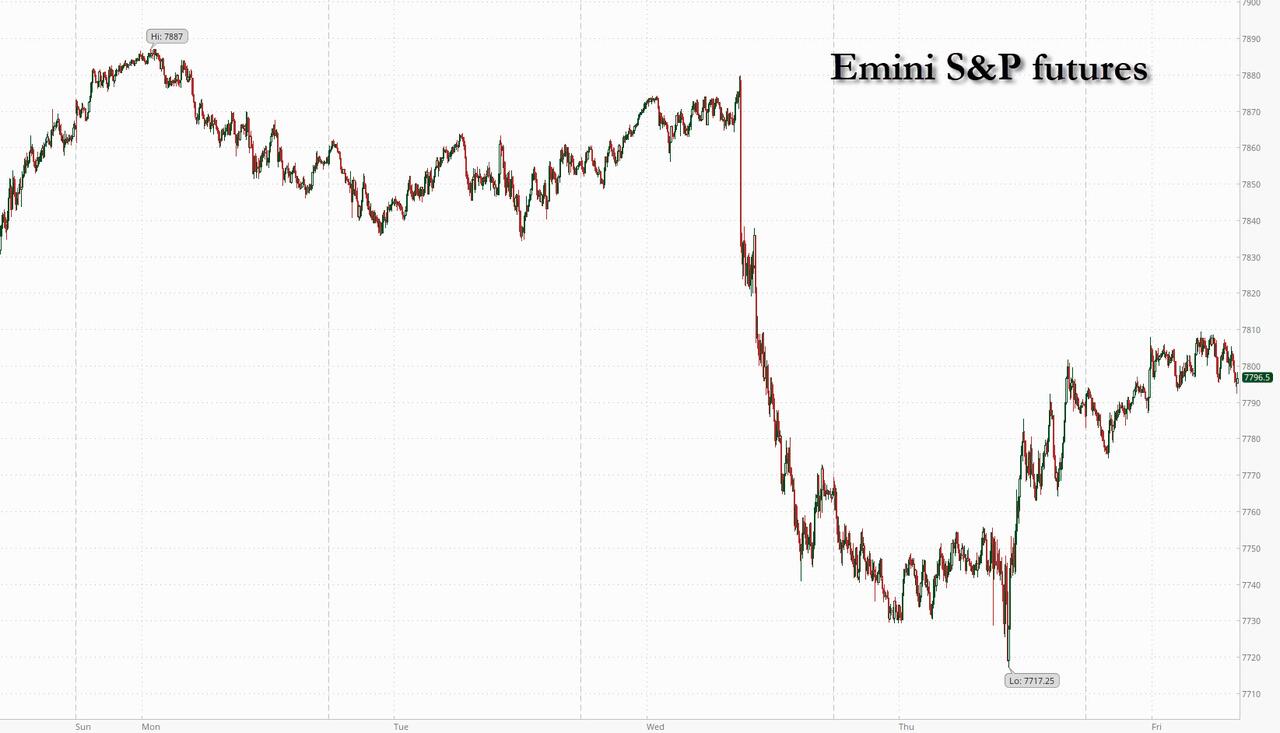
Image via ZeroHedge
Futures bounce, crowded AI gets clipped, and the market begs for a Fed hint
US futures are higher with small caps leading, while the market keeps trying to find its footing after a crowded-trade unwind. ZeroHedge frames it as “Warsh stays mum” and a tape distracted by Tesla spectacle while AI liquidation churns.
The important part isn’t the meme flavor. It’s positioning. When the same handful of mega-cap AI winners becomes the portfolio, any wobble turns into forced selling, factor rotation, and a violent bid for anything under-owned.
Small caps leading on a risk-on open is usually a positioning tell, not a macro epiphany. If rates stop climbing and the Fed stays vague, you can get a few sessions where the market pretends breadth is back. Then earnings and funding costs settle the argument.
📈 Fred's Take: This is a rotation tape, not a new bull market. If you’re long the AI crown jewels, treat every bounce as an opportunity to de-risk or hedge, because crowded trades don’t “correct,” they air-pocket. If you want upside with less headline fragility, look at quality cyclicals and domestics that benefit if financial conditions merely stop tightening. And don’t fall for product-theater; capex, margins, and discount rates run this market.

Image via National Review
2028 primary politics is turning AI buildout into a regulatory football
National Review warns that Democratic governors eyeing 2028 are competing to roll out heavy AI rules, potentially slowing America’s buildout. Think permitting friction, compliance layers, and political incentives to “do something” fast.
The market implication is simple: AI isn’t just software. It’s power generation, transmission, data centers, chips, cooling, water, land use, and labor. If states start adding inconsistent rules, you get capex delays, cost overruns, and a higher hurdle rate for the next wave of projects.
That flows straight into earnings narratives. The “infinite demand” story becomes a “time-to-revenue” story. And when timelines slip, multiples compress.
📈 Fred's Take: The biggest risk to the AI trade isn’t a better model. It’s policy drag that stretches build cycles and kills IRRs. If this regulatory one-upmanship spreads, you’ll see it first in data-center REIT guidance, utility capex plans, and chip equipment order cadence. The hedge is owning the picks-and-shovels with pricing power and regulatory insulation, not the most politically targetable consumer-facing AI brands.
Europe throws a lifeline to autos, but subsidies can’t fix cost structure overnight
Germany and France agreed on a deal aimed at supporting Europe’s struggling car industry, emphasizing safeguarding the sector and encouraging development and research. Europe’s automakers are fighting on two fronts: EV competition and a cost base that doesn’t flex fast.
Support packages usually mean some mix of incentives, coordinated industrial policy, and carrots for retooling. That can stabilize near-term sentiment and protect jobs, but it also keeps weak capacity alive longer than the market would choose.
For investors, the key is whether the deal accelerates real competitiveness or just delays restructuring. If it’s mainly subsidies, you get a tradable bounce and then the same margin math reasserts itself. If it meaningfully speeds battery supply chains, charging, or lower-cost platforms, that’s a different story.
📈 Fred's Take: This is a relief rally headline, not a solution. Subsidies can bridge a cycle, but they don’t magically close the cost and software gap versus leaner competitors. Trade it tactically in European OEMs and suppliers, but keep your strategic capital in the winners with scale, vertical integration, and access to cheap power. Europe can buy time; it can’t buy back lost execution.
That’s the map before the open. Stay liquid, respect positioning, and remember: policy is the new earnings.
— Fred Frost
