Today’s Sponsor
History shows a clear pattern: the investors who recognized the exact inflection point in the dot-com boom pocketed 400–800% gains in 18 months. Those who spotted the same moment in cloud computing saw 300–600% returns. Based on 50 years of market data, that same moment is happening right now — and the acceleration phase has already begun.
This free 7-page report reveals where we are in the current megatrend cycle, why the next 18 months are critical, and how to position yourself before the window closes. Don't be the investor who enters too late.
Get the Free ReportBy clicking 'Get the Free Report' you are automatically subscribing to Darwin Investor Network and will receive a free subscription to the Chaikin PowerFeed newsletter. Unsubscribing is easy. Privacy Policy

Washington turned the dials on trade and fiscal at the same time. The Middle East risk premium is trying to wake up. And defense demand is still the cleanest secular trend on the tape.
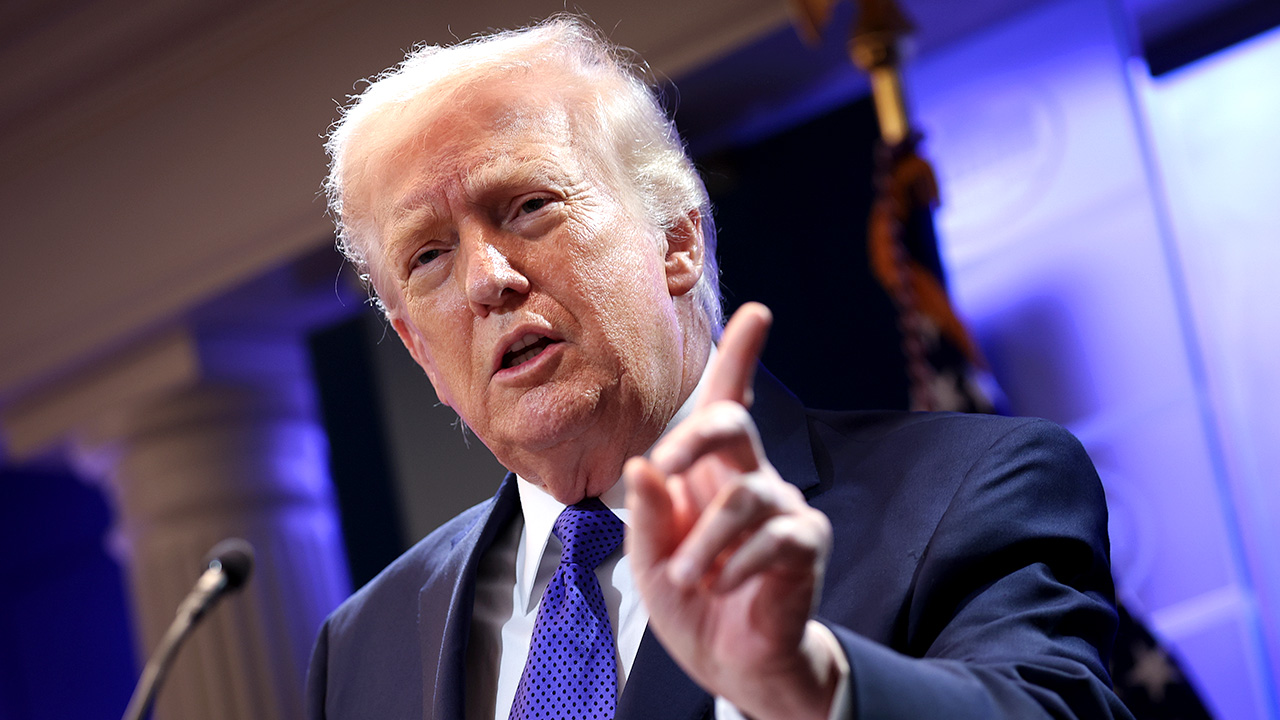
Image via Fox Business
Trump slaps fresh tariffs on 60 partners as the “temporary” era ends
The administration rolled out new blanket tariffs hitting 60 trading partners as the prior temporary global duties expired. The new rates land at 10% and 12.5%, with major exposure across Canada, India, the EU, and Taiwan.
This is a clean inflation impulse aimed straight at goods supply chains, not a symbolic headline. The immediate market read is margin pressure for import-heavy retailers and manufacturers, a potential bid for domestic substitutes, and another reason for global capex to stay cautious. If you were hoping for a smooth disinflation glide path into year-end, this just added turbulence.
Watch the second-order effects: retaliation risk, exemption lobbying, and the quiet shift of sourcing toward Mexico and the US Southeast. Also watch freight rates and inventory restocking behavior; tariffs change timing as much as they change prices.
📈 Fred's Take: This is bullish for volatility and bearish for “Goldilocks.” The winners are the companies with pricing power, domestic capacity, and government-adjacent demand; the losers are the low-margin importers who can’t pass it through. Rates don’t have to spike for this to hurt equities—sticky goods inflation plus slower volume is enough.
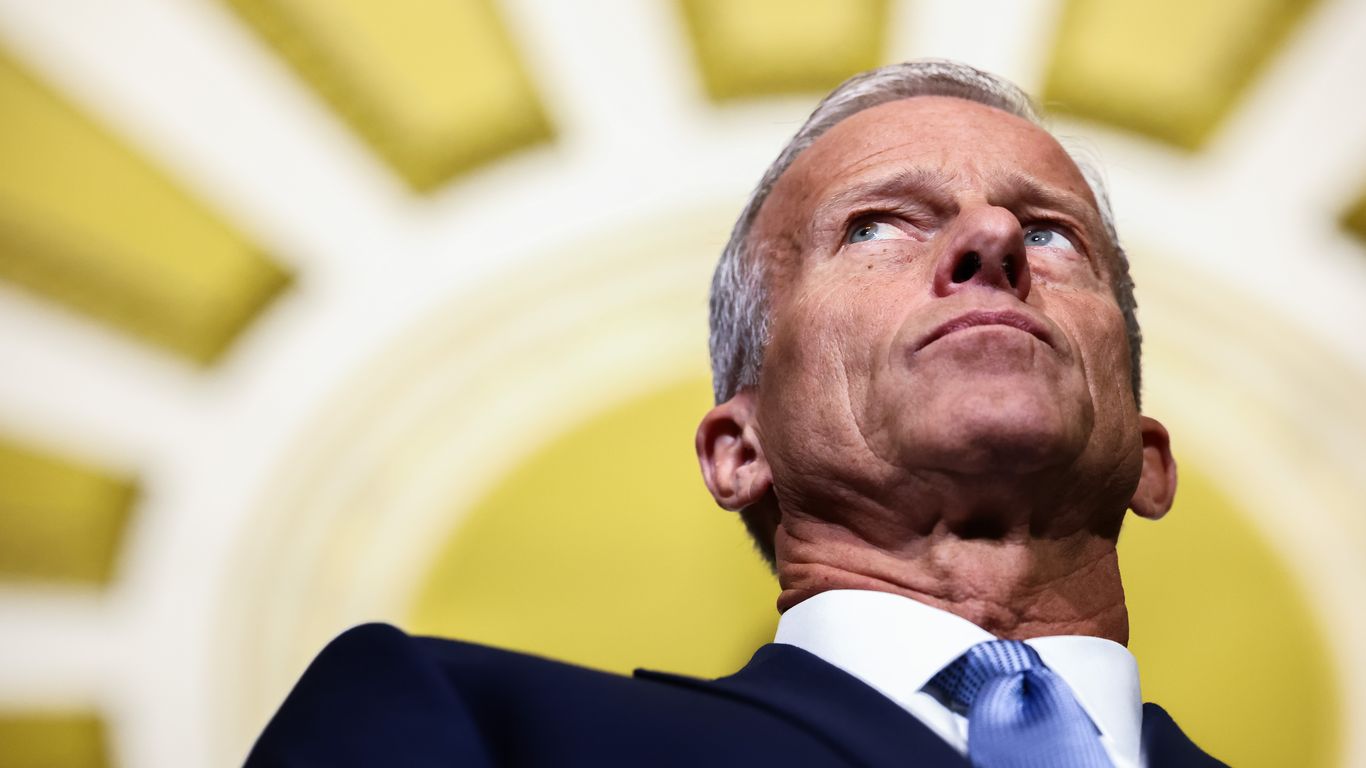
Image via Axios
House GOP tells Senate: move the $95B package or wear it
House GOP leaders are pressuring Senate Republicans to move quickly on the House-passed $95 billion reconciliation package, framing it as a must-do and signaling they want speed over perfection. The Senate’s resistance is the usual mix of intra-party math and process fights, but the message from the House is clear: stop dragging.
Markets care less about the speeches and more about the timeline. Reconciliation isn’t just “spending”—it’s sector-specific cashflows, offsets, and rule changes that reprice entire industries overnight. The longer the Senate stalls, the more you get uncertainty premiums in the affected names and less corporate willingness to commit to hiring and capex.
This also feeds the rates narrative. Even if the package is “only” $95B, the signal is Washington’s default setting remains fiscal activism, which keeps term premium stubborn when it should be drifting lower.
📈 Fred's Take: Treat this like a calendar trade: the closer this gets to real passage, the more you want to be long the direct beneficiaries and short the crowded “no new fiscal” narrative in duration. If the Senate trims it, the market reaction will be about what got cut, not the top-line number. Either way, the path is more noise in rates and more dispersion in equities.
📎 Axios
Red Sea strike, Trump talks “massive attack” — energy risk premium tries to reprice
After Houthi rebels struck two Saudi oil tankers in the Red Sea, President Trump said he’s considering a “massive attack” and vowed retaliation against Iran. The key market input isn’t the rhetoric—it’s the probability distribution shifting toward direct US-Iran escalation.
The Red Sea is a choke point where shipping risk turns into inflation fast. If insurers reprice war risk, if rerouting increases transit times, or if strikes interrupt loading schedules, you get a real-world hit to delivered energy and manufactured goods. Even without a single barrel “lost,” the fear premium can lift crude and distillates.
Keep an eye on Brent spreads, tanker rates, and defense headlines. When the White House uses words like “massive,” the options market starts doing its job.
📈 Fred's Take: This is the kind of geopolitical risk the market underprices until it doesn’t. I’d expect a bid in energy, defense, and gold on any confirmation of follow-through, and pressure on airlines and high beta growth if oil pops. The clean trade is not guessing the first strike—it’s owning hedges before the vol sellers wake up.
📎 TODAY

Image via Washington Examiner
Egypt piles troops in Sinai — the region’s “cold peace” isn’t free anymore
A Washington Examiner op-ed flags Egypt’s troop posture in the Sinai: roughly 40,000 troops across the peninsula, nearly double the 22,000 limit set by the 1979 peace treaty’s security annex. The piece argues this should push the US and regional partners toward an “Abrahamic NATO” concept.
Whether you buy the framing or not, the market point is simple: the Middle East is accumulating friction at multiple seams at once—Red Sea shipping, Israel’s borders, and Iran-adjacent proxies. When hard-power positioning increases, the baseline risk premium for energy, shipping, and defense procurement rises.
This isn’t just “war risk.” It’s budget risk and supply-chain risk. More regional militarization tends to mean more orders, more surveillance, more cyber spend, and more political volatility that bleeds into commodities and FX.
📈 Fred's Take: Even if nothing “happens,” the cost of doing business in the region goes up, and markets should price that. The practical portfolio implication is staying long the defense and security complex on dips and keeping a real asset hedge for energy shocks. If you’re running a book with zero geopolitical insurance right now, you’re basically short volatility for free—until you’re not.
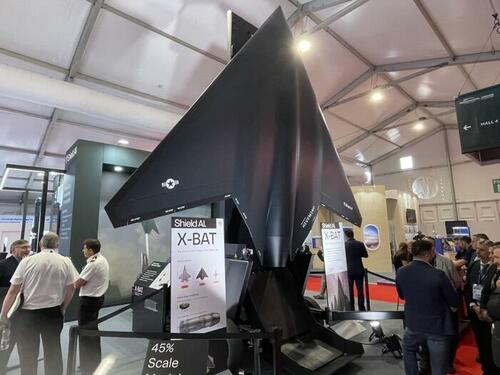
Image via ZeroHedge
Farnborough says it out loud: defense demand is structural, not cyclical
ZeroHedge’s roundup of takeaways from the Farnborough Airshow lands on the same conclusion the order books have been shouting: aerospace and defense are in a global boom. Demand is being pulled by rearmament, drone proliferation, air defense needs, and the reality that inventories and readiness were run too lean for too long.
The commercial side matters too—airlines still need planes, parts, and MRO capacity, and the supply chain remains tight. That’s supportive for pricing, but it also means delivery schedules and component bottlenecks are the swing factor for revenue timing.
The bigger point: procurement is becoming a multi-year commitment across the US, Europe, and parts of Asia and the Middle East. That’s the kind of durability equity markets pay up for—especially when other sectors are facing tariff-driven margin compression and policy whiplash.
📈 Fred's Take: Defense is a secular uptrend with political cover in both parties and across multiple capitals. The trade is to own the primes and the key subsystem suppliers, then use headline-driven pullbacks as entries—because the backlog is the story. If you want “growth” that doesn’t need a perfect consumer or a perfect Fed, this is it.
That’s the board. Tariffs lift costs, reconciliation lifts uncertainty, and the Middle East lifts the risk premium. Trade the tape, but keep your hedges paid for.
— Fred Frost
