Today’s Sponsor
🎃 The market has its own tricks — and October is full of them. Sudden momentum, unusual activity, and stocks making big moves before anyone else notices. Don't get caught off guard.
GuyStocks delivers real-time momentum alerts 🕷️, flags unusual stock activity 👻, and gives you clear, actionable insights ⚡🔎 — so you're ahead of the move, not chasing it. And it's 100% free to join 🆓.
Join GuyStocks Free TodayBy clicking the button above, you agree to receive emails from GuyStocks.com. You can opt out at any time. — Privacy Policy

Politics is risk. Risk gets priced. Today: liability shocks, tax flight math, state-threat premiums, the next capex supercycle, and BlackRock walking deeper into healthcare operations.
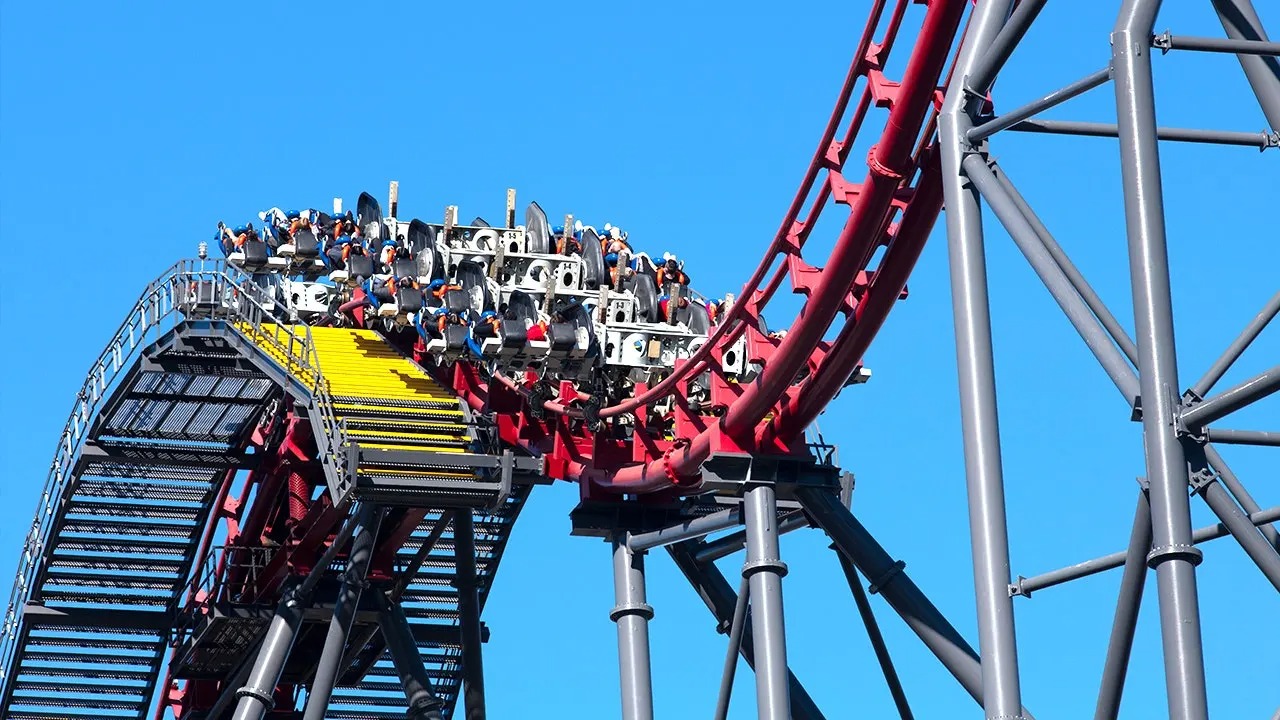
Image via Fox Business
Six Flags Hits the Brakes: Coaster Shutdowns Turn a Tragedy Into a Cash-Flow Event
Six Flags is temporarily shutting down major roller coasters across multiple parks after a fatal incident at its Georgia property. When an operator pulls a systemwide lever like this, it’s not just “out of caution.” It’s legal, insurance, and regulator triage happening in real time.
Expect near-term attendance pressure and higher operating friction: inspections, downtime, capacity limits, staff retraining, and a whole lot of PR spend. The bigger issue is the forward curve of liability. One incident can reprice insurance, trigger broader audits, and invite state-level oversight that drags on margins long after the headlines fade.
This also bleeds into the consumer discretionary tape. Theme parks are a “good times” spend, and any safety narrative hits willingness to pay and willingness to queue. If we’re already late-cycle on the consumer, this is the kind of micro-shock that shows up in guidance fast.
📈 Fred's Take: This is a classic volatility catalyst for any operator in the chain: downtime plus litigation plus insurance repricing equals margin compression. The market will try to look through it, but you don’t get to hand-wave safety risk when you sell thrills for money. If you’re long consumer leisure, remember: one bad headline can turn a seasonal business into a balance-sheet story overnight.

Image via RealClearMarkets
California Wealth Tax (Prop 40): When Politics Starts Pricing Out the Tax Base
California’s proposed wealth tax is back in the danger zone, and the economist knife fight is the tell. Proponents argue it plugs budget holes and hits “idle” capital. Critics point to flight risk, valuation games, and the simple truth that highly mobile wealth has more exits than Sacramento has assumptions.
This isn’t just a California story. It’s a signal to every founder, LP, and high-income household doing their own jurisdictional math. The wealth tax conversation accelerates three market dynamics: inbound demand for tax-advantaged vehicles, outbound migration of capital and talent, and a higher required return for investing in-state.
The second-order effects matter more than the tax line item. If Prop 40 gains traction, expect more private company domicile changes, more secondary selling ahead of “assessment dates,” and more structuring that makes reported wealth harder to measure. That’s great for lawyers, not for stable revenue forecasting.
📈 Fred's Take: A wealth tax sounds like easy money until you model behavior. The tax base isn’t a rock; it moves, it hedges, it litigates, and it votes with its feet. If you’re investing in California-exposed businesses, treat this as a higher discount rate on future cash flows and a tail risk to the venture ecosystem’s next funding cycle.

Image via BBC
MI5 Flags Russia, Iran, and AI: The Security Premium Is Back in UK Assets
The MI5 chief is warning the UK about rising state threats from Russia and Iran, with an extra kicker: AI lowering the cost and raising the capability of attacks. Translation for markets: the threat surface is widening, and the time-to-impact is shrinking.
AI-enabled tools don’t just supercharge disinformation. They tighten the loop from reconnaissance to targeting, especially for critical infrastructure, supply chains, and corporate systems. The mention of drones and even bioweapon development isn’t theater; it’s an attempt to get policymakers to fund defense, cyber, and counterintelligence at Cold War levels.
For investors, this supports a persistent “security capex” regime: more spending on surveillance, cyber hardening, identity, and resilient infrastructure. It also raises the risk premium on exposed sectors like airports, transit, utilities, and healthcare systems where disruption has real-world consequences and fast political blowback.
📈 Fred's Take: This is bullish for defense tech, cyber, and infrastructure resilience plays, and it’s a quiet headwind for anything that can be disrupted cheaply. AI doesn’t just boost productivity; it also boosts adversaries. Price UK and European risk the way we used to price emerging-market shocks: low probability, high consequence, always underinsured.
📎 BBC

Image via Fortune
The New Industrial Revolution Trade: Data Centers as the New Railroads
A VC is leaning into the Industrial Revolution analogy and he’s right to. In every tech revolution, the geopolitical winner isn’t the best inventor; it’s the best builder at scale. Today’s “steel and rails” are power generation, transmission, chips, cooling, and the physical data center footprint that makes AI real.
Markets have been treating AI like a software story with a hardware footnote. That’s backward. The bottleneck is physical: grid interconnects, transformers, gas turbines, nuclear timelines, fiber routes, land, permits, and construction labor. When physical constraints bind, pricing power shows up in the boring parts of the stack.
This is the investment map: energy infrastructure, industrials, construction materials, cooling, electrical equipment, and select REIT-like plays tied to compute. The geopolitical layer matters too: nations that can secure energy and supply chains win the compounding game.
📈 Fred's Take: Stop thinking of AI as an app cycle. It’s a capex cycle, and capex cycles mint winners in industrials, power, and logistics before the software margins show up. The trade is simple: own the picks-and-shovels that clear the bottlenecks, and don’t overpay for the “idea” when the constraint is concrete and copper.
📎 Fortune

Image via Forbes
BlackRock Goes Operational in Healthcare: Humana Hands Over 150 Clinics in a $2.8B JV
Humana struck a $2.8 billion partnership where a BlackRock investment unit will manage and operate its 150 CenterWell primary care clinics. This is the line getting crossed: the world’s biggest asset manager isn’t just financing healthcare exposure, it’s touching operations.
The logic is straightforward. Primary care clinics can be a control point for costs, outcomes, and patient capture, especially under value-based care models. If you can standardize operations, manage real estate and staffing efficiently, and integrate with payer incentives, you can turn messy healthcare delivery into a repeatable cash-flow machine.
But operational healthcare is not infrastructure with a fresh coat of paint. It’s labor-heavy, regulated, politically sensitive, and vulnerable to reimbursement shifts. The prize is steady cash flows; the risk is headline risk and policy risk that can rewrite the economics in one CMS update.
📈 Fred's Take: BlackRock is chasing durable yield, and healthcare delivery is one of the few places big enough to matter. If they execute, this validates a new playbook: asset management moving into operating platforms to manufacture cash flows instead of just buying them. If they stumble, expect Washington to smell blood and start asking why Wall Street is “running clinics” right as reimbursement fights heat up.
📎 Forbes
That’s the board. Price the risk, don’t debate it. Back before the open tomorrow — same time, same edge.
— Fred Frost
