Today’s Sponsor
The Fed held rates, inflation is still above target, and uncertainty is rising — that means the "buy anything AI" trade is over. Smart money is rotating fast toward the companies actually building AI infrastructure: chips, cloud capacity, and mission-critical data tools. Big Tech alone is projected to spend $635B–$665B on AI in 2026 — and not all of it is going where most investors are looking.
We've identified 9 AI stocks worth watching right now — including a lesser-known chip name tied to U.S. AI infrastructure, a cloud player with improving setup, and a data analytics company with government exposure. This isn't hype. It's about following where capital is actually being deployed.
Get the Free Report NowBy clicking the link above, you will receive this free report and a free subscription to the StockEarnings daily email newsletter. You are also agreeing to the terms of our Privacy Policy. Unsubscribe at any time.

Monday, Nov 9, 2026. Futures green, oil softer, and the tape is trying to decide whether the Nvidia headline is a bruise or a fracture.

Image via MarketWatch
Nvidia Drops As Wall Street Prices In A Longer Jensen Hangover
Nvidia is trading like the market just discovered reputational risk exists. The board launching an investigation tied to "spy" claims turns a clean growth story into a governance headline, and governance headlines don’t die in one session.
Wall Street’s early tone is the key tell: this isn’t just about a quarter or a guide, it’s about duration. If the investigation stays in the news cycle, the multiple compresses even if the fundamentals don’t change, because big institutions hate owning uncertainty they can’t model.
This is the part retail misses: the stock can be "cheap" versus next year’s EPS and still go down if the market starts assigning a discount rate to headline risk. In mega-cap, perception is a factor input.
📈 Fred's Take: Treat this like a volatility event, not the end of the AI trade. If you own Nvidia, you’re now long earnings and short headlines, and that second leg is what blows up position sizing. The clean way to play it is either smaller equity exposure or hedged exposure; the market will pay you to sell premium if the story drags.

Image via Fox Business
California Dodges The Wealth Tax Bullet, But The Exit Math Still Works
California voters rejected a proposed 5% wealth tax on billionaires, and supporters are already signaling they’ll be back. That’s the problem: even when a tax doesn’t pass, the attempt itself changes behavior, because capital prices the direction of travel.
The state’s revenue base is already concentrated. When the marginal taxpayer is mobile and the political system keeps flirting with confiscatory ideas, you don’t need a mass exodus to feel it. You just need a handful of high earners to re-domicile and a few venture checks to get written in Austin or Miami instead of Menlo Park.
Markets don’t trade "California" directly, but they trade the downstream: muni credit narratives, commercial real estate vacancy arcs, and the steady drip of headquarters moves that re-route payrolls, taxes, and housing demand.
📈 Fred's Take: This vote reduces near-term tail risk for California assets, but it doesn’t fix the core issue: policy volatility is a tax all by itself. If you’re underwriting California munis or coastal commercial real estate, you want a higher margin of safety than you did five years ago. The smart money will keep building redundancy in lower-tax states because it’s simply rational risk management.
Europe Tries On The "Safe Haven" Suit As U.S. Jitters Rise
European Investment Bank President Nadia Calvino is pushing the idea that U.S. market jitters could redirect safe-haven flows toward Europe. The pitch is intuitive: when investors feel the U.S. political-financial machine is grinding, they look for depth, liquidity, and institutional stability.
The reality is more nuanced. Europe can catch flows at the margin, especially into high-quality sovereigns, but "safe haven" is a competition against the dollar, Treasurys, and U.S. equity liquidity. Europe needs not just stability, but also a credible growth and energy-cost story to keep money parked.
Watch the euro and peripheral spreads. If Europe is truly receiving safety flows, you’ll see the euro firm without risk-on euphoria and you’ll see spreads behave even on ugly U.S. days.
📈 Fred's Take: I buy the tactical flow story, not the structural one. Europe benefits when U.S. volatility rises, but it doesn’t replace the dollar system unless the U.S. breaks something big. Trade it as a relative-value setup: selective long quality Europe versus U.S. volatility spikes, and keep an eye on EUR strength as your confirmation signal.

Image via Fox News
Trump Shrugs Off Impeachment Talk, Markets Still Price The Circus
Trump says he "can’t imagine" Democrats impeaching him a third time. That’s a political statement, not a probability assessment, and markets don’t care about anyone’s imagination. They care about incentives, vote math, and how much oxygen the story steals from actual fiscal and regulatory work.
Even if impeachment doesn’t happen, the threat of it is enough to gum up the calendar. That means more governing by headline, more last-minute fiscal deadlines, and more policy randomness. Policy randomness is a volatility bid.
The market impact shows up in the plumbing: wider event risk premia, twitchier rates around deadlines, and a higher bar for IPO windows when investors can’t handicap Washington risk cleanly.
📈 Fred's Take: Impeachment chatter is a tax on risk assets because it turns every week into an optionality market. Don’t trade the politics; trade the volatility. If Washington ramps the drama, you lean more barbell: keep core exposure, but own hedges and avoid crowded, high-duration stories that can’t survive a risk-off tape.
📎 Fox News
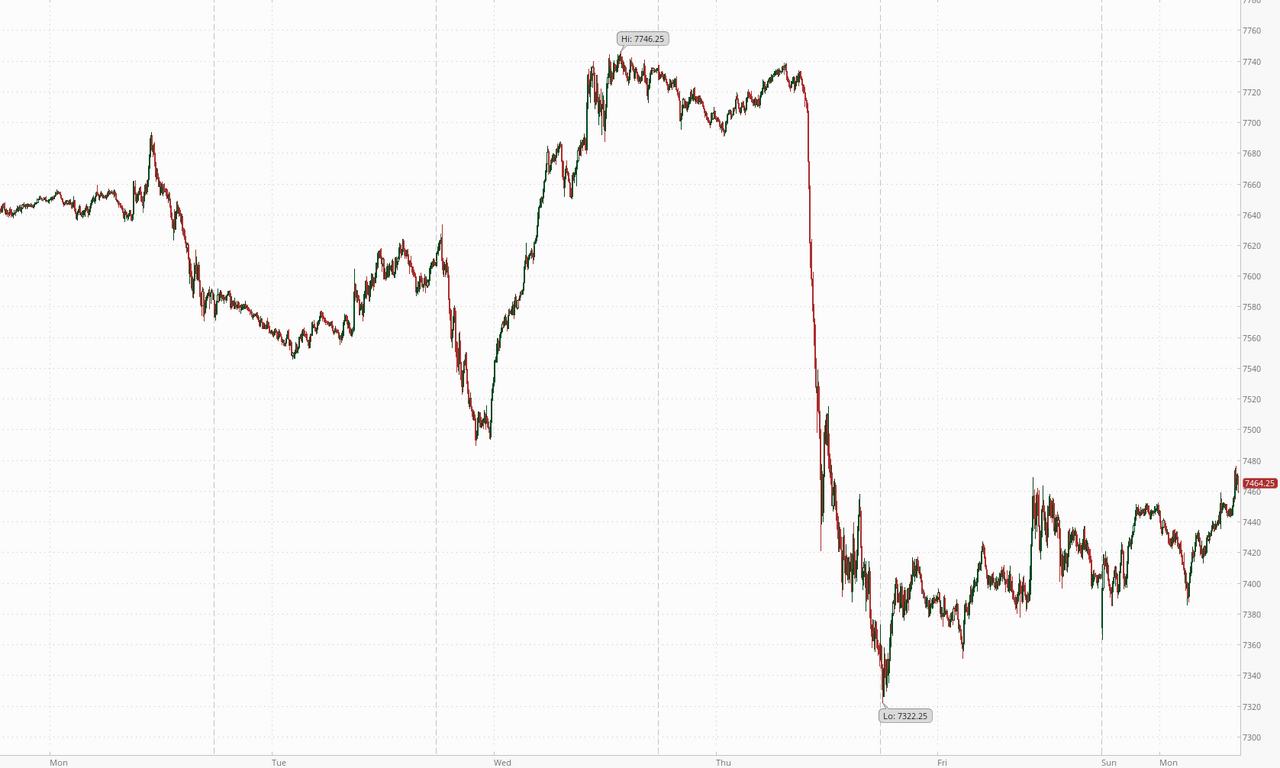
Image via ZeroHedge
Futures Bounce, Oil Slides: Dip Buyers Show Up While Iran Headlines Hit Crude
U.S. futures are higher after the S&P just logged its worst week since early April, and the tape is trying to stabilize with classic dip-buyer behavior. The Nvidia scandal noise is getting absorbed in index land because the market is bigger than one CEO headline, even when that CEO is attached to the most important stock in the building.
Oil is the other big lever this morning, sliding on renewed hopes around Iran. Crude doesn’t need a signed deal to move; it just needs a credible probability shift. Lower oil is an immediate input into inflation expectations, and that flows straight into rates and equity multiples.
Put it together and you get the day’s setup: equities supported by "less bad" energy/inflation math, with tech headline risk still lurking underneath the surface.
📈 Fred's Take: Today is a reflex rally until proven otherwise. If oil keeps easing, the market will try to re-rate risk and pull forward cuts again, which is supportive for equities and long duration. But don’t confuse a futures bounce with trend; I want to see credit calm and oil stay soft before I pay up for beta.
That’s the board. Trade the signals, not the noise. Fred Frost, Morning Bullets.
— Fred Frost

