Today’s Sponsor
Tax season quietly reshapes where capital flows — refunds hit accounts, portfolios get rebalanced, and positions get liquidated to cover obligations. That creates unusual early movement in small-cap stocks that has nothing to do with company fundamentals. Right now, certain names are already showing structural signals most investors will miss entirely.
We've put together a free Market Structure Guide breaking down how tax season shifts market activity, why some small-cap profiles move unexpectedly in March and April, and three companies already showing early breakout signals. The window to act before broader attention arrives is narrow — don't wait.
Get the Free Market Structure Guide*We encourage readers to perform their own research and due diligence on any information we provide. By clicking the link you will automatically be subscribed to the Fierce Investor Newsletter. Privacy Policy

Trump’s Iran MOU puts oil risk back on the calendar. Ukraine drones hit Moscow energy again. Orlando Bravo tries to re-price software in an AI world. Qantas goes ultra-long-haul. And the U.S. equity tape walks into a two-week liquidity/risk gauntlet.

Image via Bloomberg
Orlando Bravo’s AI Reset: Same Playbook, Harder Math
Orlando Bravo built Thoma Bravo by buying boring software, cutting costs, and compounding cash flows. Now he’s selling investors on an AI-era reboot: portfolio companies will “embrace” AI, defend pricing power, and avoid getting leapfrogged by new native-AI entrants.
The backdrop is brutal. AI is compressing moats in horizontal software while inflating capex and compute spend for anyone trying to keep up. When a flagship PE shop has to reassure the street that a bad deal (Medallia) is a one-off, that’s not marketing — that’s fundraising risk management.
Public markets are already pricing the split: AI beneficiaries get premium multiples, legacy SaaS gets a haircut, and anything “workflow” without a real data advantage gets treated like a melting ice cube. Private marks will follow. Slowly at first, then all at once when exits don’t clear.
📈 Fred's Take: PE doesn’t get to “pivot to AI” with a slide deck. If Thoma Bravo can’t prove AI lifts retention and pricing inside its installed base, the exit multiple is lower and the debt math gets tighter — period. For public investors, this is a tell: the next leg is multiple dispersion, not a broad SaaS rebound. Stay long the real AI toll-takers; be picky on legacy application software until you see re-acceleration in net revenue retention.
Trump’s Iran MOU: Oil Volatility Is Back on the Menu
Trump is hitting back at critics as a new Iran peace framework fuels debate over U.S. concessions. The memorandum of understanding sets a 60-day window for talks toward a final agreement and includes a headline-grabbing $300 billion reconstruction plan for Iran.
Markets will translate this into two immediate questions: what happens to Hormuz risk premium, and what happens to Iranian barrels over the next quarter. Even a partial thaw can cap crude rallies — but the path is never linear, because politics injects gap risk.
The other angle is inflation optics. If Washington can talk oil down into an election-year economy, that’s gasoline prices, CPI prints, and the Fed’s reaction function all getting nudged at once.
📈 Fred's Take: Treat this as a volatility event, not a straight-line “oil down” story. If talks hold, downside skew in crude increases and inflation breakevens can soften — that’s constructive for duration and rate-sensitive equities. But the 60-day window is exactly the kind of timeline that produces headline whiplash; I’d own optionality (energy puts or crude collars) rather than chase direction. The winners are disciplined hedgers, not hot takes.
📎 CNBC
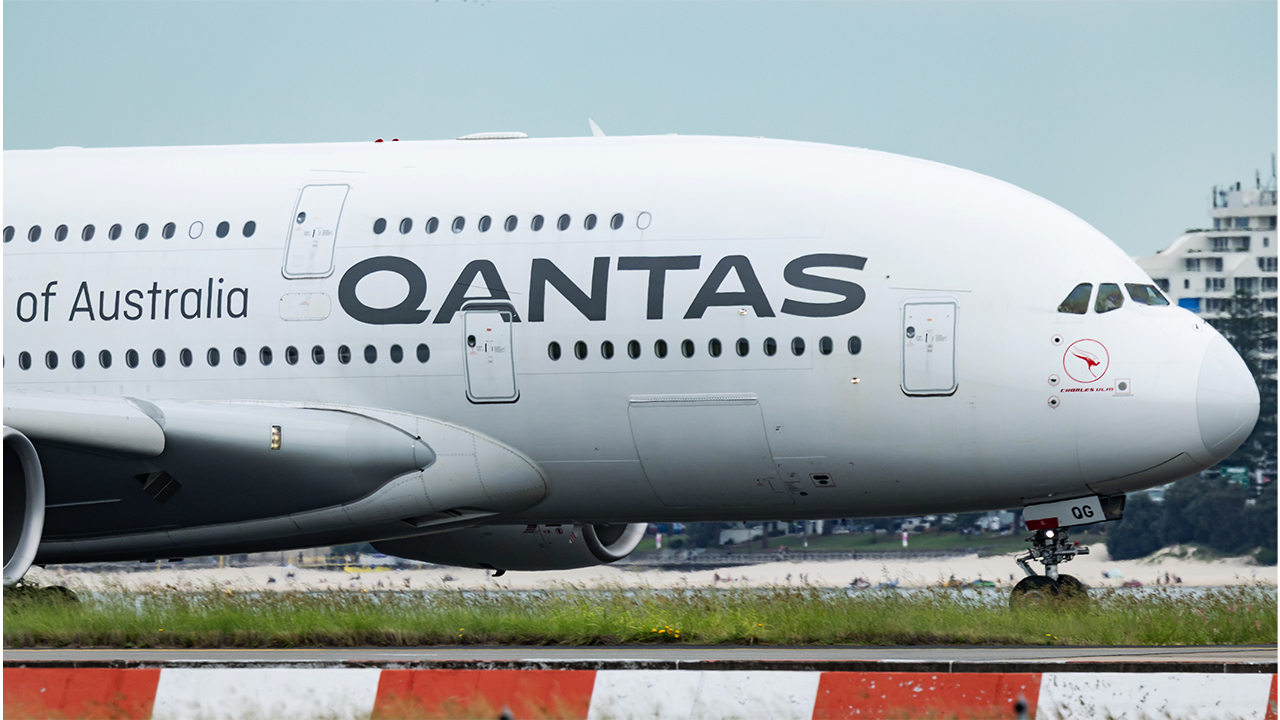
Image via Fox Business
Qantas Goes Sydney–London Nonstop: Great PR, Thin Margins
Qantas says it will launch the world’s longest nonstop commercial flight between Sydney and London, extending its Project Sunrise push. The pitch is simple: fewer connections, less total travel time, and a premium experience for long-haul travelers.
Aviation is always a spread trade: yields versus fuel, maintenance, labor, and aircraft utilization. Ultra-long-haul routes are catnip for brand and business-class demand, but they’re also exposed to fuel spikes, weather-driven reroutes, and any wobble in high-end travel budgets.
This is also a supply-chain story. New aircraft programs, engine reliability, and delivery schedules matter more than marketing. If capacity comes in late or costs run hot, the route can be a headline win and a P&L headache.
📈 Fred's Take: Nonstop is a premium product — and premiums work only when energy is calm and corporate travel stays firm. With geopolitics pushing oil risk around, I wouldn’t pay up for airline equities on a flashy route announcement. If you want the trade, look upstream: aircraft/engine makers and global travel infrastructure tend to capture the durable economics, while airlines eat the volatility.

Image via MarketWatch
Two Weeks of Tape Turbulence: This Is Where Weak Hands Get Shaken Out
MarketWatch highlights Citadel Securities strategist Scott Rubner warning that the next two weeks could be bumpy for U.S. stocks — and that any dip may be a buy. The idea is familiar: a dense window of catalysts, positioning shifts, and liquidity pockets can produce sharp moves that don’t necessarily change the underlying trend.
When the calendar tightens, flows matter more than narratives. Systematic rebalancing, options expiries, quarter-end behavior, and macro data can all amplify intraday swings. That’s how you get the same day delivering “risk-off panic” at 10:30 and “melt-up” by the close.
The key is not predicting each wiggle — it’s knowing whether the tape is being driven by fundamentals or by positioning. In choppy windows, the best trades are often executed, not theorized.
📈 Fred's Take: I’m with Rubner’s framing: this is a buy-the-dip environment until credit spreads break and unemployment inflects — neither has happened. But you don’t buy dips blindly; you buy them in leaders with earnings durability and in indexes when vol pays you to do it. If VIX pops and breadth stays intact, that’s your entry — not your exit.
Ukraine Drones Hit Moscow Refinery Again: Energy Infrastructure Is the New Front Line
Ukraine hit a Moscow oil refinery for the second time in a week, disrupting commercial flights in a major drone attack, according to the AP. The strikes underscore a persistent shift in this war: deeper hits on logistics, energy infrastructure, and domestic normalcy inside Russia.
For markets, refinery and distribution disruptions don’t need to be “catastrophic” to matter. They add fragility to product supply, raise regional insurance and shipping costs, and keep a geopolitical bid under crude and refined products — especially when combined with any Middle East headline risk.
The aviation disruption is a reminder that drone warfare is also economic warfare. It forces rerouting, security costs, and operational friction — the kind that doesn’t show up as a single shock but bleeds into risk premia over time.
📈 Fred's Take: This is why I won’t fade energy volatility just because crude has a quiet week. Infrastructure attacks create asymmetric risk: downside in oil is slow, upside is fast. If you’re long equities, you hedge with energy exposure or cheap upside in crude — because when geopolitics hits, it hits overnight, not during your afternoon meeting.
📎 AP
That’s the map. Trade the flows, hedge the headlines, and don’t confuse a calm open with a safe market. — Fred
— Fred Frost
