Today’s Sponsor
JP Morgan just quietly put a $8,000 price target on gold — and they don't publish numbers like this without ironclad data. Gold is already up roughly 80% since the start of 2025, hitting $5,500 while stocks, bonds, real estate, and Bitcoin all stumbled. Central banks now hold more gold than at any point since 1971, and gold has officially overtaken U.S. Treasuries as the world's #1 reserve asset — at the fastest pace in 50 years.
Most Americans are waiting for a pullback, waiting for confirmation, waiting for cable news to say it's safe — while the gap between those who moved first and those who waited keeps widening. You're making a decision today whether you realize it or not. Position before $8,000 prints, or scramble after every news anchor in America is already talking about it.
Get the Free Wealth Preservation GuideThis is an advertisement. If you no longer wish to receive promotional emails for this promotion, please unsubscribe here. Or write to: 5005 Lyndon B. Johnson Fwy. Suite 350, Dallas, TX 75244.

Tuesday, August 25, 2026. Washington is throwing policy grenades again. Markets are doing what they always do: pricing the second-order effects before the first-order headlines hit your screen.

Image via NBC News
A U.S. Military Transport Touches Down in Moscow. Markets Smell a Backchannel.
A U.S. military transport aircraft landed in Moscow, per flight tracking, and nobody’s volunteering a clean explanation. That’s the point. If it were routine, it would be routine.
The market read isn’t “peace is coming.” It’s “something is being negotiated that can’t survive daylight yet.” These backchannel moments usually revolve around prisoner swaps, deconfliction, or Ukraine-adjacent risk management. Any of those can shift the tail risk premium in Europe, and tail risk premium is what moves FX vol, energy spreads, and defense multiples.
📈 Fred's Take: This is a volatility story, not a kumbaya story. If this is deconfliction, you’ll see it first in lower front-end EUR vol and a softer bid in oil risk premia, not in headlines. I’d fade any broad “detente” rally in European cyclicals until there’s an observable policy change, but I’d respect a short-term vol crush trade if follow-up flights or official chatter confirm a channel is open.
📎 NBC News
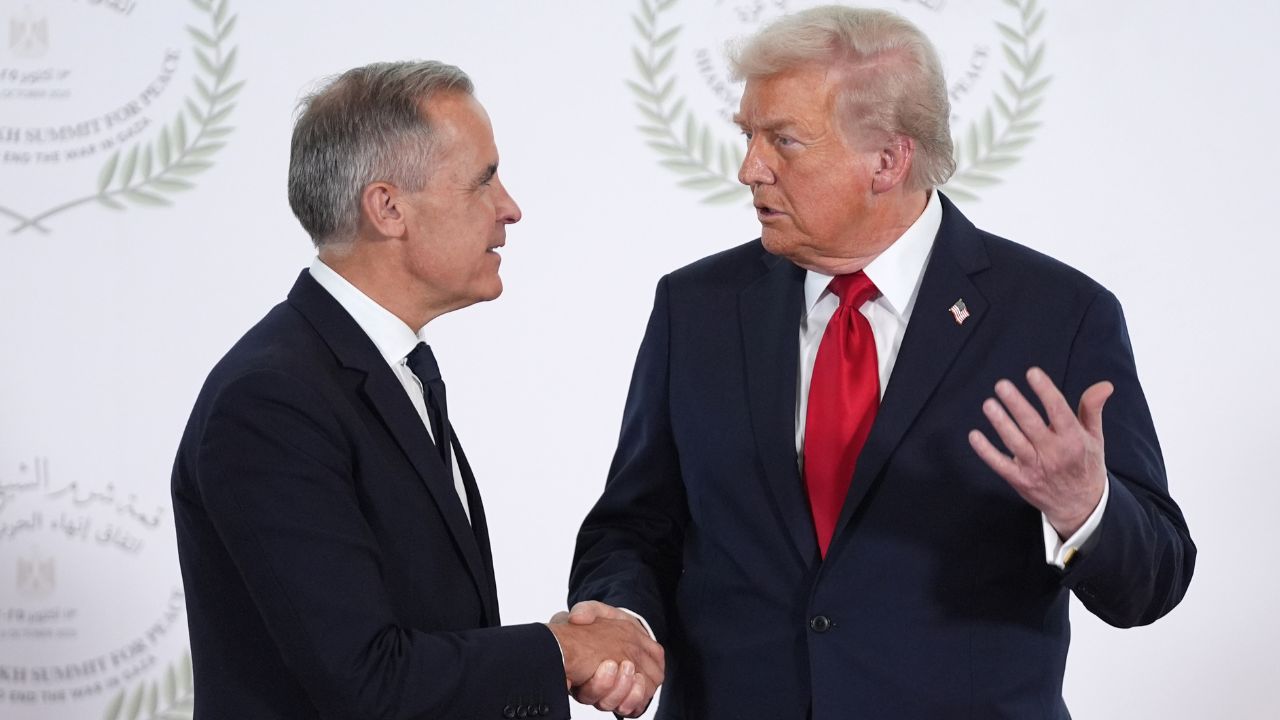
Image via Fox Business
Trump Hits Canada With 50% Duties. Ottawa Says “Dollar for Dollar.” Welcome to North America’s Trade Shock.
Trump ordered 50% duties on Canadian goods and told Canadian leaders to “fall in line.” Prime Minister Mark Carney says Canada will retaliate dollar for dollar. That’s not posturing; that’s the opening bid in a tit-for-tat that bleeds straight into CPI baskets and corporate margins.
Canada is not a peripheral trading partner. This is autos, parts, lumber, metals, food inputs, and cross-border supply chains that were built for frictionless flow. Tariffs don’t just raise prices; they force inventory hoarding, reroute logistics, and widen bid-ask spreads in the real economy. Expect earnings calls to pivot from demand to “policy uncertainty” overnight.
📈 Fred's Take: This is stagflationary at the margin: higher input costs with no productivity offset. The first market tells will be USD/CAD volatility and a bid in U.S. inflation breakevens, especially front-end, because tariffs hit now. I’d be cautious on U.S. retailers and industrials with Canada-exposed supply chains, and I’d expect the Fed path to get harder, not easier, if this sticks past the first round of exemptions.

Image via MarketWatch
Alibaba Prints $10B in Stock Sales. Insiders Step In. That’s the Only Signal That Matters.
Alibaba is selling $10 billion of stock, and major figures around the company are reportedly buying shares ahead of a key secondary offering. In plain English: dilution meets insider demand. That’s a tug-of-war between balance-sheet flexibility and price support.
China tech trades like a policy derivative, not a growth stock. So when you see large placements, the question isn’t “is the business good?” It’s “is Beijing comfortable with capital raising and foreign holders staying put?” Insider buying doesn’t erase macro headwinds, but it can cap downside during supply dumps if the market believes the insiders know the regulatory temperature.
📈 Fred's Take: I treat insider stepping-in as a volatility dampener, not a green light for a new bull market in China tech. If the book is well-absorbed, you can trade the relief bounce, but don’t confuse placement mechanics with fundamental re-rating. The real catalyst remains policy stability; without it, every rally is a rent-a-trend.

Image via Axios
Trump’s Iran “D-Day” Was a Deadline Extension. Secondary Sanctions Still the Real Weapon.
Trump’s much-hyped “economic D-Day” for Iran arrived and… slipped into another ultimatum. The shock-and-awe version didn’t show. What remains on the table is the only lever that consistently matters: secondary sanctions pressure, especially aimed at buyers and facilitators tied to China.
Energy markets trade credibility. When deadlines roll, near-term risk premium can leak out, but the structural risk doesn’t disappear; it just gets repriced into the probability tree. If secondary sanctions tighten later, you get a different kind of spike: shipping, insurance, and settlement friction that hits barrels even if production doesn’t change overnight.
📈 Fred's Take: Oil is going to whipsaw on credibility, not supply. The trade is to stop chasing every headline and watch enforcement signals: Treasury actions, shipping advisories, and China-facing language. If enforcement ramps, energy and tanker rates catch a bid fast; if it keeps slipping, the market sells risk premium and you’ll see it in a softer front month and a flatter curve.
📎 Axios

Image via The Dispatch
America’s $40 Trillion Debt Story Isn’t History. It’s Your Forward Rate Curve.
The Dispatch walks through how the U.S. piled up $40 trillion in debt and asks the polite question: can we grow out of it? The real answer sits in the bond market, not in a podcast studio. Growth helps, but only if it beats the effective interest rate on the debt for a long time, while politics stays disciplined. That’s not our operating environment.
Debt this large turns fiscal policy into a market variable every day, not every election. It changes how we should think about “risk-free,” term premium, and why the dollar can stay strong even as the math looks ugly: global collateral demand and relative weakness elsewhere. But don’t miss the punchline: refinancing at higher rates is a slow-motion tax on everything.
📈 Fred's Take: You don’t “grow out” of this without either financial repression, inflation, or a productivity miracle. For portfolios, that means keep respecting duration risk and treat long bonds as a trading instrument, not a retirement plan. The winners keep being real assets with pricing power and short-duration cashflows; the losers are anything priced off permanently low discount rates.
That’s the tape. Stay liquid, stay cynical, and let policy mistakes pay you instead of hurt you. — Fred Frost
— Fred Frost
