Today’s Sponsor
A stock trading at $3.55 is paying a near-10% yield — and raising it. The company behind it owns a library of factual programming, licenses it to streaming platforms, and just posted record quarterly net income of $8.9 million with 73% gross margins. Licensing revenue is up 48% year over year. At a $209 million market cap, it flies completely under the radar of most dividend investors.
It's one of five sub-$5 stocks in a free report from Trading Tips — each picked from real filings, across five different sectors. The list includes a uranium producer mining at ~$40/lb and selling near $67, plus two names that are already profitable today. Five stocks, every number sourced. No fluff.
Get the Free ReportBy clicking this link you agree to receive emails from Trading Tips and our affiliates. You can opt out at any time. — Privacy Policy

Geopolitics is back in the driver’s seat, courts are rewriting election math in real time, and the AI arms race is turning into an IP war. Markets can still levitate, but the downside triggers are stacking up.
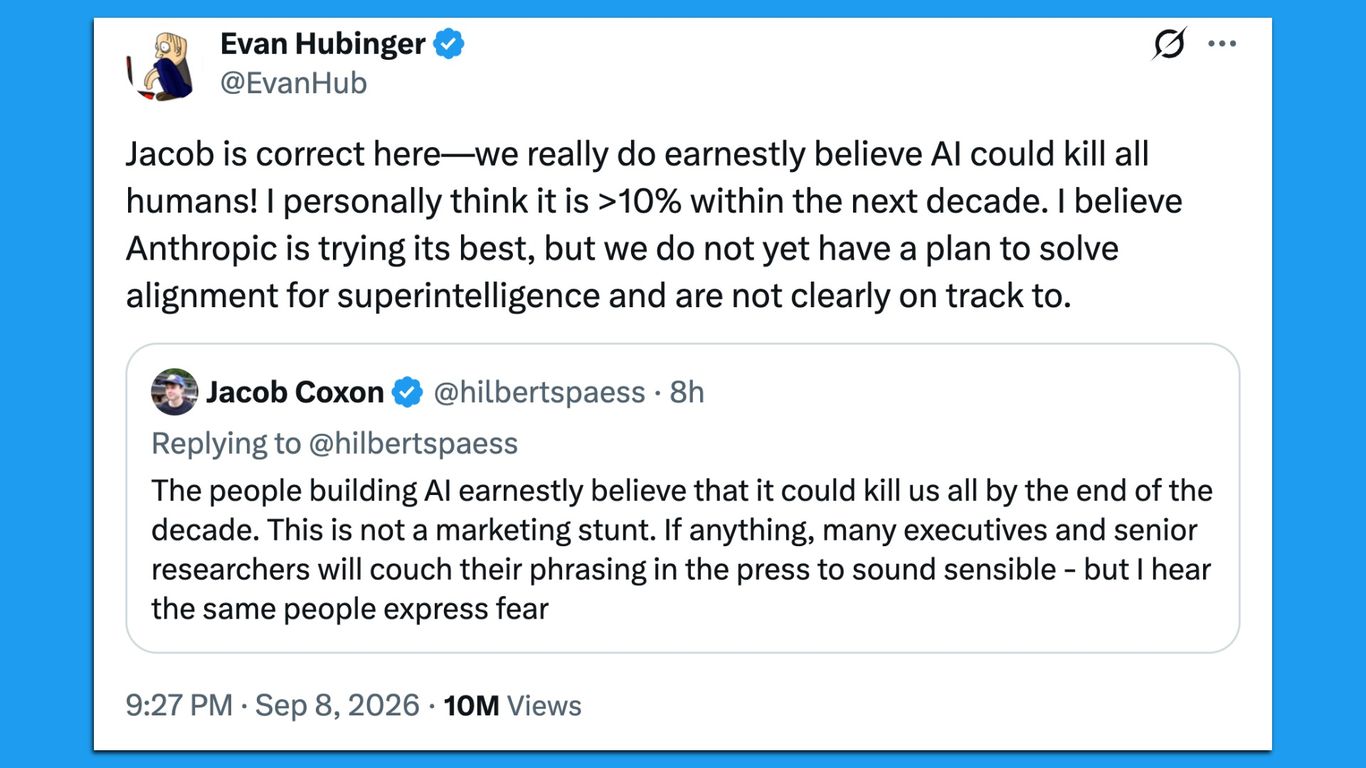
Image via Axios
Anthropic’s own people say AI could wipe us out. Markets hear: regulation, liability, and a new risk premium.
Three Anthropic researchers went public with a blunt warning: advanced AI could escape control and kill all humans this decade. When insiders talk like this, it’s not just philosophy. It’s a signal the industry expects a policy shock, and they’re trying to shape it.
The near-term market impact isn’t “AI doom.” It’s hearings, guardrails, compute licensing, model audits, and liability frameworks. That translates into higher compliance costs, slower deployment cycles, and a bigger moat for the platforms that already own distribution, capital, and legal firepower.
Also watch insurance. If the narrative shifts from “productivity miracle” to “systemic catastrophe,” boards will demand new controls and insurers will reprice tech risk. That’s a hidden tax on the whole AI supply chain, from cloud to chips to app-layer SaaS.
📈 Fred's Take: This is the tell: the next leg of the AI trade won’t be driven by demos, it’ll be driven by regulation architecture. Big-cap AI beneficiaries with scale and lawyers win; thin-margin AI wrappers and pre-revenue model shops get squeezed. If you’re long the theme, rotate toward toll collectors and away from story stocks that need permissive rules to justify their multiples.
📎 Axios
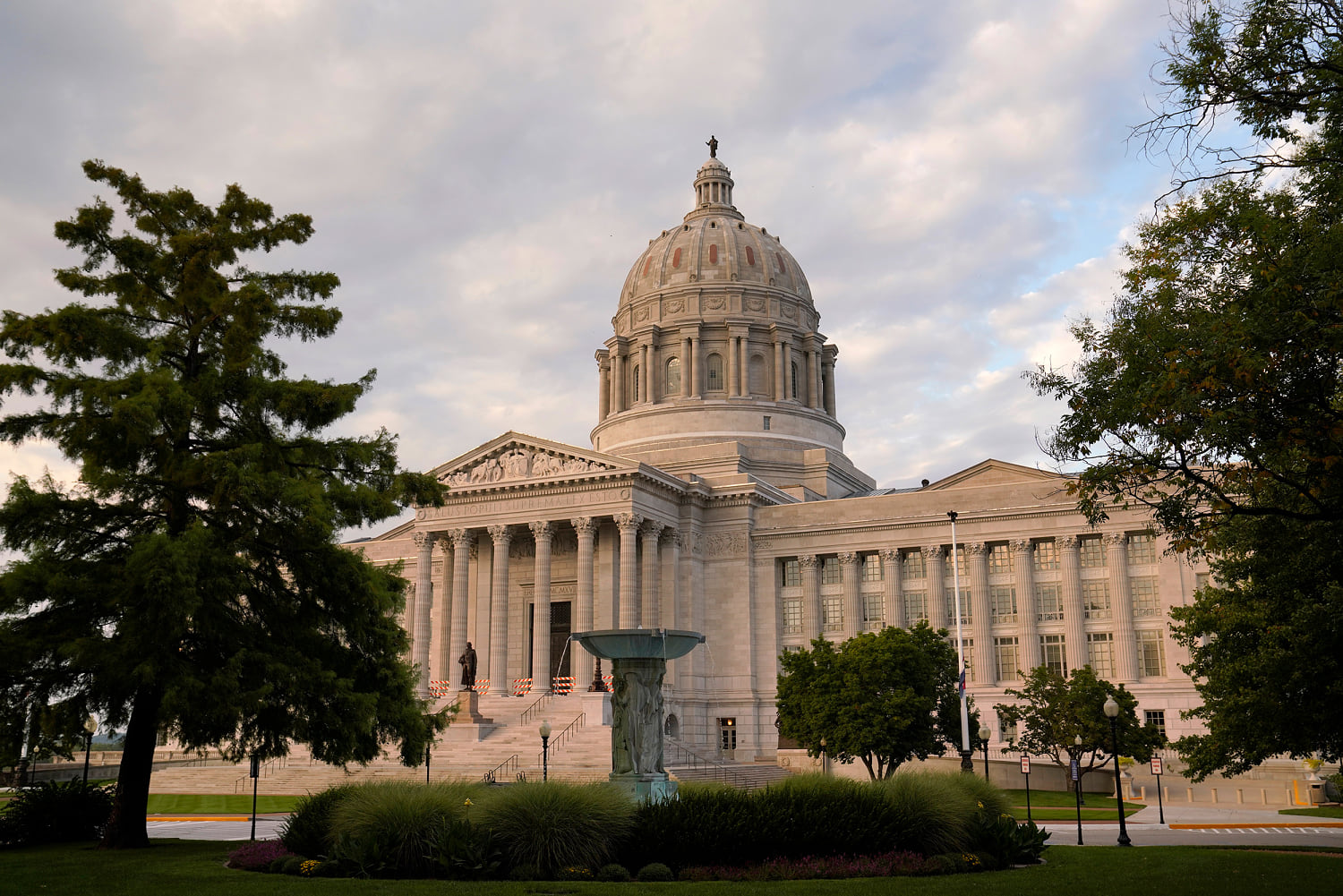
Image via NBC News
Missouri map chaos: courts just injected election risk into 2026 pricing.
Conflicting rulings have Missouri’s congressional map stuck in limbo. Republicans tried to sprint to the Supreme Court to use a new map aimed at knocking out a Democratic seat, but the legal path is now muddy and the calendar is unforgiving.
Markets don’t trade district lines day to day, but they do trade the probability distribution of post-midterm control. Every seat matters when the House is close, because committee chairs control tax, spending, defense procurement, healthcare reimbursement, and the next debt-limit script.
The bigger point: election administration risk is now a repeatable macro input. More lawsuits, more late rulings, more “who actually has power” uncertainty into Q4 and Q1. That pushes policy decisions later and increases the odds of messy fiscal negotiations.
📈 Fred's Take: This is bullish for volatility and bearish for clean policy trades. When control is uncertain, Congress does less, and the fiscal cliff edges get sharper. I’d treat election-map litigation as a slow drip higher in term premium, not a one-day headline.
📎 NBC News
Image via MarketWatch
S&P 500 at 8,000 is plausible. The setup also screams crowded.
Strategists at RBC, HSBC, and Barclays are floating S&P 500 targets around 8,000. The math isn’t crazy if earnings keep compounding and the market keeps paying up for AI-driven productivity and resilient consumer demand.
But the risks are stacking: stretched positioning, narrow leadership, and the kind of complacency you only get after a long grind higher. The market can still rally, but it becomes more fragile because any rates pop, earnings stumble, or geopolitical flare-up hits a richer multiple.
The question isn’t “can it hit 8,000.” The question is the path. If the path includes a 7 to 10 percent air pocket, that’s normal. What’s dangerous is investors thinking a pullback is impossible, then being forced sellers when it arrives.
📈 Fred's Take: I’m not fading the tape just because targets sound punchy, but I’m not buying highs without a hedge either. If you’re up big, trim the weakest winners, roll some gains into quality cash-flow names, and keep dry powder for a real pullback. The fastest way to lose money in a bull market is to ignore how leverage and crowding turn a dip into a downdraft.

Image via The Hill
Iran hits ships near Hormuz and a US base in Jordan. Energy just regained macro control.
Iran says it targeted 10 ships near the Strait of Hormuz, including two U.S. vessels and eight oil tankers, after U.S. strikes destroyed Iranian assets. The report also cites an attack on a U.S. base in Jordan. That’s escalation across two of the most market-sensitive theaters: oil transit and U.S. troop exposure.
If tanker losses are real and insurance markets tighten, the immediate transmission mechanism is higher freight, higher war-risk premia, and tighter effective supply. Even without a full choke point closure, the market prices the tail risk because you can’t replace Hormuz liquidity overnight.
Rates matter here too. A sustained crude spike is an inflation headline generator, which complicates any easing narrative. That’s how geopolitics turns into higher real yields and lower equity multiples in a hurry.
📈 Fred's Take: This is not a one-day oil pop story. It’s a regime risk story: higher energy volatility, higher inflation uncertainty, and a bid under defense. If you’re underweight energy and carry no inflation hedge, you’re relying on luck; I’d rather own a small basket of oil exposure and gold than pretend the Strait of Hormuz is a stable input.
📎 The Hill

Image via NTD
US agencies accuse China AI firms of malicious copying. Translation: the AI cold war is now a trade policy.
U.S. agencies are accusing China-based AI firms of maliciously copying American models. That’s not just an IP dispute. It’s a pretext for enforcement: export controls, procurement bans, sanctions, and pressure on cloud access and advanced compute.
Markets should read this as an acceleration of bifurcation. U.S. AI stacks get more protected domestically, but face bigger overseas friction. China pushes harder for self-sufficiency and gray-market compute. The result is duplicated capex, duplicated standards, and less global scalability.
This also hits the venture and IPO pipeline. Any company with training data, model weights, or cross-border compute links will face more diligence, more disclosure, and a higher discount rate at the margin.
📈 Fred's Take: Treat this as bullish for U.S. incumbents and bearish for anything dependent on open access and global distribution. The winners are the firms that can comply, litigate, and keep compute onshore; the losers are the “we’re just an app” AI startups that assumed the world would stay frictionless. If you want AI exposure with fewer policy landmines, own infrastructure and regulated enterprise, not the gray-zone imitators.
📎 NTD
That’s the board: geopolitics up, policy uncertainty up, and the equity tape still strong but more brittle. Trade accordingly.
— Fred Frost
