Today’s Sponsor
One warehouse robotics company is sitting on a $22.7 billion order backlog — contracts signed, revenue incoming — and its stock is down 16.6% in the past month. That disconnect is exactly the kind of setup worth paying attention to. Heading into 2026, analysts screened the entire robotics sector and found 7 stocks with compelling cases: a pure-play warehouse name with $2B cash and zero debt, a semiconductor robotics firm that nearly doubled quarterly revenue year-over-year, and a robotic surgery company placing hundreds of next-gen systems while trading 31% below its 52-week high.
Every name and the full case behind it is available in a free report — no forms, no friction. Backlogs that size take time to convert, which means the window to understand these setups is open right now. Don't wait.
Get Your Free Robotics ReportBy clicking this link you agree to receive emails from TradingTips and our affiliates. You can opt out at any time. — Privacy Policy

AI is back in the driver’s seat, crude is trading the headline tape, and the Indo-Pacific keeps adding hard power to the supply-chain map.
Image via MarketWatch
Meta’s AI moment: Muse is doing what the metaverse never could
Meta is putting up its best month in more than a decade on one simple story: the new AI assistant is sticky, visible, and monetizable. Muse is getting real uptake, and that’s enough for the tape to re-rate the whole AI capex cycle from "cost" to "investment." Investors don’t need perfect margins today; they need proof the product is pulling users and ad dollars forward.
This matters because Meta has been the poster child for "spend first, explain later." Muse flips the narrative: spend, ship, measure. If engagement holds, the next leg is pricing power in ads and paid tiers, and the multiple expands before the earnings do.
📈 Fred's Take: This is the cleanest kind of mega-cap rally: product traction plus a story institutions can underwrite. If Muse keeps DAU/retention trending, Meta becomes a "high-quality AI compounder" again, not a "capex sink." I’d rather own this than chase the 12th-best AI wrapper in small caps—liquidity and execution win in markets like this.
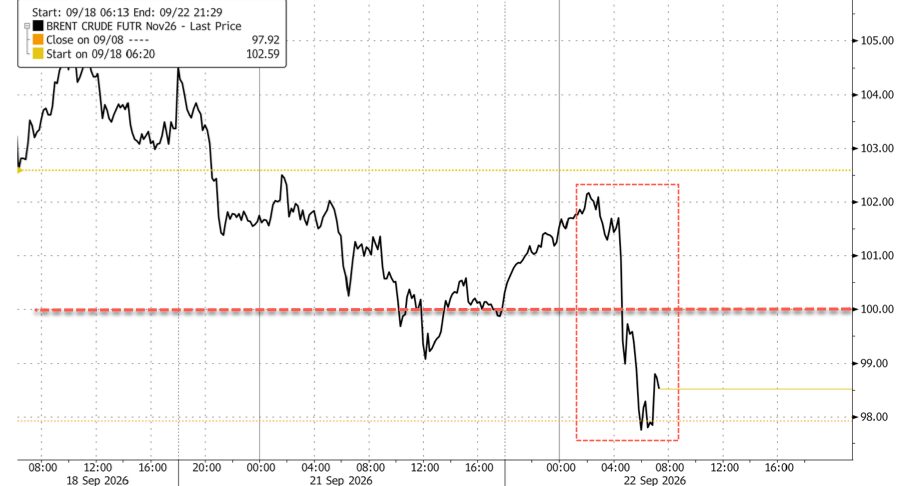
Image via ZeroHedge
Hormuz headline whiplash: crude drops, then reality checks it
Oil sold off after a report suggested Iran might offer to reopen the Strait of Hormuz, then the pushback hit fast with Iranian-linked media calling the story invalid. That’s the energy market right now: algos trade the first headline, humans read the second, and risk desks spend the morning resetting limits.
The bigger point is not whether one report was right. It’s that the market is pricing a narrow path between escalation and a negotiated de-escalation, and that path keeps shrinking as the political calendar accelerates. Volatility is the product.
📈 Fred's Take: Treat every "Hormuz reopening" headline as optionality, not a base case. If you’re short vol in energy here, you’re the liquidity for the next surprise—bad trade. I’d keep exposure via quality integrateds and defensively sized hedges, because the tail risk is still upside crude even if today’s tape says otherwise.
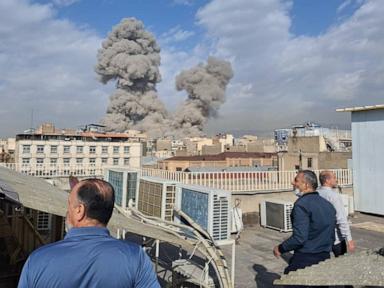
Image via ABC News
Trump goes to the UN with a war premium already in the curves
The president’s UN General Assembly address lands with the Iran conflict hanging over every bilateral meeting, especially with Gulf leaders. Markets will parse tone, red lines, and any hint of timeline—because timeline is what moves oil, rates, and defense orders. The diplomatic theater matters less than whether it signals containment or expansion.
Watch the secondary effects: higher energy feeds inflation expectations, which feeds term premium, which feeds equity multiples. That’s the chain. If the White House projects resolve without escalation, risk can breathe. If it projects escalation without an off-ramp, you’ll see it in crude first and Nasdaq second.
📈 Fred's Take: This isn’t about speeches; it’s about whether policy reduces uncertainty or compounds it. If the administration can credibly signal protection of shipping lanes and a contained posture, you’ll get a risk-on relief bid and a softer oil vol surface. If not, expect a higher-for-longer inflation impulse and a market that punishes duration—tech and unprofitable growth get hit first.
📎 ABC News

Image via Investing.com
Raymond James stays loud on Lexeo after the deal: price targets meet reality
Raymond James reiterated a Strong Buy on Lexeo after its acquisition, framing the deal as strategically positive. That’s the sell-side playbook: bless the integration, model the synergies, and keep the story clean for incremental buyers. The market will care about one thing: whether the acquisition tightens the timeline to cash flow or pushes it out.
In this tape, acquisitions get rewarded only when they de-risk the business model—distribution, reimbursement, manufacturing, or a platform that scales. If it’s just more pipeline and more burn, the equity will trade like a financing vehicle, not an innovation story.
📈 Fred's Take: Analyst reiterations don’t pay your bills—execution does. If Lexeo can show the acquisition lowers funding risk and accelerates milestones, you can justify a premium; if not, this is dead money with dilution risk hiding in the calendar. Trade it like an event-driven name, not a long-term compounder, until the integration proves itself.
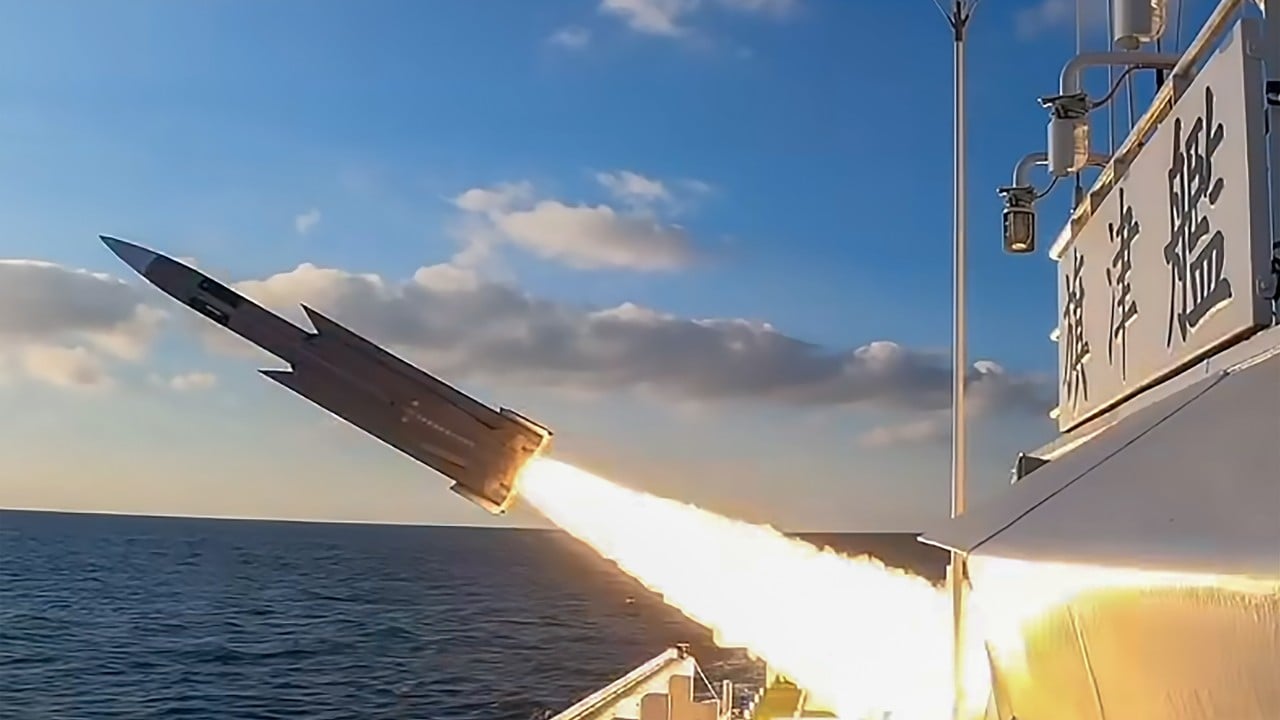
Image via South China Morning Post
Taiwan’s coast guard fires missiles: the civilian line is going military
Taiwan’s coast guard conducted a rare supersonic anti-ship missile firing during an exercise, and the subtext is obvious: roles are blending as deterrence hardens. When a law-enforcement agency starts showing anti-ship capability, it’s a signal about readiness, command integration, and how a crisis would be managed under gray-zone pressure.
For markets, this is supply chain geopolitics turning into force posture. Every incremental step raises the strategic premium embedded in semis, shipping insurance, and regional FX. It doesn’t mean conflict is imminent; it means the baseline is more militarized, and the market has to price that drift.
📈 Fred's Take: This is another reminder that "Taiwan risk" is not a headline event—it’s a structural factor. If you’re long global tech, you’re long the assumption that the Strait stays open and predictable; hedge accordingly with defense exposure, energy resilience, and selective commodity hedges. The cheapest time to buy insurance is before the exercise turns into an incident.
Trade the facts, hedge the tails, and don’t let a headline pick your position for you. — Fred Frost
— Fred Frost
