Today’s Sponsor
Gold's rally isn't over — and institutional investors know it. As economic uncertainty, rising debt, and shifting fiscal policy reshape the financial landscape, smart savers are turning to physical gold held inside tax-advantaged IRAs to protect what they've spent a lifetime building. The window isn't closed. But it won't stay open forever.
The Reagan Gold Group Wealth Protection Guide shows you exactly how physical gold can legally and tax-efficiently anchor your retirement — covering IRS-approved assets, portfolio strategies, and why experienced investors are repositioning now before markets shift further. Get the clarity you need to act with confidence.
Get Your FREE Wealth Protection GuideThis is an advertisement. Reagan Gold Group does not provide financial, legal, or tax advice. This information is for educational purposes only and should not be considered investment advice. All investments carry risk, including loss of principal. Past performance is not indicative of future results. Consult your licensed financial advisor before making investment decisions. If you no longer wish to receive this promotional message, please Unsubscribe. Or write to: 2029 Century Park E Suite 400, Los Angeles, CA 90067.

Tech leadership is back, geopolitics is re-pricing energy risk, and the bond market is daring the Fed to prove it’s still in control.

Image via MarketWatch
Magnificent Seven back on the throne — and the index is along for the ride
The mega-cap complex is acting like it remembers who runs this tape. You’re seeing synchronized strength across the usual suspects: semis, cloud, AI infrastructure, and the ad machines. Breadth still isn’t great, but leadership is clear, and leadership is what moves benchmarks.
What matters: this is not a “cute rally.” When the biggest weights re-accelerate, passive flows do the heavy lifting and every dip gets bought because everyone’s under-invested and terrified of missing year-end performance. If these names push to fresh highs, you’re not fighting a valuation debate — you’re fighting a flows-and-benchmarking problem.
Watch the tell: real rates. If 10-year real yields stabilize or slip, the long-duration trade gets oxygen and the megacaps can levitate again. If real yields lurch higher, the same crowded leadership turns into a trap fast.
📈 Fred's Take: This is the market admitting it still only trusts a handful of balance sheets and a handful of cash-flow streams. If you’re waiting for “the rest of the market” to confirm before you participate, you’ll show up after the move and own the worst risk-reward. Stay long quality growth, but stop pretending it’s diversified: hedge with rate exposure or downside protection because when these seven sneeze, the whole index catches pneumonia.

Image via Axios
Hormuz incident: U.S. blows up Iranian boats over a Navy drone — oil risk just got a heartbeat
The U.S. hit two Iranian small boats after IRGC forces tried to seize a U.S. Navy drone in the Strait of Hormuz. That’s a real-world escalation in the world’s most important choke point for crude flows. The drone detail is almost irrelevant; the location is everything.
Markets routinely shrug off Middle East headlines until shipping insurance, tanker routing, or a miscalculation makes it tangible. This one is tangible because it involves direct contact, destruction of assets, and an arena where accidents become policy.
If you see follow-on harassment or reciprocal strikes, the energy complex won’t need much excuse to reprice. The first move is usually options: vol bids in crude and product spreads, then equities catch up — XLE, refiners, and the defense names that always get the “instability premium.”
📈 Fred's Take: Energy risk premium has been too cheap, period. You don’t need a full-blown conflict to make money here — you need repeated friction in a bottleneck and a market that’s complacent on supply disruption. Own some oil convexity (calls or tight-risk structures) and don’t be short energy equities just because mega-cap tech is ripping; geopolitics can change the tape in a day.
📎 Axios
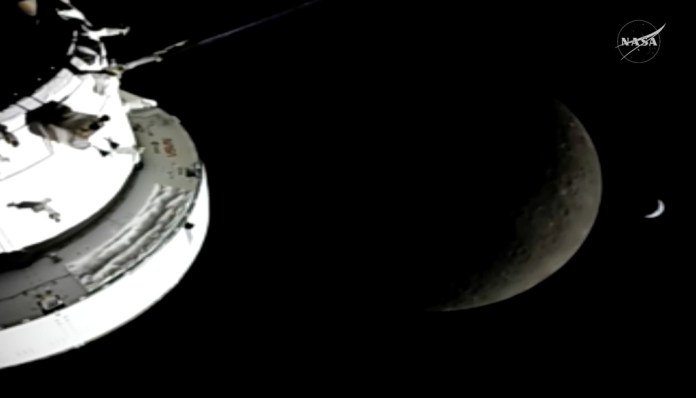
Image via Washington Examiner
Pentagon says the quiet part out loud: weapons are in space
The Air Force secretary publicly acknowledged U.S. weapons are stationed in outer space, framing it as a warfighting domain and warning Russia and China. That’s not just rhetoric; it’s an official confirmation that the deterrence ladder has moved up a rung.
Translation for investors: the defense stack is getting a new procurement runway. Space-based capabilities mean sensors, communications, command-and-control, launch, counterspace, and the software layer that ties it together. The money doesn’t just flow to primes; it flows to specialized contractors, launch providers, and the cybersecurity ecosystem that protects the network.
This also raises a geopolitical tail risk markets are not priced for: interference with satellites is the new “shock to plumbing.” Take out positioning, timing, communications, or ISR, and you can destabilize everything from logistics to financial infrastructure.
📈 Fred's Take: This is a multi-year budget tailwind with a headline catalyst: the government is signaling urgency, and urgency means checks get written. Defense and space exposure is no longer a niche theme; it’s a structural allocation, especially for anyone worried about a growth slowdown. If you want a non-tech way to own “mission-critical compute,” this is it.
Russian drones hit a train near a former CIA chief — escalation by intimidation
Reports say Russian drone strikes hit a train near a former CIA chief. Whether the target was symbolic, mistaken, or opportunistic, the message is the same: Russia’s drone campaign is normalizing strikes against infrastructure and high-profile proximity.
Markets tend to file this under “war headline, no trade” until it changes Western posture — more aid, different weapons authorizations, tighter sanctions, or higher security posture across Europe. The key transmission mechanism is not empathy; it’s policy response and energy logistics.
The drone angle matters because drones are cheap, scalable, and hard to defend against perfectly. That pushes Europe toward more air defense spend, more electronic warfare, and more domestic production — all inflationary at the margin and supportive for defense suppliers.
📈 Fred's Take: This isn’t a one-off; it’s the future of conflict: low-cost drones creating high-cost defensive requirements. The investable takeaway is persistent defense capex and continued pressure for Europe to re-arm, which is bullish for defense supply chains and selectively bullish for commodities tied to manufacturing. If you’re long Europe on a “peace dividend” fantasy, you’re long the wrong decade.
📎 Newsmax

Image via RealClearMarkets
Rate-hike talk: the bond market already wrote the script — the Fed’s just reading lines
The argument: a rate hike would merely validate what’s already priced. That’s the core truth today — front-end rates and the curve have been doing the Fed’s job in advance, and the market has treated guidance like noise.
What matters is not the hike itself, it’s whether the Fed tightens financial conditions beyond what markets have already absorbed. If the hike comes with hawkish persistence, you’ll see it in real yields and credit spreads. If it’s framed as “one and done” or “data dependent,” risk assets can actually rally on clarity.
The dirty secret: the economy doesn’t get hit by Fed statements. It gets hit by funding costs, credit availability, and the refinancing window. Watch bank lending, HY spreads, and the housing credit channel — that’s where policy becomes pain.
📈 Fred's Take: If a hike is already in the price, it’s not the headline that hurts you — it’s the dot plot and the press conference tone. The trade is simple: don’t overreact to the decision; react to real yields and credit spreads in the hours after. My base case is the market keeps forcing the Fed toward validation, not surprise, which keeps volatility tradable and keeps quality risk assets supported until something breaks in credit.
That’s the tape. Trade the flows, respect the chokepoints, and never let the Fed headline distract you from the real-yield line.
— Fred Frost
