Today’s Sponsor
Ex-Wall Street banker and CFA© Charterholder Tan Gera turned $57,000 into $1.87 million in 18 months — not by trading blind, but by reverse-engineering the same three-phase playbook BlackRock uses to manage $14 trillion. He rebuilt it for everyday investors with $50k+, and over 4,500 members are already using it in any market condition.
It's called the ABN System — designed to protect your capital when markets crash, generate income whether they rise or fall, and unlock opportunities before they go public. If you're holding digital assets right now, this framework could multiply what you're sitting on.
Copy BlackRock's $14 Trillion Playbook →*Results not typical. This email contains affiliate links. This content is for educational purposes only. The opinions expressed are from DM Intelligence LLC, doing business as Decentralized Masters, who are not licensed financial advisors or registered investment advisors. DM Intelligence LLC is not responsible for any losses, direct or indirect, resulting from the use of this information. Results vary. Success with digital currencies requires time, effort, and involves substantial risk including total loss of investment. Past performance does not indicate future results. All investments are at your own risk. Unsubscribe.

Wednesday, July 8, 2026. The tape is back to pricing geopolitics like it matters. Energy is the transmission mechanism, rates are the amplifier, and Washington can still trip over its own shoelaces on anything crypto.

Image via Axios
U.S. hits Iran near Hormuz. Markets just got an energy risk premium again.
The U.S. says it struck Iranian military targets around the Strait of Hormuz after renewed attacks on commercial vessels. That’s the chokepoint. You don’t need a history lesson to know what traders do when tankers get touched: they pay up for oil and they widen every risk spread they can find.
This isn’t just a Middle East headline. It’s an inflation headline. Crude up feeds gasoline, freight, margins, and ultimately the Fed path. And when the market has to handicap retaliation cycles, you get the classic combo: higher energy, higher uncertainty, and a risk-off tilt that punishes high-multiple growth first.
Watch the second-order moves today: energy equities bid, airlines and transports offered, and breakevens firming. If insurance rates and shipping reroute premiums stick, the “temporary” part becomes a quarter, then two.
📈 Fred's Take: This is the kind of shock that makes the soft-landing crowd look overconfident. If Hormuz risk persists, oil becomes a tax and the Fed stays tighter than stocks want. I’d treat rallies in rate-sensitive growth as sells until crude stops making higher highs. Long energy as a hedge, keep duration exposure honest, and don’t pretend geopolitics can’t move CPI.
📎 Axios
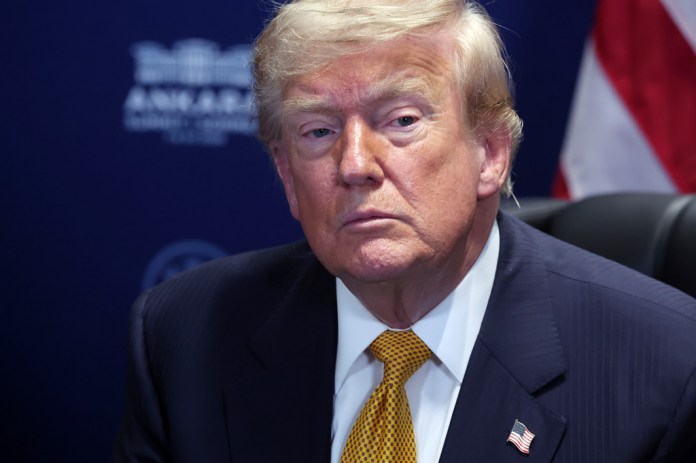
Image via Washington Examiner
Trump reopens the Greenland file. The market read: defense, minerals, and Arctic logistics.
At a NATO summit press conference with Secretary General Mark Rutte, President Trump revived talk of the U.S. acquiring Greenland. Most people will file it under spectacle. Markets don’t care about vibes. They care about what gets funded, permitted, and prioritized.
Greenland is a map-and-materials story: Arctic positioning, shipping lanes, radar and basing, and access to strategic minerals that the West keeps discovering it’s short of. Even if “acquire” is a non-starter diplomatically, the direction of travel is clear: more U.S. money into Arctic infrastructure, surveillance, and supply chain redundancy.
That means a tailwind for defense primes, satellite and ISR tech, and anything tied to critical minerals processing. It also means another flashpoint with Europe and Denmark that can complicate NATO cohesion headlines at exactly the wrong time.
📈 Fred's Take: Ignore the theatrics and follow the budget. The fastest path from this headline to P&L is higher defense and Arctic capability spend, not a real estate transaction. I want exposure to defense, space-linked contractors, and U.S.-based critical minerals processing; I don’t want to pay up for European political stability while Washington is tossing grenades into allied optics.
Oil rips, gold slips. That’s not “risk-off.” That’s positioning and rates.
Oil jumped after Trump said an Iran peace deal is “over,” while gold fell more than 1%. On the surface, that looks backwards to the classic playbook where war risk lifts gold. But the actual market is trading the inflation and rates channel, not the bunker trade.
When crude spikes, the market immediately reprices inflation risk and the probability of a less-dovish Fed. Higher real yields are kryptonite for non-yielding assets, and gold feels that fast. Add the fact that plenty of investors were already long gold as a geopolitical hedge, and you get the usual: crowded positioning meets a rates impulse and gold dumps even as headlines worsen.
The key signal today isn’t the gold tick. It’s whether long-end yields firm, breakevens climb, and the dollar catches a bid. If that happens, equities don’t get to celebrate “energy stocks up” because the index-level multiple gets squeezed.
📈 Fred's Take: Gold didn’t fail; the trade did. If oil keeps pushing inflation expectations higher, gold can go sideways or down while the market reprices real rates up. I’d rather own energy and cash-like yield than chase gold on headlines, and I’d only step back into gold aggressively if financial conditions tighten hard enough to force a genuine Fed pivot.
📎 Reuters
Image via Fox Business
Apple drops $30B on U.S. chip manufacturing. Supply chain is now strategy.
Apple says it will invest more than $30 billion in U.S. chip manufacturing, targeting production of 15 billion chips as part of a broader long-term investment plan. This is the post-2020 world: resiliency isn’t a buzzword, it’s a balance sheet line item.
For Apple, it’s about control, continuity, and politics. Domestic manufacturing checks the “national security” box, reduces single-region risk, and buys goodwill in Washington at a time when tech regulation and tariff threats can swing with a press conference.
For the market, it’s a capex signal that supports U.S. industrial activity, equipment makers, and semiconductor manufacturing ecosystems. The near-term question is margin: more domestic production can be more expensive, and Apple will either eat it, squeeze suppliers, or pass it through. Pick your poison.
📈 Fred's Take: This is Apple paying for optionality, and it’s the right move. The winners are the U.S. semiconductor manufacturing supply chain and specialty equipment names, not necessarily Apple’s gross margin line in the next couple quarters. If you’re investing, treat this as a multi-year capex and industrial policy tailwind, and don’t overreact to near-term cost noise.
Image via Zero Hedge
U.S. Bitcoin Reserve bogs down. Bureaucracy is the biggest counterparty risk.
A report says plans around a U.S. Bitcoin Reserve are stalling as Treasury and Commerce fight over control. That’s the least shocking thing in Washington: two agencies want the steering wheel, and the result is brake lights.
Markets wanted clarity: who custody-holds, who sets acquisition policy, how it interacts with sanctions, and whether it’s strategic stockpile or political trophy. Instead, we get interagency turf war. That doesn’t kill the idea, but it delays execution, increases the chance of a watered-down framework, and keeps headline volatility elevated.
For crypto, this matters because the U.S. “reserve” concept is narrative fuel. When it’s real and operational, it tightens the implied supply outlook and legitimizes custody rails. When it’s stuck, it becomes another reason for traders to fade hype rallies and focus on liquidity, not proclamations.
📈 Fred's Take: This is bullish long-term and annoying short-term. The market will keep front-running the idea, then punishing it when bureaucracy shows up, which means chop and headline whiplash. I’d own bitcoin on liquidity and adoption trends, not on Washington timelines, and I’d keep powder dry for dips created by policy delays.
Trade the facts, hedge the headlines. See you before the bell tomorrow.
— Fred Frost
