Today’s Sponsor
Successful investing starts with better research. RushTheStreet cuts through the noise to spotlight companies in AI, small-cap equities, gold & silver exploration, biotech, and high-momentum markets — sectors where timing and insight matter most.
Join a community of informed investors getting free, in-depth research on the opportunities that could matter next. Don't wait for the headlines — get ahead of them.
Get Free Investment ResearchBy clicking the link above, you agree to receive emails from rushthestreet.com. You can opt out at any time. — Privacy Policy

Five moves before the bell: oil-risk premium back on, India’s market plumbing goes public, Nvidia turns balance sheet into a weapon, telecom privacy fines stick, and crypto policy stalls in recess mud.
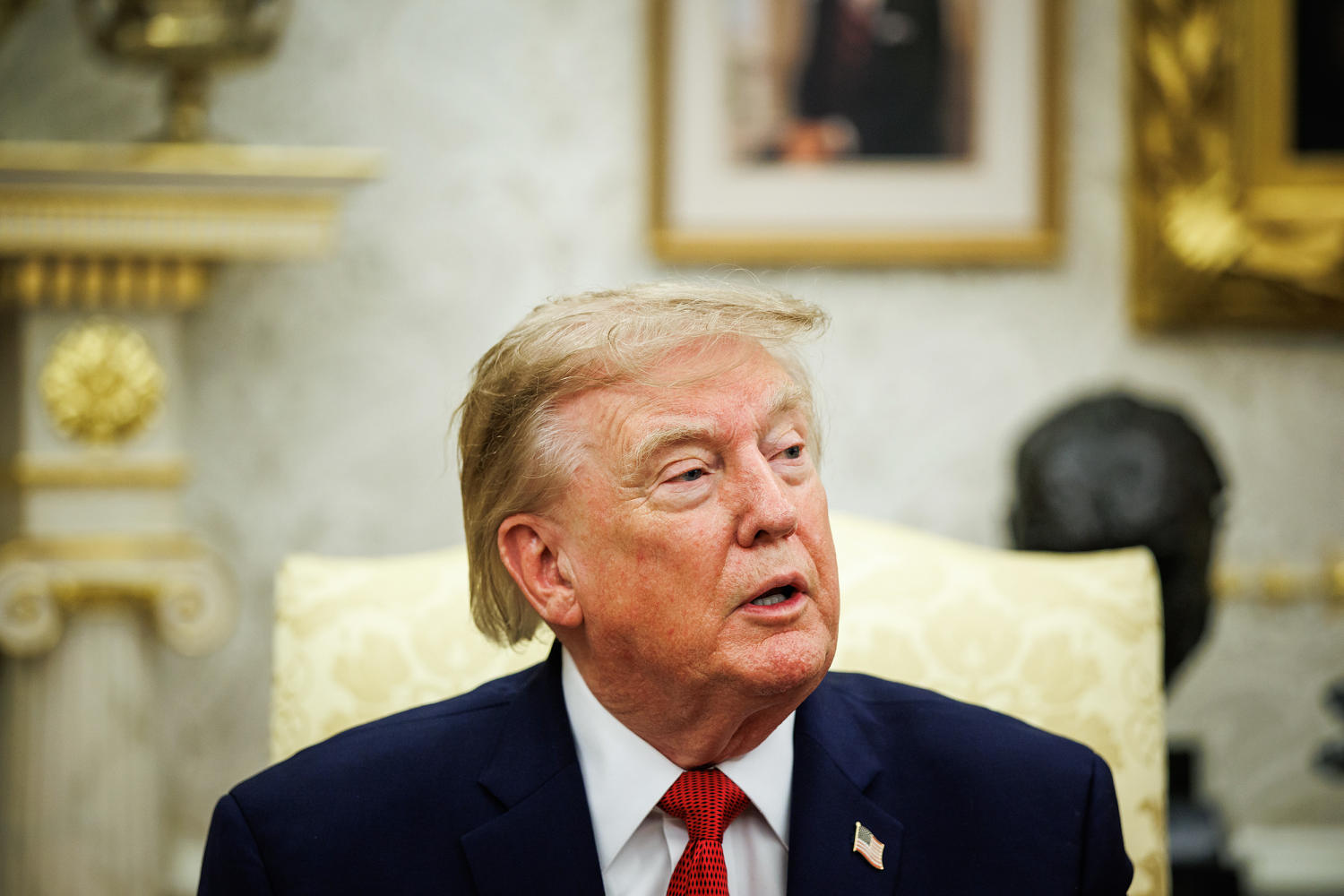
Image via NBC News
Trump Lights a Match Near Hormuz — Oil Traders Hear It First
Trump threatened to bomb Oman if it “gets in the way” of Strait of Hormuz talks with Iran, as a 60-day deadline tied to a June U.S.-Iran agreement hits the wall. Oman is usually the quiet corridor for Gulf diplomacy, which is exactly why this kind of rhetoric changes the temperature fast.
Markets don’t need missiles launched to reprice risk. They just need uncertainty around the world’s most important oil chokepoint, plus the possibility that a mediator gets dragged into the blast radius. If headlines keep escalating, expect a fatter front-end crude risk premium, a bid in defense, and a knee-jerk flight into dollars and gold while EMFX sweats.
📈 Fred's Take: This is how you get an oil spike without a supply shock: inject political volatility into Hormuz and let positioning do the rest. If you’re long equities, you want to know whether crude is rising because growth is strong or because geopolitics is breaking—this is the second kind, and it hits multiples. Keep energy exposure tactical, not romantic, and don’t ignore duration: geopolitical oil pops tend to lift inflation breakevens and punish long bonds.
📎 NBC News
India’s NSE IPO: The Exchange Becomes the Trade
India’s National Stock Exchange is heading toward a valuation around $55 billion, setting up what looks like a global queue for a rare asset: the toll booth on one of the fastest-growing equity cultures on Earth. Exchanges are a different animal—recurring revenues, operating leverage, and a structural tailwind when participation rises.
The bigger signal is geopolitical finance, not just India growth. Global allocators keep trying to diversify away from U.S. mega-cap concentration, and India is one of the few markets big enough, liquid enough, and demographically powerful enough to absorb real flows. Listing the core market infrastructure turns that macro thesis into a single, clean ticker.
📈 Fred's Take: This will get priced like scarcity, not like a boring utility—until it’s boring, and that’s when you really want it. The first trade is the hype: index front-running, local participation, foreign “India allocation” mandates. The better trade is the second act: buy it when everyone realizes exchanges are cash machines that win whether bulls or bears are in control.
Nvidia’s Next Moat Isn’t Silicon — It’s the Checkbook
Nvidia still dominates AI chips, but the moat is shifting. As competition compresses hardware advantage, Nvidia is leaning harder into capital—financing, partnerships, and investment structures that effectively pull demand forward and lock customers into its ecosystem.
That matters because AI buildouts aren’t just a technology race; they’re a balance-sheet race. If Nvidia can make it easier for customers to buy clusters, scale data centers, and standardize on its stack, it can defend share even as rival chips improve. In other words: it’s not just selling picks and shovels; it’s financing the mine.
📈 Fred's Take: This is smart, and it’s also a signal that the easy phase of chip dominance is maturing. Investors should treat Nvidia less like a pure semiconductor story and more like a platform plus capital-markets story—higher strategic leverage, but also more scrutiny on credit risk, partner concentration, and deal quality. If the market starts valuing “capital-enabled distribution” like a financial layer, expect multiple volatility even if revenue stays strong.
📎 CNBC

Image via Fox Business
Supreme Court Leaves Verizon Holding the Privacy Bag
The Supreme Court rejected Verizon’s effort to claw back a $46.9 million FCC fine tied to customer location data. The rehearing denial leaves the penalty in place and reinforces the agency’s enforcement posture in privacy-adjacent telecom cases.
This isn’t about the dollar amount; it’s about precedent and posture. Location data is radioactive, and regulators want to make sure boards treat it like toxic waste, not a monetization side hustle. The market implication is simple: higher compliance costs, tighter internal controls, and more legal tail-risk for any business that touches sensitive user data at scale.
📈 Fred's Take: Telecom is already a capital-intense, low-multiple business—regulatory headaches are not what you want layered on top. Don’t overtrade the $46.9 million, but do update your model for “privacy is a permanent line item,” not a one-off. The winners are companies that can prove governance and data discipline; everyone else pays the fine today and the valuation discount tomorrow.

Image via Roll Call
Crypto Bill Stuck in August: Lobbyists Work, Markets Wait
A crypto bill is in limbo as stakeholders crank up pressure during the congressional recess. Sen. Ruben Gallego, who backed the bill in committee, says he wants stronger protections against political self-dealing before supporting it on the floor, underscoring how much of this fight is now ethics and optics.
The policy overhang matters because markets trade clarity. Without a clean framework, big institutions keep inching in through the side doors—ETFs, custody, limited token exposure—while avoiding the full-throttle buildout that comes with legal certainty. Meanwhile, the longer it drags, the more room there is for enforcement-by-headline, which is the worst kind of regulation for risk assets.
📈 Fred's Take: Crypto doesn’t need Congress to moon, but it does need Congress to become boring—and boring is bullish because it lowers the required return. If this bill slips again, expect bursts of volatility around enforcement actions and election-cycle messaging, with Bitcoin holding up better than the long-tail. Trade the majors, keep powder dry for regulatory-driven drawdowns, and assume the real institutional wave waits for a final rulebook.
That’s the map. Trade the headlines, but price the second-order effects. Back before the bell tomorrow.
— Fred Frost
