Today’s Sponsor
The midterms are behind us — but market uncertainty isn't. Options premiums can look attractive right now, yet the obligations behind them demand equal attention. Assignment risk, capped upside, and capital requirements don't disappear just because the premium looks good.
Our free Income Strategies with Options guide breaks down the mechanics clearly — obligations beside potential income, downside mapped before any trade. The premium is visible immediately; the obligation may arrive later. Read the guide before a tempting quote becomes a costly position.
Send Me the Free ReportBy clicking this link you agree to receive emails from StockEarnings and our affiliates. You can opt out at any time. Privacy Policy.

Inflation gets a break at the pump, Treasury goes into hard-security mode, Nvidia’s China leak problem sharpens the export-control blade, Falklands oil heads to court, and House GOP chooses discipline over chaos. Last but not least, let's take 30 seconds today to honor the people who actually signed up when things got real. Thank you to all of our Veterans.

Image via Fox Business
Gas finally cracks $4. Inflation math just got easier.
AAA has the national average gas price slipping under $4 for the first time since July. Winter blend and weaker demand are doing the work. That is not a structural energy miracle. It is a seasonal pressure release valve.
Markets care because gasoline is the most visible inflation print in America. Lower pump prices bleed into near-term inflation expectations, consumer sentiment, and the odds the Fed can stay patient instead of getting dragged back into hiking theater. If crude stays rangebound and refiner margins don’t spike, the next CPI/PCE narrative gets less toxic fast.
📈 Fred's Take: This is a small win with outsized psychological impact. Softer gasoline is a direct tailwind for discretionary spending and a quiet bid for rate-sensitive equities because it takes heat off the front end of the curve. Don’t chase energy shorts on this alone: one refinery outage or a Middle East headline and the pump reverses in a week.
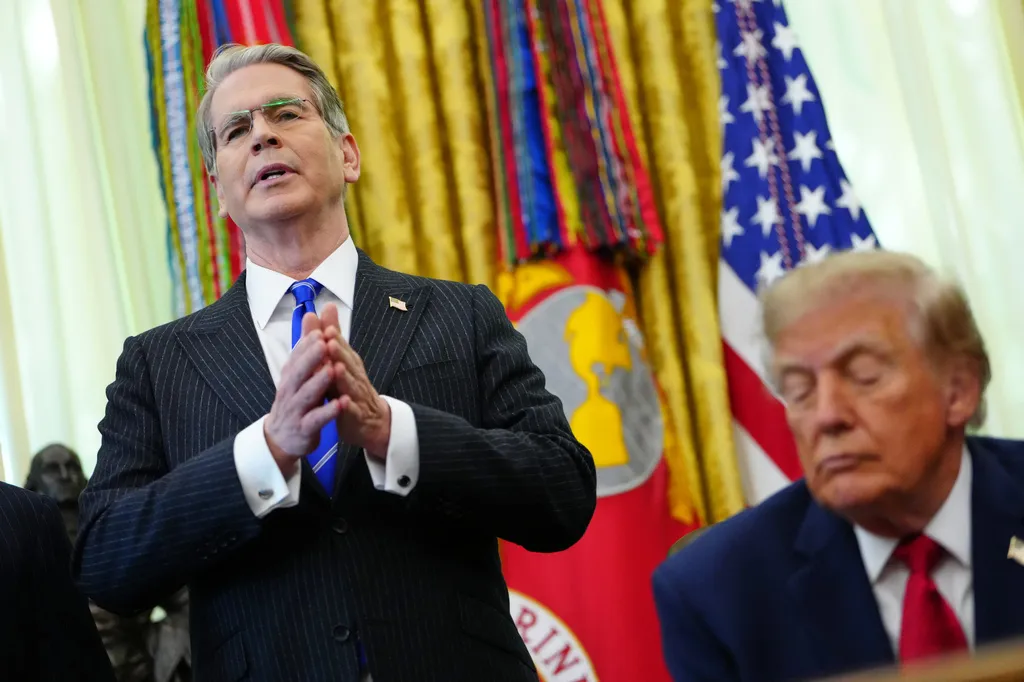
Image via Washington Examiner
Treasury goes bunker-mode. That’s not a headline you ignore.
Treasury Secretary Scott Bessent reportedly moved onto a military base after U.S. officials received an advance Iranian assassination threat. That is an escalation in posture, even if no shots are fired. When senior economic officials harden security, it signals the threat stream is credible enough to disrupt normal operations.
The market channel is risk premium. You don’t need war for volatility to reprice; you just need uncertainty around sanctions, shipping lanes, retaliation, cyber risk, and the continuity of decision-making in Washington. Expect defense names to stay bid, crude to keep a geopolitical floor, and Treasurys to catch intermittent safety flows even on days when the data says yields should rise.
📈 Fred's Take: If you’re long risk, treat this like a volatility regime warning, not a one-day news blip. The base case is still contained, but the tail risk just got fatter, which means options are too cheap if you’re running naked exposure. This also increases the odds of more sanctions and more financial-friction headlines, which historically helps the dollar and hurts emerging-market beta.

Image via National Review
Nvidia’s China problem is now a policy accelerant.
A new warning shot: the alleged efforts by Chinese actors to get hold of restricted U.S. tech is being framed as proof that selling advanced chips into China is strategically naïve. The thrust is simple: if they’re trying that hard to obtain it, the product is too important to ship.
For investors, this is about the policy path, not the moral argument. The next move is tighter export controls, heavier compliance burdens, and more scrutiny on gray-market diversion through third countries. That hits top-line China exposure, raises operating costs, and increases the probability of sudden guidance cuts when rules change mid-quarter.
📈 Fred's Take: The market is still pricing AI like demand is the only variable. It isn’t. Policy is the second factor, and it can kneecap revenue faster than any cyclical slowdown. Own the winners, but stop pretending the multiple should ignore geopolitical throughput risk; you hedge this with position sizing, not hope.

Image via ZeroHedge
Falklands oil goes to tribunal. Energy risk premium isn’t just Middle East.
Tribunal hearings have begun in the UK-Argentina dispute over a Falklands-linked oil project. This is old sovereignty friction colliding with new resource stakes, and legal process is now the battlefield. The project timeline and ownership economics are what’s actually on trial.
Markets won’t price this like a global supply shock, but it matters at the margin for offshore development risk, partner selection, and the cost of capital for frontier projects. Any signal that contracts can be politically rerated years later raises the hurdle rate for similar assets and pushes investors toward lower-risk basins.
📈 Fred's Take: This is a reminder that barrels in the ground are not barrels on the tape until the political risk clears. It won’t move Brent by itself, but it supports the broader thesis that long-cycle supply is structurally harder to bring on. That’s a medium-term tailwind for quality producers and a headwind for anyone underwriting frontier projects with cheap financing assumptions.

Image via Daily Caller
House GOP smothers the Hegseth impeachment push. Markets prefer boring.
House Republicans blocked Rep. Thomas Massie’s attempt to impeach Defense Secretary Pete Hegseth. Whatever your politics, the practical outcome is party leadership choosing containment over internal spectacle. Washington picked process over pyrotechnics.
Defense is a flow business: budgets, contracts, and continuity. Leadership chaos in the Pentagon invites procurement delays, headline risk, and opportunistic amendments that gum up authorization. By tabling this, Congress reduces near-term noise around defense governance, even if the underlying factionalism doesn’t disappear.
📈 Fred's Take: This is the kind of boring that markets pay for. Less impeachment drama means fewer surprises in NDAA negotiations and less headline volatility for primes and their suppliers. Don’t overtrade it, but if you’re long defense, you’d rather have bureaucratic continuity than a soap opera.
That’s the tape: softer inflation at the pump, harder edges in geopolitics, and policy risk creeping deeper into AI. Trade what matters, hedge what you can’t control. Fred Frost, Morning Bullets
— Fred Frost

