Today’s Sponsor
Trump's Department of Labor just proposed allowing physical gold inside 401(k)s — and if approved, millions of Americans could gain access by 2027. BlackRock is already launching new gold funds. JP Morgan forecasts gold hitting $6,000/oz. And gold has already surged 64% in 2025 — before this policy even officially dropped.
If you're over 59½, there's a legal, IRS-approved strategy to move part of your 401(k) or IRA into physical gold right now — tax-deferred and penalty-free. A free guide called "Retirement to Gold" breaks down exactly how to do it before everyone else catches on.
Get the Free Guide NowThis is an advertisement. If you no longer wish to receive promotional messages from Secco Squared, please unsubscribe here. Or write to: 351 Paseo Nuevo, Floor 2, Santa Barbara, CA, US 93101.

Friday, October 23, 2026. Politics moved energy and industrials overnight while AI cracked, Europe sweated ratings risk, and trade policy rewired autos.
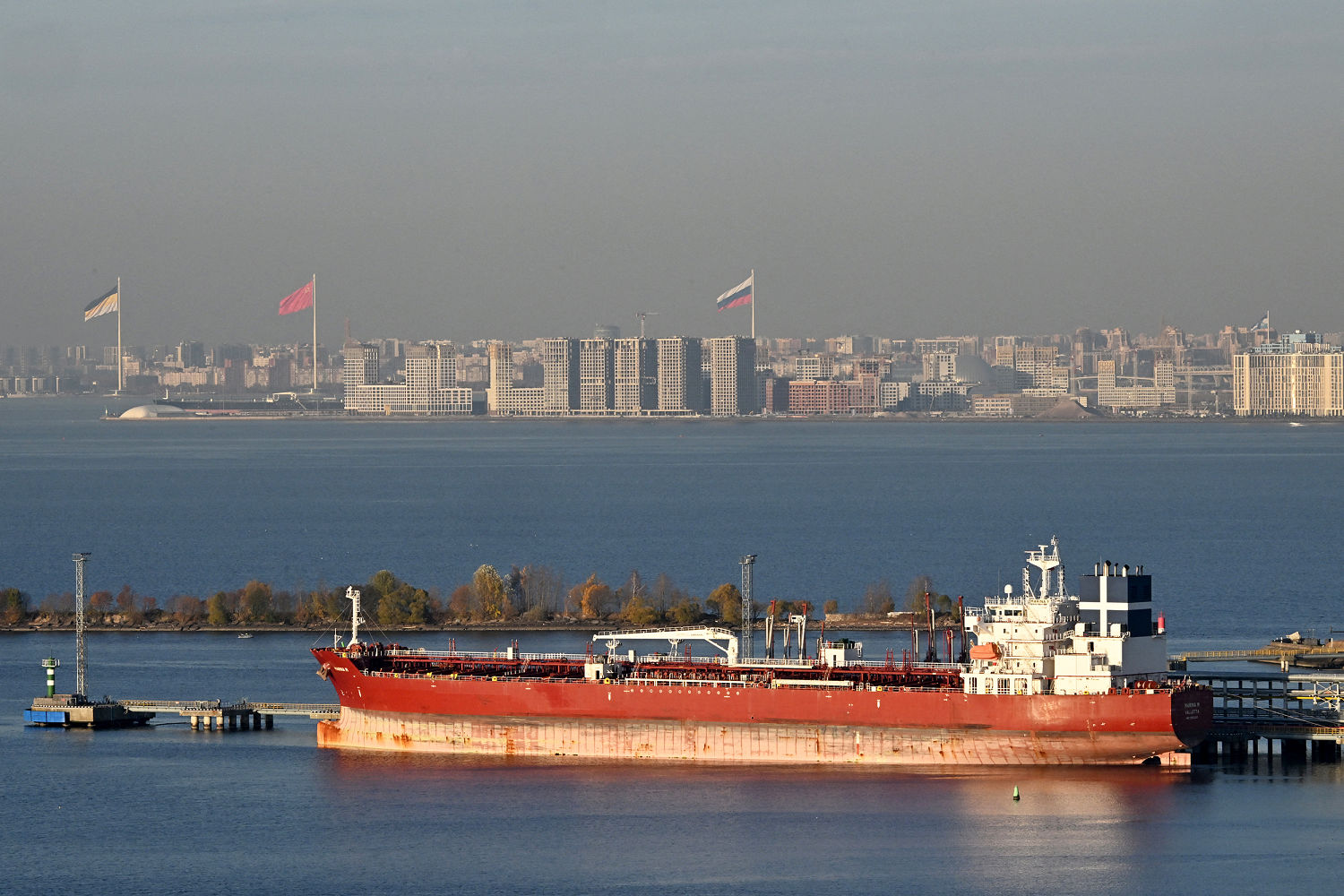
Image via NBC News
Russian Diesel Hits the Tape: First U.S.-Bound Cargo Since Trump-Putin Deal
A Russian diesel tanker sailed for the United States Friday, the first such shipment since President Trump cut a deal with President Putin tied to the Ukraine war. Whatever the diplomatic wrapping, the market read is simple: molecules are flowing again, and traders will front-run any sign sanctions enforcement is getting “selective.”
Diesel is the bloodstream of the real economy. If Russian barrels start showing up on the U.S. coast, it eases near-term distillate tightness and takes a little air out of the refining margin story that’s been carrying parts of the energy complex. But it also telegraphs something bigger: policy is turning from punitive to transactional, and that means energy volatility becomes policy-driven again, not purely supply-driven.
Watch the knock-ons: regional cracks, freight rates, and the bid in inflation hedges. Distillates are a CPI accelerant when they spike, and Washington knows it.
📈 Fred's Take: This is not “cheap diesel,” it’s a regime signal. If imports normalize even a little, distillate cracks soften, refiners stop being the easy long, and breakeven inflation stops running away at the margin. The real trade is volatility: once energy flows depend on presidential phone calls, you buy optionality, not narratives.
📎 NBC News

Image via Fox Business
Bombardier Brings a Checkbook: $270M U.S. Expansion Gets the Trump Seal
Bombardier says it’s expanding its U.S. footprint under a $270 million investment plan that the White House is touting as a win for jobs and manufacturing. The company is leaning into the American market where procurement, defense adjacency, and business aviation demand have stayed resilient even as commercial cycles wobble.
This is the corporate version of reading the political weather correctly. Industrial policy is back, “Made in America” rules are sticky, and the fastest way to de-risk cross-border friction is to put capex inside the fence. For markets, it’s another reminder that the winners of this cycle aren’t just software companies; it’s firms that can align supply chains with policy and still ship product on time.
Also: business jets are a high-end confidence indicator. When corporate travel budgets don’t flinch, the recession calls get quieter.
📈 Fred's Take: This is smart positioning, not patriot theater. The U.S. is effectively selling regulatory certainty and procurement access, and Bombardier is buying it. If you’re investing in industrials, follow the capex migrating into the U.S. and Mexico corridor, because that’s where policy is underwriting margins.
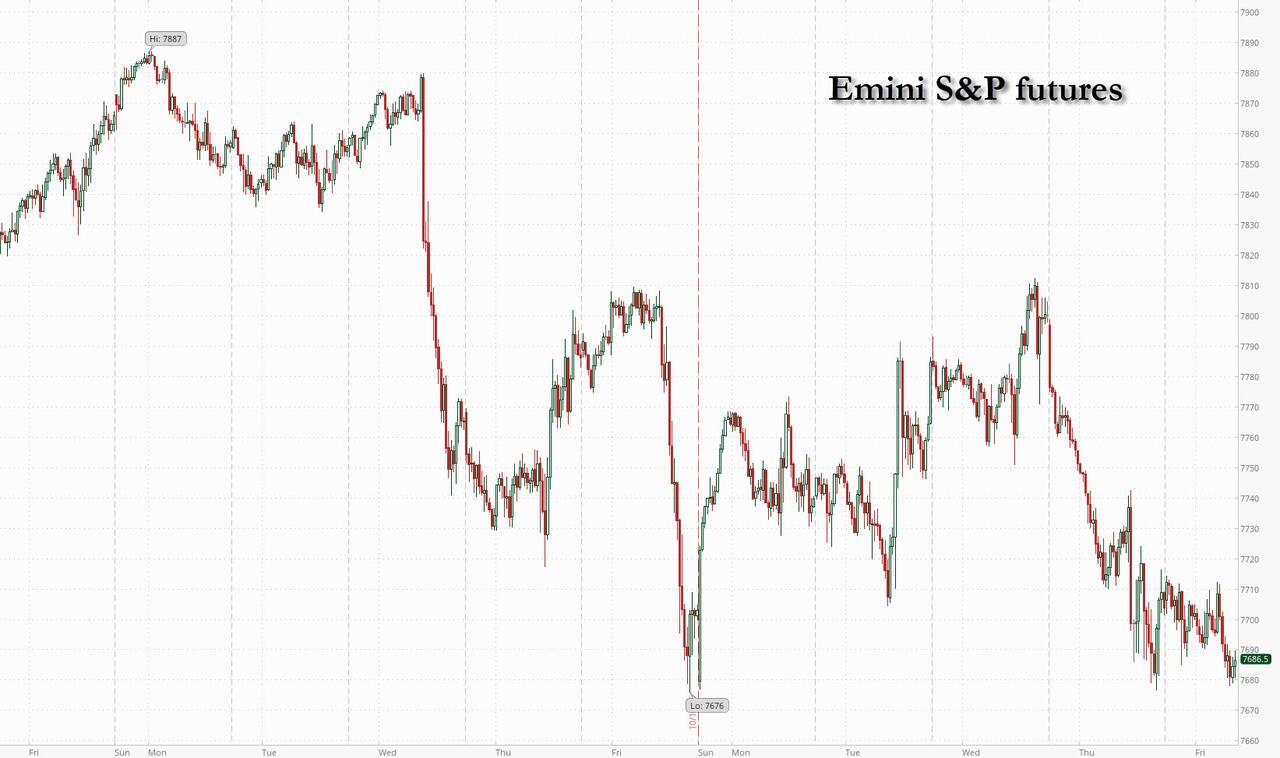
Image via ZeroHedge
AI Gets Its Face Ripped Off, Brent at $114, and France Stares at Moody’s
Futures wobbled after an AI-led selloff, with risk trying to stabilize while energy kept screaming higher. Brent pushing $114 is the kind of price that turns “soft landing” into “sticky inflation” in a hurry, and markets are suddenly forced to care about inputs again instead of just earnings multiples.
Europe is its own problem set: France bracing for Moody’s is a reminder that sovereign risk didn’t die, it just went quiet while everyone chased the next AI ticker. A ratings scare doesn’t need a downgrade to hurt; it just needs to widen spreads, tighten financial conditions, and bully the ECB into a harder tradeoff.
The cross-asset message is messy but tradable: expensive energy, fragile tech leadership, and renewed attention to public finances.
📈 Fred's Take: When AI is the marginal buyer and it steps back, liquidity vanishes fast. With Brent at $114, the Fed can’t pretend inflation is yesterday’s problem, so duration is not your friend on rallies. If France spreads start to move, Europe becomes a volatility exporter and the “buy every dip” crowd in U.S. growth is going to learn what correlation feels like.

Image via RealClearMarkets
California’s High-Speed Rail: The Paperwork Is the Product
A deep dive into California’s high-speed rail points to a familiar pattern: big promises, bigger budgets, and a project structure that rewards process over progress. Voters approved funding years ago for a San Francisco-to-Los Angeles line, but what’s grown fastest is not track laid or riders served; it’s the ecosystem of consultants, compliance, and administrative churn.
Markets don’t trade feelings about trains, they trade cash flows and credibility. When states normalize mega-projects that behave like permanent cost centers, muni investors should widen their lens from headline debt metrics to governance risk, cost-overrun probability, and the political incentives that prevent cancellation.
If you want to know why “infrastructure week” rarely delivers, start here: incentives beat intentions every time.
📈 Fred's Take: This is why I discount public-infrastructure optimism in economic forecasts. The spend happens, the productivity boost doesn’t, and the financing tail risk sticks to taxpayers and muni holders. If you own long-dated California paper, you’re not just underwriting tax receipts; you’re underwriting management competence.

Image via South China Morning Post
France Says EU Unity Forced China’s Hand on Hybrids
France claims a united front with Germany helped push China into a deal moderating hybrid car exports, framing it as a payoff from tougher EU posture. The subtext is industrial defense: Europe is trying to slow the import wave long enough for its own automakers and supply chains to stay alive through the transition.
China’s warning shots matter because autos are now geopolitics with a VIN number. Hybrids are a pressure point: they’re consumer-friendly, margin-relevant, and a bridge technology that can steal share without requiring a full EV infrastructure leap. If Europe can manage volumes via policy, it buys time; if it can’t, it risks plant closures and political blowback.
For investors, this is trade policy becoming a direct input to earnings models. Tariffs, quotas, and “voluntary” export restraints are back in the toolkit.
📈 Fred's Take: Europe just admitted the strategy: coordinated pressure to reshape Chinese export behavior. That’s bullish for European legacy auto margins near-term if enforcement holds, but it’s also inflationary and invites retaliation in other categories. Treat autos and battery supply chains like defense stocks now: policy risk is the dominant factor, not just demand curves.
That’s the board. Manage risk first, then hunt setups when the tape stops shaking.
— Fred Frost
