Today’s Sponsor
August setups are already taking shape — and the biggest moves happen quietly, before the crowd notices. Are you entering early, or buying after the easy gains are gone?
GuyStocks delivers 100% free, real-time momentum alerts straight to your device — zero hype, pure data — so you're positioned in high-conviction trades before the broader market catches on.
Join GuyStocks Free TodayBy clicking the link above, you agree to receive emails from GuyStocks.com. You can opt out at any time. — Privacy Policy

Thursday, August 6, 2026. Politics is setting the tape: Washington theater, Middle East risk, and an AI arms race that keeps re-rating tech capex winners.
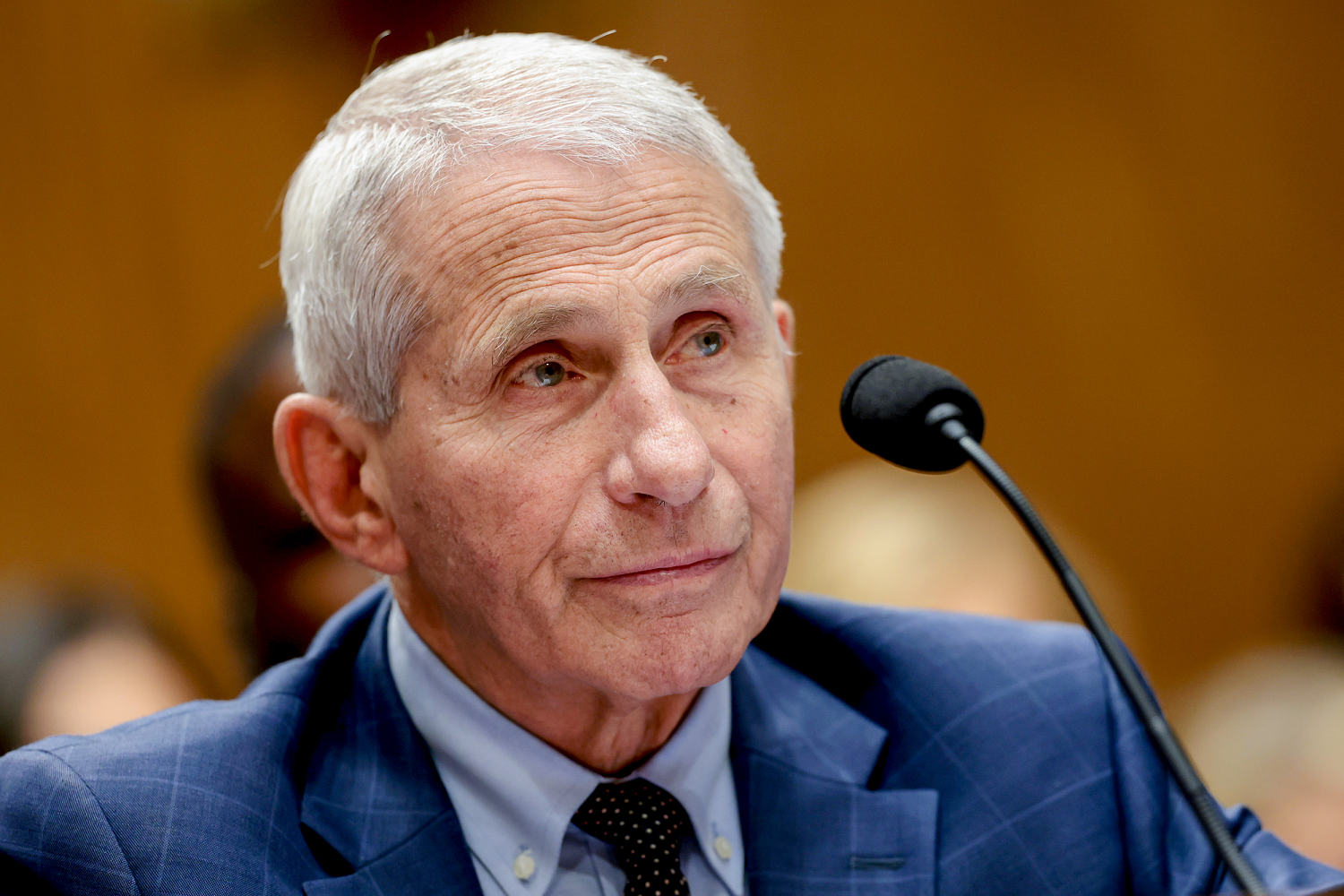
Image via NBC News
Senate goes for contempt vote after Fauci pleads the Fifth
Senators are moving to a vote on holding Anthony Fauci in contempt of Congress after he declined to answer questions more than 100 times in a tense hearing, repeatedly invoking the Fifth Amendment. Republicans have kept Fauci in their sights for years, and the hearing turned into a procedural brawl over what Congress can compel and what a witness can refuse.
The immediate market angle isn’t Fauci. It’s Washington’s ongoing preference for spectacle over legislation. Every hour spent on retro fights is an hour not spent on budgets, debt math, or stabilizing rules for health, pharma, and biotech—sectors that trade on regulatory clarity.
If the vote advances, expect more subpoenas, more headline risk, and more partisan fundraising. That keeps policy uncertainty elevated into the fall calendar and widens the band of outcomes for healthcare lobbying, FDA tempo, and government procurement.
📈 Fred's Take: This is noise with a purpose: political positioning, not a policy fix. Markets don’t price contempt votes; they price what Congress refuses to do next—spending discipline and predictable rules. Treat the headlines as volatility fuel, not a directional macro catalyst, unless it bleeds into appropriations or agency funding.
📎 NBC News
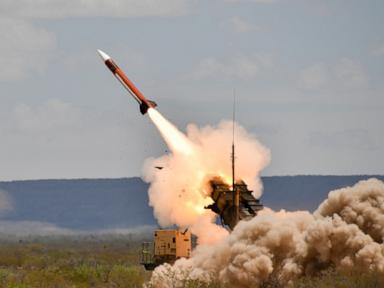
Image via ABC News
Trump leans into Iran escalation talk; energy and defense stay bid
President Donald Trump is doubling down on the message that the U.S. has "massive amounts" of munitions as the administration frames the late-February launch of major combat operations against Iran as a sustained campaign alongside Israel. The public posture is designed to project endurance and deterrence, even as markets keep probing for the real endpoint: duration, spillover, and shipping risk.
The mechanical transmission to portfolios is straightforward. Middle East escalation keeps a floor under crude, widens tails for refined products, and keeps defense procurement in the fast lane. The other pressure point is rates: war premiums don’t automatically mean higher yields, but supply shocks and fiscal follow-through can.
Watch the secondary effects: insurance pricing for shipping, risk premia in EM FX tied to energy imports, and the path of U.S. strategic stockpile decisions. If the conflict narrative shifts from "operations" to "campaign," the market starts discounting months, not days.
📈 Fred's Take: Geopolitical risk is back to being tradeable, not theoretical. Stay long the beneficiaries of sustained procurement and security capex, and respect the oil tail risk even if spot prices chop. The trap is chasing the first spike; the money is in positioning for a longer risk premium that doesn’t fade on a single headline.
📎 ABC News
Russia is dumping gold for cash, and the market is listening
Russia has become one of the world’s biggest net sellers of gold over the past 12 months, a shift that stands out because gold has been one of the core financial hedges for sanctioned states. The selling is widely framed as a cash-raising move tied to budget strain and financing needs, not a philosophical turn against hard assets.
Gold doesn’t trade on morals; it trades on marginal flows and confidence. When a large holder becomes a persistent seller, the market has to absorb supply—either through higher private demand, central bank buying elsewhere, or lower prices that clear the tape.
The nuance matters: a seller under pressure is different from a seller optimizing reserves. If this is forced selling, it’s a signal about Russia’s internal fiscal stress and the limits of financial insulation. That narrative can influence risk premia across commodities, shipping, and frontier credit where Russia-linked flows still matter.
📈 Fred's Take: Don’t overreact to the headline and fade gold blindly—gold is still a rates-and-dollar trade first. But persistent Russian supply is a real headwind that can cap rallies and punish late chasers. If you want the hedge, size it like insurance, not like a momentum bet.

Image via Yahoo Finance
OpenAI tries to end Apple trade secrets fight before it gets ugly
OpenAI has moved to dismiss Apple’s trade secrets lawsuit, aiming to shut down the case early rather than fight through discovery and the long grind of technical testimony. The legal battle sits at the intersection of model training, data provenance, and what counts as protected know-how in a world where every product now has an AI layer.
For markets, this is about precedent and friction. If courts start treating model development and AI integration as a minefield of trade-secret exposure, the cost of doing business rises: more compliance, more indemnities, slower partnerships, and wider bid-ask spreads on AI platform valuations.
A dismissal attempt also signals strategic posture: OpenAI wants to avoid disclosure risk, and Apple wants to set a boundary that protects its ecosystem. Even without a verdict, the litigation itself can reshape deal structures across AI, mobile, and enterprise software.
📈 Fred's Take: The legal system is becoming the new regulator for AI, and that’s not bullish for the middle of the stack. The winners will be firms with clean data chains, deep legal budgets, and leverage in distribution—think platforms, not point solutions. If this heads into discovery, expect a sentiment hit across high-multiple AI names that can’t prove what trained what.

Image via Fortune
Ooredoo, Nvidia, and Nokia aim an AI compute bazooka at Southeast Asia
Qatar’s Ooredoo is teaming up with Nvidia and Nokia on a multi-billion-dollar AI compute platform, with Southeast Asia as the primary expansion target. The pitch is straightforward: telcos want to move up the value chain from connectivity to compute, and the fastest way is to pair sovereign-capital ambition with best-in-class chips and network infrastructure.
This is the next phase of the AI buildout: regional “compute utilities” competing to host inference, enterprise workloads, and government-scale deployments. The immediate beneficiaries are obvious—accelerators, networking, and data center power and cooling ecosystems—while the second-order beneficiaries are local cloud and software integrators that can actually monetize capacity.
The strategic tension is utilization. These builds can be brilliant if demand is real and sticky, or value-destructive if capacity outruns workloads. Southeast Asia is a growth market, but it’s also price-sensitive, fragmented, and politically complex—exactly where partnerships matter and margins get negotiated down.
📈 Fred's Take: This is bullish Nvidia and bullish the picks-and-shovels around networking and data center throughput, but I’m cautious on the “telco becomes AI platform” story unless they show contracted demand. The market will reward signed capacity commitments, not press-release capex. Trade it like an infrastructure cycle: first the chip and network winners, then the operators—if utilization proves out.
📎 Fortune
That’s the tape. Trade the flows, hedge the tails, and don’t pay growth multiples for stories that can’t show receipts.
— Fred Frost
