Today’s Sponsor
Policy is already moving markets in 2026 — trade enforcement, regulatory shifts, and tax positioning are redirecting capital right now. Institutions reposition before the headlines catch up, and the window to act early is closing fast.
Our analysts identified 5 stocks showing real momentum tied directly to current administration policy themes — including the sectors benefiting most from domestic investment trends and regulatory tailwinds. Don't get left behind.
Get the Free Report Now(By following any of the links above, you're choosing to opt in to receive insightful updates from The Investment News Daily + 2 free bonus subscriptions! Your privacy is important to us. You can unsubscribe anytime. See our privacy policy for details.)

Monday, July 6, 2026: EV demand is back, the White House is marketing financial products, UK turns the sanctions screw, macro is back on deck, and a European courtroom is taking swings at U.S. energy security.

Image via Bloomberg
Tesla + BYD Catch a Tailwind: EV Summer Is Real Again
EV sales are climbing across multiple global markets, and the leaders are doing what leaders do: taking share while the laggards argue about incentives and charging maps. Tesla and BYD are benefiting from a cleaner demand backdrop, better product cadence, and improving affordability as pricing normalizes after last year’s discount wars.
The market piece matters more than the headline: breadth. When EV demand is rising in more than one region at the same time, it stops being a one-country policy story and becomes an industrial cycle. That drags batteries, copper, grid spend, and autos supply chains along with it.
Watch the second-order effects: stronger EV demand tightens the market for key inputs and pulls capex forward. That’s good for select miners and battery materials, good for Chinese exporters, and not great for legacy automakers still carrying high-cost ICE capacity and union cost structures.
📈 Fred's Take: If EV volume is broadening globally, you buy the winners and you stop pretending the middle is investable. Tesla and BYD are the operating leverage trade; everyone else is a margin story waiting to disappoint. This is also quietly inflationary at the commodity margin—copper and power infrastructure don’t get cheaper when adoption accelerates.
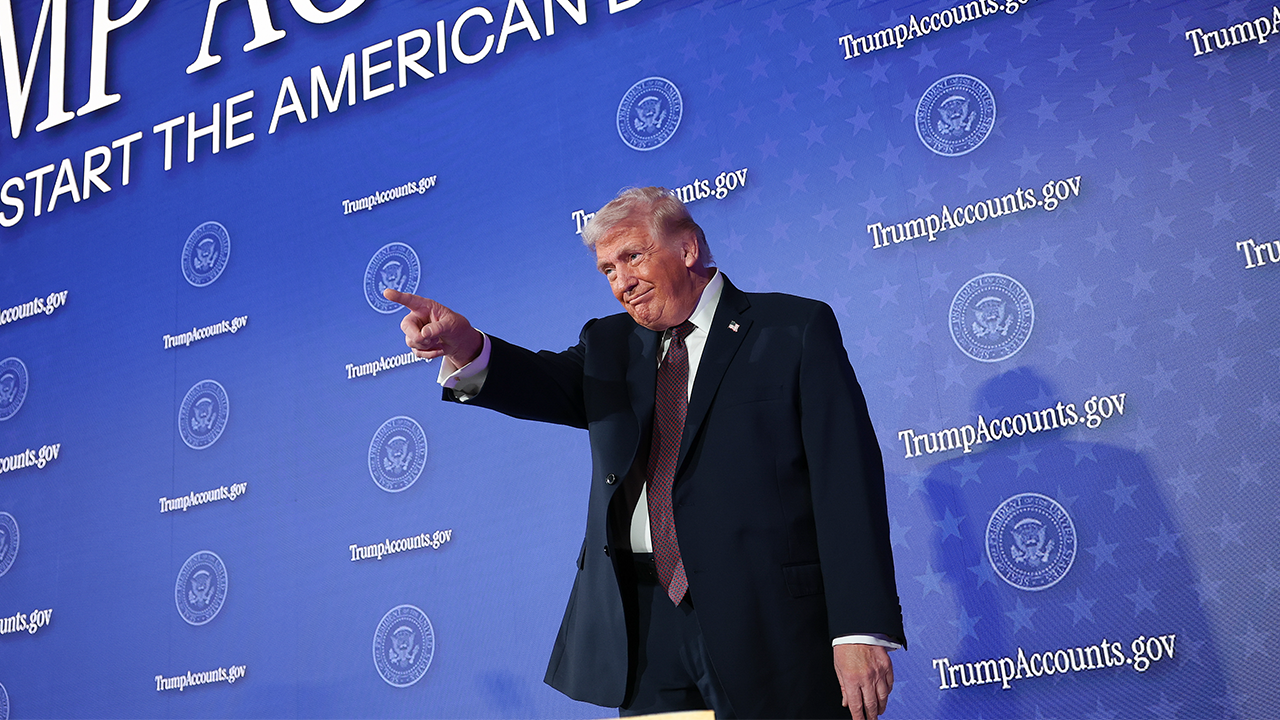
Image via Fox Business
Trump Rings NYSE + Nasdaq Bells From the White House: Welcome to Politicized Retail Finance
President Trump marked the launch of “Trump Accounts” by ringing the opening bells for both the NYSE and Nasdaq from the White House. It’s a visual: the presidency as a capital-markets platform, retail money as a constituency, and markets as a daily scoreboard.
Set aside the theater and focus on what it signals. This is an administration leaning into asset prices as a policy outcome, not just a byproduct. When politicians publicly celebrate equity benchmarks, you should assume they will resist anything that risks a drawdown—and they’ll pressure agencies to keep the mood upbeat.
The market implication is a familiar one: moral hazard. If retail is being pulled harder into markets under a political banner, volatility becomes a headline risk, and headline risk becomes policy risk. That feedback loop tends to favor liquidity, megacaps, and anything that can ride momentum without needing perfect fundamentals.
📈 Fred's Take: This is an explicit “wealth effect” strategy dressed up as branding. It’s bullish near-term for risk because it telegraphs a low tolerance for market pain, but it’s bearish for long-term credibility because it politicizes outcomes that should stay boring. Trade it like a put is being hinted at—but remember: political puts expire fast when inflation reappears.
Image via AP News
UK Sanctions Russian Chemical Weapons Network: Geopolitics Keeps a Bid Under Energy + Defense
The UK announced sanctions targeting Russian labs and individuals connected to chemical weapons linked to the Navalny and Skripal poisonings. It’s part accountability, part deterrence, and part message to allies: London is staying engaged in the hard-power lane.
Sanctions aren’t just diplomacy—they are supply-chain friction. Every new layer increases transaction costs, insurance costs, compliance costs, and the odds of retaliation in less predictable arenas (cyber, shipping, gray-market energy flows). Markets don’t price morality; they price disruption.
The UK also showcased operational posture with carrier strike activity intercepting a Russian aircraft. That matters because investors are watching whether Europe’s defense posture is permanent capex or temporary politics. Permanent capex supports a higher floor under defense budgets and a longer runway for the primes.
📈 Fred's Take: More sanctions equals more friction, and friction is inflationary at the edges. The clean trade is still long selective defense and long energy optionality, not because you want a crisis, but because the world keeps buying them. If you’re running a portfolio pretending geopolitics is over, you’re underwriting tail risk for free.
📎 AP News
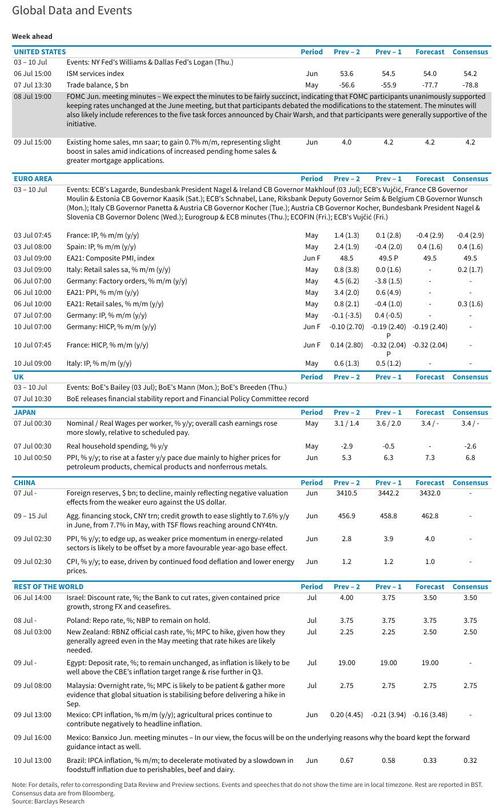
Image via ZeroHedge
This Week’s Macro Ammo: ISM, FOMC Minutes, and a Fed Speaker Parade
The calendar isn’t empty just because payrolls are behind us. We’ve got ISM data, FOMC minutes, and a steady rotation of Fed speakers—the classic recipe for intraday whipsaws and narrative-chasing.
ISM is the tell on growth momentum at the margin: new orders, prices paid, and employment components are what matter for rates, not the headline. Then the minutes: markets will hunt for any hint the committee is more worried about inflation persistence or growth fragility. Speakers will try to guide expectations without committing—which usually means they add noise.
Positioning matters here. When markets are leaning one way, the first data point that challenges the consensus doesn’t just move yields; it moves the whole risk stack—equities duration, credit spreads, crypto beta, and gold’s opportunity cost.
📈 Fred's Take: This is a rates week wearing a “quiet week” mask. If ISM prices re-accelerate, duration gets smoked and high-multiple equities feel it first; if growth cracks, you’ll see the bid go straight into front-end rate cuts, defensives, and quality balance sheets. Trade smaller, wait for confirmation, and don’t marry the first headline out of a Fed mic.

Image via National Review
Dutch Courtroom, American Consequence: A Lawsuit That Can Hit U.S. Energy Security
A Dutch lawsuit is being framed as a climate/legal challenge, but the real risk is strategic: it could constrain energy infrastructure decisions and investment pathways that the U.S. and its allies rely on for stable supply. When courts, not markets or elected officials, start setting de facto energy policy, capital gets timid fast.
Energy security isn’t a slogan—it’s redundancy, storage, shipping, and the ability to surge supply when the world breaks. Legal uncertainty in one jurisdiction can ripple through financing, insurance, and corporate governance across the West. Boards hate open-ended liability; lenders price it; projects stall.
The market doesn’t need a full shutdown to react. It just needs a higher perceived probability that future supply will be harder, slower, and more political. That’s how you get structurally higher volatility in oil and gas and a higher floor under energy equities—even when the spot price is calm.
📈 Fred's Take: If you want higher long-run energy prices, outsource energy policy to courts. This kind of legal risk is a stealth tax on supply, and supply is the only thing that reliably cures high prices. Investors should treat it as another reason energy capex stays constrained—bullish energy optionality, bullish volatility, and bearish for any industry living on cheap power fantasies.
That’s the tape. Keep your risk tight, your time horizon honest, and your politics translated into P&L before the open.
— Fred Frost
