Today’s Sponsor
Forget trendy tech — the biggest income opportunities right now are hiding in plain sight. Our newest research has uncovered three high-yield dividend powerhouses generating billions in free cash flow: an energy infrastructure leader paying a 7.3% yield, a tobacco giant delivering an 8.6% dividend, and a consumer-finance specialist posting a massive 9.2% yield — all with conservative payout ratios built to last.
These cash machines are built to thrive even when markets turn choppy — and smart income investors are positioning right now, before this report goes public. Don't miss your window.
Download Your Free Report NowBy clicking the link above you agree to receive emails from StockEarnings and our affiliates. You can opt out at any time. Privacy Policy.

Politics is setting the price of power, the cost of defense, and the volatility premium. Markets will follow.

Image via Fox Business
Trump Hits the DPA Button for Alaska Grid Money
The Trump administration is invoking the Defense Production Act to push money and urgency into Alaska’s Beluga-Healy Transmission Project. JD Vance is out front with the headline number: $150 million in DPA funding, sold as a statewide energy-cost reducer.
This is classic industrial policy dressed as national security. A big transmission build in a remote state means steel, transformers, engineering, permitting, and a long tail of maintenance. The market angle isn’t the $150 million; it’s the precedent: using emergency authorities to accelerate domestic infrastructure, which changes the playing field for utilities, equipment makers, and anyone underwriting grid upgrades.
📈 Fred's Take: This is a quiet bullish read-through for grid hardware, transmission engineering, and domestic electrical supply chains. The DPA label matters more than the dollars because it signals speed, priority access, and fewer excuses for delays. If you’re in broad infrastructure baskets, keep an eye on margins: expedited projects can be great for revenue and bad for costs if supply is tight.

Image via MarketWatch
While Wall Street Chases AI, One Manager Buys Boring: Fire, HVAC, and Berkshire
MarketWatch highlights a Heartland Advisors manager taking the other side of the tape: ignore the AI hype cycle and focus on companies that can adopt AI as it gets cheaper, rather than the ones priced as if they invented the future. The shopping list is unapologetically unsexy: fire protection, HVAC, plus Berkshire Hathaway.
This is a reminder that most AI “winners” will be second-order beneficiaries with real distribution and pricing power, not the loudest tickers on TV. If compute costs fall and tools commoditize, the value migrates to operators who use AI to cut labor, improve routing, manage inventories, and tighten maintenance schedules. That’s industrials, services, and steady compounders, not necessarily the highest-multiple names.
📈 Fred's Take: The easiest way to get hurt this cycle is paying venture-capital multiples in public markets for revenues that can be competed down. I like the “AI as a cost reducer” framing because it pushes you toward cash-flow businesses with durable demand and away from story stocks. If you need one sentence for positioning: own the adopters, not the brochures.
Trump Pulls Bombers from UK After Iran-Linked Threat; Risk Premium Ticks Up
Breitbart reports President Trump said a threat linked to Iran forced the U.S. to pull B-1 bombers from RAF Fairford in the UK. He followed it with the standard but still market-relevant warning: Iran will “suffer greatly” over any combat drone plot.
Any time you get aircraft repositioning plus language escalation, you should assume the market will reprice tail risk, even if nothing fires. The immediate channels are crude volatility, defense names catching bids, and a modest risk-off tilt in rates if the headlines persist. The second channel is shipping and insurance: drones and proxies don’t have to hit much to raise costs.
📈 Fred's Take: This is the kind of geopolitical headline that adds a small tax to risky assets and a bid under energy optionality. If it stays verbal, equities shrug and crude fades; if it turns into assets being struck, you’ll see oil gap first and cyclicals lag. Keep your eye on implied vol in crude and defense outperformance as the tell, not the politics.

Image via Washington Examiner
Anduril + Navy: $6.6B to Build Sub Components in Maryland
The Washington Examiner reports Anduril and the U.S. Navy are announcing a $6.6 billion investment tied to a new facility in Baltimore County to build critical components for Virginia-class submarines. It’s a very explicit message: industrial capacity is strategy now, and the bottleneck is manufacturing.
For markets, this is the defense buildout story continuing to broaden from primes to the supply chain. The spend is also a labor and capex signal: more welders, machinists, specialized materials, and long-duration contracts. That pushes demand into industrial real estate, tooling, and select materials, while reinforcing the view that defense outlays are structurally sticky regardless of political noise.
📈 Fred's Take: Defense isn’t a trade anymore; it’s a cycle. The primes will benefit, but the real upside often sits in the less-glamorous suppliers that can actually deliver components on time. If you’re positioning for 2027, this supports staying long the defense-industrial complex and avoiding the “peace dividend” fantasy in your macro assumptions.
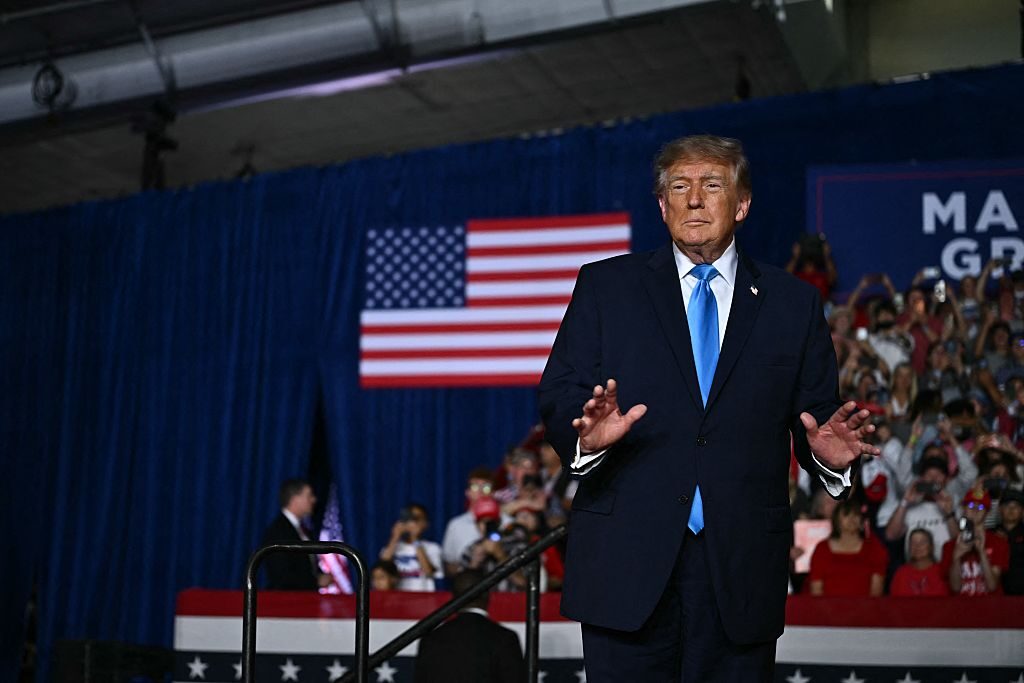
Image via Roll Call
Trump Reverses on Publicly Funded TV Political Ads: Ad Markets Get Another Shock
Roll Call reports Trump reversed course on publicly funded TV political ads. The details matter for who gets checks and when, but the market punchline is simpler: political ad flows are policy-risk now, not just election-season noise.
When Washington fiddles with ad funding rules, it hits local broadcast, national networks, and the ad-tech pipes differently. TV political demand is a pricing lever; move the rules and you move CPMs, inventory value, and guidance credibility. In an already fragmented ad market, regulatory whiplash creates forecasting errors and multiple compression.
📈 Fred's Take: If you own anything ad-exposed, treat this as another reminder that revenue “visibility” is a fairy tale when rules can change mid-cycle. The winners are the platforms with diversified demand and the balance sheets to eat volatility; the losers are the businesses counting on political dollars to paper over structural declines. Trade it like policy risk: smaller size, faster stops.
That’s the board. Politics moved the levers; prices will do the talking at the open.
— Fred Frost
