Today’s Sponsor
History shows a clear pattern: the investors who recognized the exact inflection point in the dot-com boom pocketed 400–800% gains in 18 months. Those who spotted the same moment in cloud computing saw 300–600% returns. Based on 50 years of market data, that same moment is happening right now — and the acceleration phase has already begun.
This free 7-page report reveals where we are in the current megatrend cycle, why the next 18 months are critical, and how to position yourself before the window closes. Don't be the investor who enters too late.
Get the Free ReportBy clicking 'Get the Free Report' you are automatically subscribing to Darwin Investor Network and will receive a free subscription to the Chaikin PowerFeed newsletter. Unsubscribing is easy. Privacy Policy

Five signals before the bell: geopolitics is bleeding into risk premia, big allocators are getting defensive, and supply chains are being re-wired in plain sight.

Image via NBC News
DOJ Says Kremlin Ran a D.C. Hit Plot: Geopolitical Risk Premium Is Back
Justice Department prosecutors say Russia orchestrated a murder-for-hire plot targeting a prominent Russian dissident in Washington this summer, and they’ve unsealed charges tied to the operation.
This is not just spy-movie theater. When the U.S. government puts a foreign assassination plot on the record, it hardens the policy lane: more sanctions, more expulsions, more cyber actions, less room for “reset” talk. Markets don’t price morality. They price escalation paths.
If this builds into another sanctions package, watch the knock-ons: tighter shipping and compliance, more fragmentation in energy and metals flows, and more headline volatility in European risk assets. The U.S. can absorb it. The periphery can’t.
📈 Fred's Take: This raises the floor under defense, cybersecurity, and energy-security spending for the next several quarters. It also keeps a bid under gold and supports a stronger dollar on risk-off spikes. If you’re long broad Europe cyclicals, you’re implicitly short geopolitical calm — and that trade is getting crowded and fragile.
📎 NBC News
New Zealand’s Star Sovereign Fund Flags a U.S. Equity Pullback: Listen to the Adults
New Zealand’s $54 billion pension fund just posted a 14.2% return for the year to June and is warning a pullback in U.S. stocks is looming.
That’s not a day trader calling tops. That’s a long-horizon allocator saying: valuations are tight, positioning is heavy, and the margin for error is thin. When the best-performing pools get cautious, it’s usually because the easy money has already been made.
The important part isn’t “crash” versus “no crash.” It’s that big money is likely rotating from beta into quality, cash-flow durability, and real hedges. If liquidity tightens or earnings disappoint by even a little, the air pockets show up fast.
📈 Fred's Take: Treat this as a positioning memo, not a prophecy. Trim the stuff you only own because it went up, and shift toward profitable balance sheets and short-duration cash flows. Keep dry powder: the next 5–8% downdraft in U.S. equities will be a buying window, but only if you’re not already maxed out.
📎 CNBC
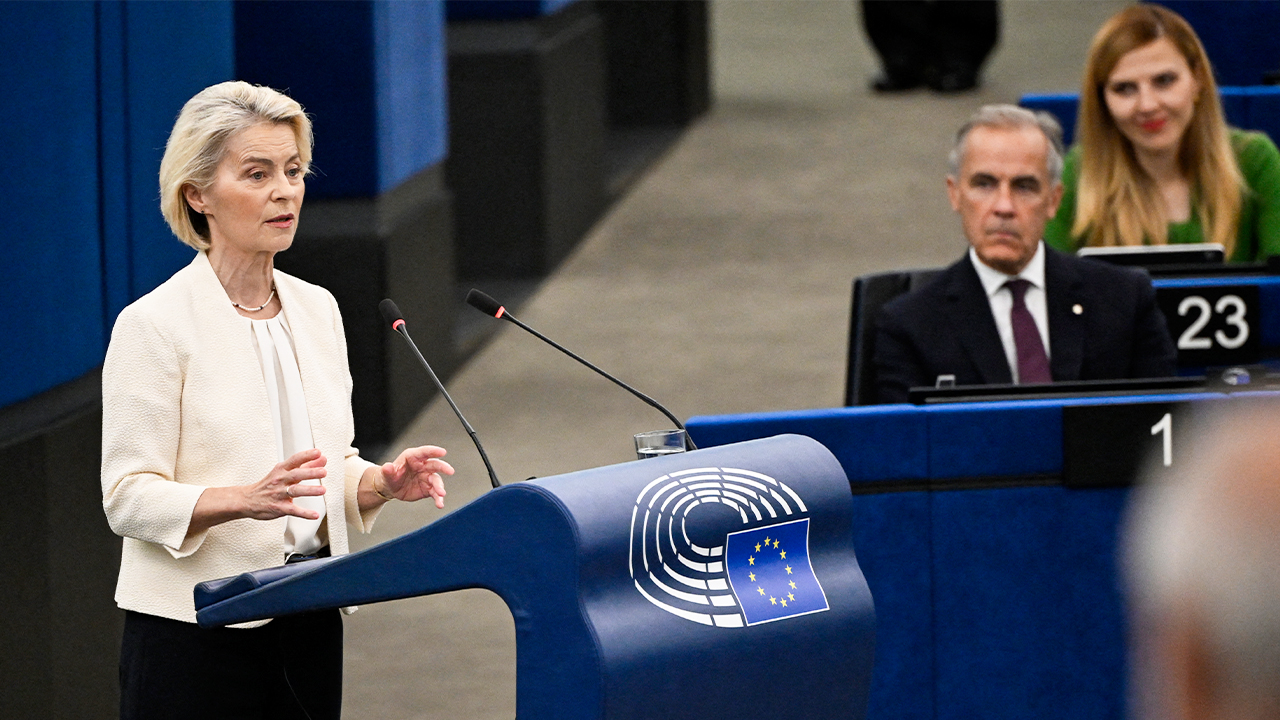
Image via Fox Business
EU Floats ‘Associate Member’ Track for Canada: Supply Chains Are Picking Sides
EU Commission President Ursula von der Leyen proposed a new “associate member” status for Canada, aiming to integrate supply chains more deeply as U.S. tariff tensions grind on.
That’s a big deal because it’s a formal attempt to route around Washington. Trade spats aren’t just about tariffs; they’re about who gets the next factory, the next battery plant, the next critical-minerals contract. When blocs form, capital expenditures follow.
If the EU and Canada move toward preferential alignment, expect more transatlantic investment in energy, aerospace, defense procurement, and critical inputs. The U.S. doesn’t lose overnight. But it loses negotiating leverage at the margin — and margins are where markets move.
📈 Fred's Take: This is bullish for Canadian industrials, materials, and infrastructure plays tied to European demand, and it’s quietly bearish for U.S. companies relying on “friendly” access as a given. If you’re building a 2027 theme book, start treating trade policy as a factor like rates: it reprices cash flows. The winners will be the firms with redundant sourcing and political optionality.

Image via National Review
The Anti-Doomer AI Argument: Washington Can’t Regulate Its Way to Second Place
A new argument making the rounds pushes back on AI doomerism and warns the U.S. can’t afford to fall behind.
Translation for investors: the political center of gravity is drifting toward “accelerate and secure,” not “pause and ban.” You can already see it in procurement language, export-control tweaks, and the way national security folks talk about compute, chips, and models. The state will try to steer AI, but it won’t tolerate a self-imposed productivity recession.
That doesn’t mean there won’t be rules. There will be. But the likeliest path is licensing, audits, watermarking, and liability frameworks that favor incumbents with compliance budgets — which is exactly how regulation usually lands in markets.
📈 Fred's Take: The bull case is simple: AI remains a capex cycle with government tailwinds, and regulation will mostly function as a moat for scaled platforms and chip supply chains. Own the picks-and-shovels and the compliance winners, not the narrative vapor. If you’re short “AI because ethics,” you’re trading against national power incentives — and that’s a low win-rate bet.

Image via France 24
L.A. News Helicopter Crash: A Tragedy, and a Quiet Liability Signal
A news helicopter covering a deadly bus collision crashed in Los Angeles, killing three and sending two others to the hospital.
This is first a human loss. But markets always translate tragedy into cost: investigations, insurance claims, legal exposure, fleet grounding, and higher premiums across similar operations. When accidents hit live-news aviation, regulators and insurers respond, and the bill shows up later.
For media companies and aviation service providers, the near-term effect is operational disruption and risk-review pressure. In a tight ad market, unexpected costs matter — especially for businesses already juggling shrinking linear TV economics and rising production expenses.
📈 Fred's Take: This won’t move the index, but it can move the names with direct exposure through insurance and litigation headlines. If you own small-cap aviation services or local media operators, expect premium hikes and compliance costs to creep higher. The clean trade is to avoid businesses where one incident can rewrite the quarterly P&L.
That’s the tape. Keep your risk tight, your hedges honest, and your powder dry. — Fred
— Fred Frost
