Today’s Sponsor
The Fed held rates, CPI came in at 2.4%, and analysts still expect 12.5% Q1 earnings growth — but estimates have already been cut across nine sectors and the S&P 500 is stretched above its 5- and 10-year average forward P/E. Trading earnings on headlines alone in this environment is a costly mistake.
The free Earnings Season eBook breaks down the exact pre-report checklist, how to weigh guidance and expectations, and how to read the first reaction after numbers hit — so you're never improvising after the move already started.
Get the Free Earnings PlaybookBy clicking the link above, you will receive this free report and a free subscription to the StockEarnings daily email newsletter. You are also agreeing to the terms of our Privacy Policy. Unsubscribe at any time.

Energy tail risk is back on the tape, Treasury gets a trader-friendly brain, Washington and Beijing dial down the trade heat, SpaceX clears a major technical gate, and South Africa reminds markets why political risk premia exist.

Image via NBC News
Iran Talks Diplomacy, Keeps The Match Lit Under Hormuz
Iran’s foreign minister Abbas Araghchi said Tehran is “fully prepared” for war to resume, while insisting diplomacy isn’t finished. The messaging is classic: keep doors open, keep pressure high, keep markets guessing.
The immediate catalyst is the unresolved dispute around reopening the Strait of Hormuz. Araghchi said Iran hasn’t officially responded to a proposal yet, after President Trump publicly rejected a plan tied to the strait. With no formal answer and plenty of rhetoric, traders get maximum headline risk with minimum clarity.
The market channel is straightforward: anything that raises the probability of disruption in Hormuz widens the crude risk premium, pushes up near-term inflation expectations, and complicates rate-cut math. Even if nothing happens, the optionality alone tightens financial conditions through energy and volatility.
📈 Fred's Take: This is an energy-volatility setup, not a geopolitical trivia question. If you’re long risk, you hedge the tail with either energy exposure or volatility, because the first move will be crude up, yields up, and growth multiples down. The base case is talk, but the payout on being unhedged is asymmetrically bad.
📎 NBC News
Bessent Brings In Zervos: Treasury Adds A Markets Translator
Treasury Secretary Scott Bessent hired Wall Street economist David Zervos as a counselor, adding a high-profile markets voice inside the department. Zervos is known for translating macro narratives into market consequences, which is exactly what Treasury needs when deficits, issuance, and growth policy all collide.
The job matters because Treasury isn’t just writing memos; it’s managing the world’s reference curve. The interplay between auction sizes, maturity mix, cash balance management, and the Fed’s posture has been the dominant driver of real rates, term premium, and equity discount rates.
This signals an administration that wants tighter feedback loops with investors and a cleaner messaging channel to rates desks. When Treasury starts thinking like markets, volatility can fall even if the numbers don’t.
📈 Fred's Take: This is a quiet positive for rates stability, and stability is bullish for duration-sensitive assets. If Treasury can reduce self-inflicted curve shocks, you get lower term premium, a friendlier backdrop for tech multiples, and less random pressure on housing and credit. Don’t confuse it with fiscal discipline, but do respect it as risk-management.
📎 CNBC

Image via The Hill
U.S.-China Tariff Truce: $60B Gets A Price Cut
The U.S. and China agreed to cut tariffs on $60 billion worth of products, split evenly at $30 billion per side, after last week’s Trump-Xi meeting in Washington. It’s a targeted détente, not a full reset, but it’s concrete enough to move supply-chain expectations.
Lower tariffs typically flow through as marginal disinflation on traded goods and less uncertainty for corporate planning. The immediate beneficiaries tend to be import-heavy retailers, industrial supply chains, and any sector living on component costs and predictable lead times.
Politically, both sides get a win without surrendering leverage. Economically, it reduces one source of stagflation anxiety at the margin, which matters because the market is hypersensitive to any shift in the inflation path and the reaction function around it.
📈 Fred's Take: This is a risk-on input, even if it’s small-dollar relative to the full tariff architecture. The real value is lowering the probability of escalation headlines that hit semis, industrials, and cyclicals in a single premarket print. Fewer trade shocks means a calmer rates tape, and that’s what equities have been begging for.
📎 The Hill
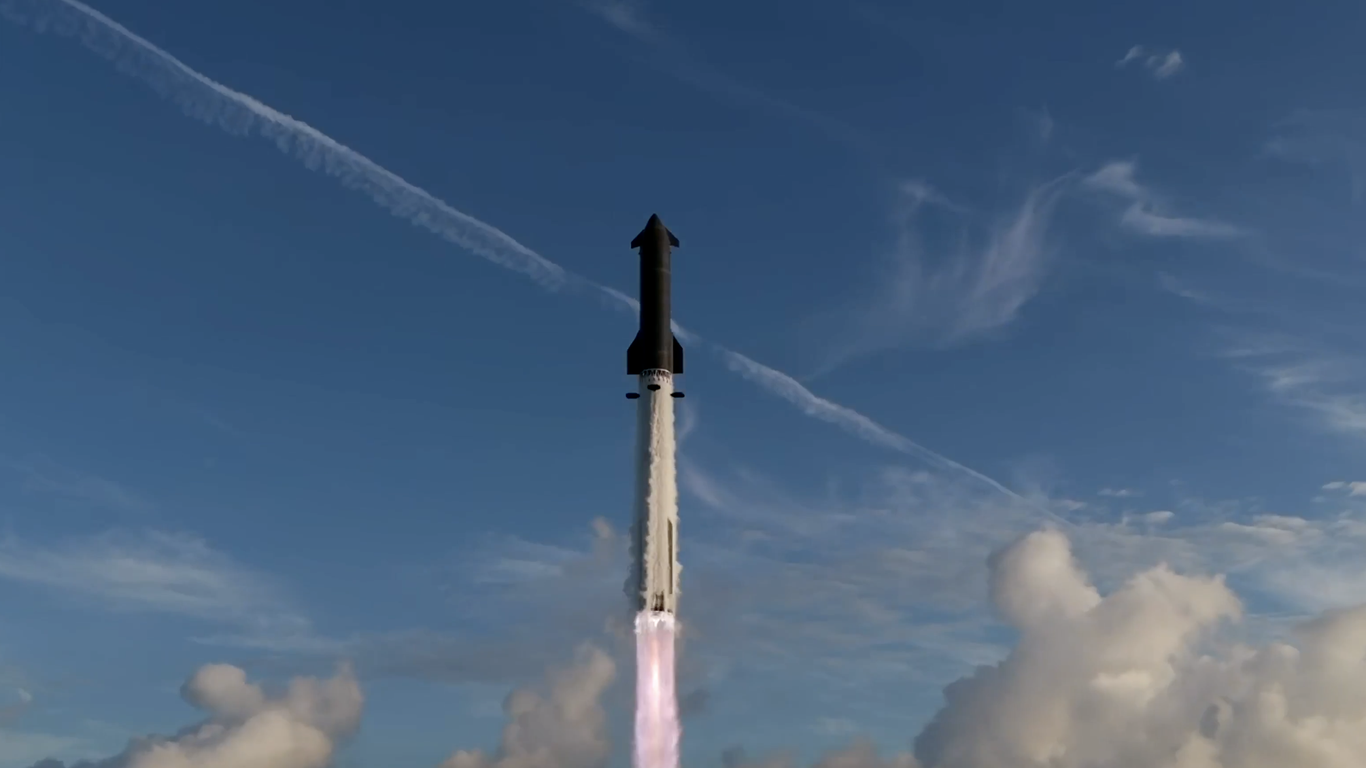
Image via Axios
Starship Goes Orbital: SpaceX Just Moved The Goalposts
SpaceX launched Starship early Monday on what’s planned to be its first orbital mission, a major milestone for the fully reusable rocket system. The flight is designed to validate capabilities that matter for payload scale, cadence, and cost per kilogram.
Starship is central to the next phase of the space economy: heavier satellites, faster deployment, and lower unit economics for large constellations. It also has direct implications for government space contracting, lunar missions, and the competitive landscape for legacy launch providers.
Markets don’t always price engineering progress in real time, but when a platform crosses an orbital threshold, downstream capital follows. Launch cost curves drive business models, and business models drive IPO windows.
📈 Fred's Take: If Starship proves reliability, it compresses the timeline for a fresh wave of space-adjacent listings and re-rates anything tied to satellites, launch services, and defense-space infrastructure. The trade isn’t “space is cool” — it’s lower costs, higher cadence, and an expanded TAM showing up in forward revenue math. This is a structural catalyst, not a one-day headline.
📎 Axios

Image via The Guardian
South Africa Violence Spike: Political Risk Premium Isn’t Optional
At least 27 people were killed in two mass shootings in South Africa, according to police. Seventeen died near Johannesburg in what’s being described as a suspected illegal goldmining turf war, and ten were killed in a separate incident at a barbecue venue near Cape Town.
Beyond the human tragedy, the episodes underscore chronic security strains and the presence of organized criminal activity in parts of the economy tied to resources. South Africa sits at the intersection of EM risk: governance, policing capacity, commodity-linked cash flows, and social stress.
When violence and illicit mining collide, investors start questioning operational continuity, insurance costs, and the reliability of local enforcement. That shows up in currency risk, sovereign spreads, and required returns on domestic assets.
📈 Fred's Take: This is why EM carries a discount, and why that discount can widen fast without a single policy announcement. If you’re hunting yield in South Africa, you need to be paid for security and governance risk, not just FX volatility. In portfolios, treat this as a reminder to size EM exposure like it can gap on non-financial headlines — because it can.
That’s the tape: hedge the energy tail, respect the trade thaw, watch the curve, and don’t ignore political risk just because your spreadsheet can’t model it. See you before the bell.
— Fred Frost
