Today’s Sponsor
🎃 The market has its own tricks — and October is full of them. Sudden momentum, unusual activity, and stocks making big moves before anyone else notices. Don't get caught off guard.
GuyStocks delivers real-time momentum alerts 🕷️, flags unusual stock activity 👻, and gives you clear, actionable insights ⚡🔎 — so you're ahead of the move, not chasing it. And it's 100% free to join 🆓.
Join GuyStocks Free TodayBy clicking the button above, you agree to receive emails from GuyStocks.com. You can opt out at any time. — Privacy Policy

Tuesday, October 20, 2026 | The Crossroads of Politics & Investing
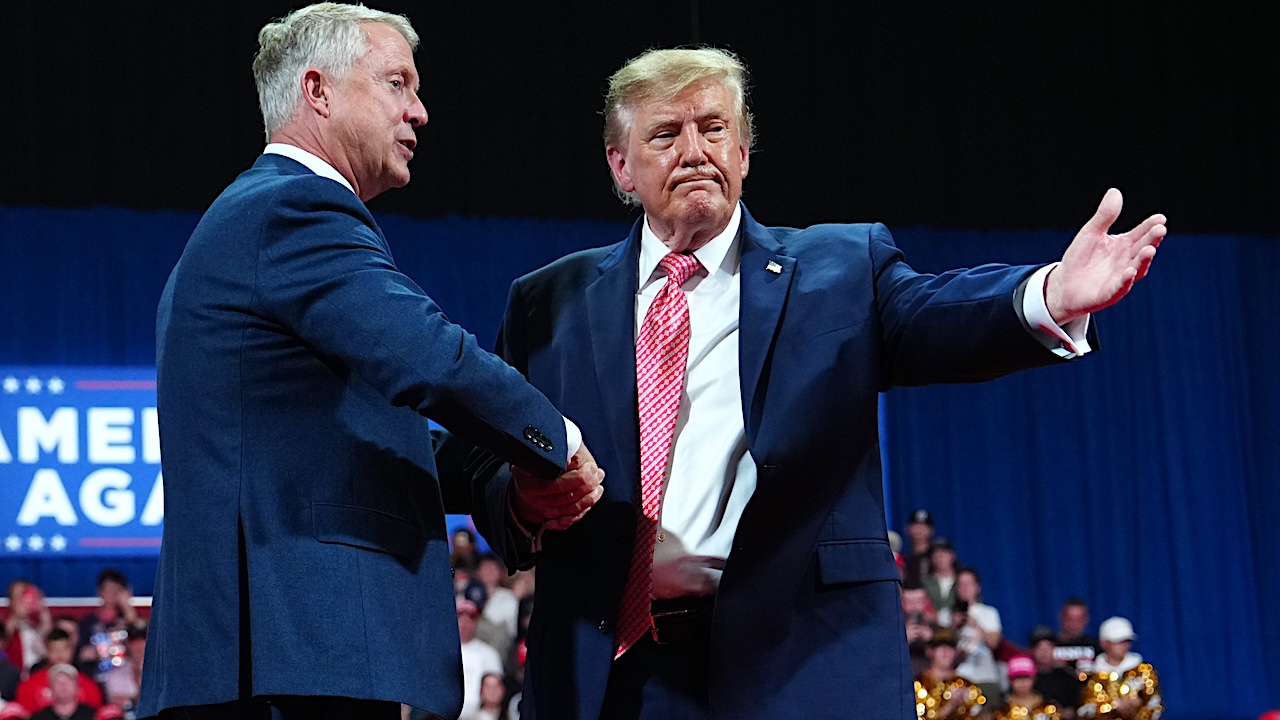
Image via Fox Business
Trump drops an $8B diesel lifeline for farmers — and quietly props up demand
Trump rolled out an $8B "Harvest Fuel Relief" program at a Kansas rally, pitched as a targeted patch for farmers getting hit by a diesel cost surge during harvest. The political framing is simple: keep food supply steady, keep rural America calm, and keep the optics away from "Biden-era inflation" arguments.
The market framing is cleaner: it’s a fiscal offset aimed directly at an energy input, not a broad consumer stimulus. It cushions a key end-user of distillates right when global supply is being stressed by attacks and shipping risk, meaning demand destruction gets delayed and the price signal gets distorted.
This is also a reminder that energy shocks are becoming policy events, not just market events. When Washington starts subsidizing diesel, you’re no longer trading only fundamentals — you’re trading response functions.
📈 Fred's Take: This is bullish distillates at the margin and mildly inflationary for the next CPI prints, because it reduces the natural demand brake higher prices would have created. Short-term: supportive for refiners and ag/inputs; medium-term: it complicates the Fed’s “inflation is cooling” narrative if diesel stays sticky. If you’re long risk, you want the bailout’s liquidity effect, but you hedge the energy tail with crude exposure or quality energy equities.

Image via MarketWatch
Meta’s earnings could be the AI capex starting gun for all of Big Tech
Meta heads into earnings season as the first real tell on whether 2027 AI costs are about to be revised up across the sector. The setup is familiar: revenue is stabilizing, ad demand is fine, and the temptation is to press the accelerator on infrastructure before competitors do.
If Meta signals higher-than-expected AI spend, it won’t stay a Meta story. It becomes a read-through for hyperscalers, semiconductor demand, power and cooling buildouts, and the broader “capex eats margins” trade that can hit indices even when the AI narrative sounds bullish.
Markets love AI until the bill arrives. Once the Street starts modeling heavier depreciation and operating expense drag, multiple compression becomes the main event — especially if rates won’t cooperate.
📈 Fred's Take: Watch guidance, not headlines: any capex step-up is a green light for the picks-and-shovels (chips, networking, power), but it’s a yellow light for mega-cap index multiples. The trade is barbell: long the beneficiaries of compute buildout, hedge the platform names that become capex funnels. If Meta opens the spending spigot, expect the whole group’s cost discipline story to get marked down in a single week.
UK jets to shield Saudi from Houthi attacks — the Red Sea risk premium isn’t leaving
The UK is dispatching fighter jets and transport aircraft to help defend Saudi Arabia from Iran-backed Houthi attacks. That’s a meaningful escalation in commitment, and it signals Western capitals think the threat set is persistent, not episodic.
For markets, this is about shipping lanes, insurance, and the price of reliable delivery. Every time the Red Sea or Gulf adjacency gets militarized, you pay a tax: higher freight, longer routes, tighter refined-product balances, and a renewed bid under energy volatility.
It also tightens the feedback loop into inflation expectations. Energy isn’t just a commodity; it’s a policy input, a political vulnerability, and the quickest way to turn “soft landing” into “sticky prices.”
📈 Fred's Take: This keeps a floor under the geopolitical risk premium in crude and, more importantly, in diesel and jet fuel spreads. Don’t overtrade the headline day-to-day, but do respect the structural volatility: refiners and quality energy producers stay investable, and airlines/shippers remain headline-sensitive shorts on spikes. If this drags on, it bleeds into breakevens and makes rate cuts harder to justify.

Image via Fox News
DOJ subpoenas Philly DA Krasner — law-and-order politics heads into the tape
DOJ reportedly sent grand jury subpoenas to Philadelphia DA Larry Krasner after a judge’s referral, according to sources. Whatever the eventual merits, the immediate reality is the Justice Department is escalating a fight that has been simmering for years.
Politically, it’s a signal flare heading into 2026’s closing stretch: crime, prosecution standards, and federal intervention are back as campaign ammunition. Markets don’t price the morality play; they price the second-order effects: public-sector risk, municipal confidence, and the odds of policy whiplash at city and state levels.
Philadelphia is also a bellwether for how quickly governance stories can become credit stories. If this turns into sustained institutional conflict, you can see it in spreads before you see it on cable news.
📈 Fred's Take: This is noise until it isn’t: watch Pennsylvania political spillover and any knock-on to municipal risk perception. If the story broadens into a national crackdown narrative, you get a bid for “order” candidates and a hit to progressive-city governance brands — that matters for local bonds, insurers, and commercial real estate sentiment. Keep it on the screen, but trade it only if credit starts reacting.
📎 Fox News

Image via Axios
Rubio to Zelensky: no directive to hurt Ukraine — translation: aid is now a negotiation lever
Secretary of State Marco Rubio told Ukraine’s President Volodymyr Zelensky that President Trump hasn’t issued any order to harm Ukraine. The line matters because it confirms what markets have been sniffing: policy is being managed through signals and leverage, not through clean, predictable commitments.
For Kyiv, reassurance by phone is not the same as a budget line that clears Congress. For markets, the key variable is the probability distribution of U.S. support: consistent aid keeps Russia/Ukraine risk contained; conditional aid raises the tail risk of escalation or forced settlement on messy terms.
Geopolitics feeds directly into commodities, defense spending, and European growth expectations. Every time the support framework looks negotiable, the volatility premium comes back into energy and Eastern Europe-adjacent assets.
📈 Fred's Take: This is a volatility headline: it reduces immediate panic but doesn’t restore certainty, and markets trade certainty. Defense stays structurally supported, European risk assets stay headline-fragile, and energy retains a geopolitical floor. If you’re positioning, you want exposure to defense and quality energy, and you avoid being naked short volatility in Europe.
📎 Axios
That’s the map: diesel subsidized, AI capex creeping up, and geopolitics re-pricing freight, fuel, and rates. Trade the second-order effects, not the slogans. — Fred
— Fred Frost
