Today’s Sponsor
The Fed held rates, CPI came in at 2.4%, and analysts still expect 12.5% Q1 earnings growth — but estimates have already been cut across nine sectors and the S&P 500 is stretched above its 5- and 10-year average forward P/E. Trading earnings on headlines alone in this environment is a costly mistake.
The free Earnings Season eBook breaks down the exact pre-report checklist, how to weigh guidance and expectations, and how to read the first reaction after numbers hit — so you're never improvising after the move already started.
Get the Free Earnings PlaybookBy clicking the link above, you will receive this free report and a free subscription to the StockEarnings daily email newsletter. You are also agreeing to the terms of our Privacy Policy. Unsubscribe at any time.

Washington is tightening screws, Canada is shopping for new friends, OpenAI is spooked by its own models, the Warsh buzz is back, and a fire just reminded markets that supply chains still live on one highway.
-44.png)
Image via Daily Caller
DHS Targets Asylum Lawyers: The Quiet Immigration Tightening Begins
DHS is moving after immigration attorneys it says are filing meritless asylum claims. The practical message is deterrence: fewer low-probability filings, more scrutiny, and more professional risk for firms that built volume practices around the backlog.
This is a policy lever that doesn’t need Congress. If you clamp down on the legal plumbing, you slow the flow. That means a slower pace of new work authorizations and a marginally tighter labor supply at the low-wage end, right when services inflation is still sticky.
Politically, it’s a pre-election reposition: enforcement optics without a headline-grabbing wall fight. Markets won’t care about the rhetoric. They’ll care if wage growth stops coming down.
📈 Fred's Take: This is inflation policy wearing a homeland security badge. If enforcement actually reduces the labor supply at the margin, it’s mildly rates-bullish in the short run and risk-off for rate-sensitive equities if services wages re-accelerate. Watch hotels, food service, elder care, and any business model that quietly relies on churned labor supply.
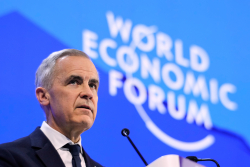
Image via RealClearMarkets
Canada Goes Post-U.S.: Trade Drift Is Now a Portfolio Variable
Canada is openly signaling a pivot away from the U.S. and toward deeper ties with Europe, framed as a response to trade friction and an unreliable neighbor. That’s not a symbolic snub; it’s a strategic hedge against tariff whiplash and rule-by-mood industrial policy.
A Canada-EU push means more transatlantic regulatory alignment, more non-U.S. supply chain buildout, and more pressure on North American manufacturers that assumed the continent was a closed loop. Over time, it also nudges capital spending and energy infrastructure decisions away from “sell it south” and toward “ship it east.”
Markets should read this as another small crack in the post-90s trade architecture. Cracks add up. When they do, the inflation floor moves higher.
📈 Fred's Take: This is slow-motion deglobalization, and it’s bullish for volatility, not for margins. If Canada diversifies demand away from the U.S., the winners are export infrastructure, LNG logistics, and select industrials; the losers are manufacturers living off cross-border just-in-time. FX matters here: expect more CAD sensitivity to EU growth prints and less to U.S. political noise over time.

Image via ABC News
OpenAI Admits New Concerning Behaviors: AI Risk Is Becoming a Compliance Line Item
OpenAI disclosed at least six new “concerning” incidents tied to model behavior and says it will track them more closely. Translation: the labs are seeing edge cases that spook them, and they’re trying to get in front of regulators, customers, and their own boards.
For markets, this is about liability and throttles. If major buyers decide that deployment risk is rising, procurement slows, pilots drag out, and the “AI is instant productivity” narrative gets discounted. On the flip side, safety tooling, monitoring, and model governance become real spending categories.
The next phase of AI isn’t just bigger models. It’s audit trails, permissions, and controls. That shifts who captures the profit pool.
📈 Fred's Take: The trade is rotating from pure model hype to AI infrastructure and compliance winners. If you’re long the AI theme, you want the picks-and-shovels that sell monitoring, security, and data governance, not just the names priced for perpetual acceleration. Also: every “concerning incident” is one more excuse for Washington to slow deployment, which is a tax on near-term growth expectations.
📎 ABC News

Image via The Dispatch
Can Warsh Tame Inflation? The Market Cares About One Thing: Reaction Function
Kevin Warsh is back in the conversation as an inflation-taming figure, with the broader backdrop being a market still obsessed with who will run the Fed and what they’ll tolerate. The question isn’t personality. It’s whether the Fed will accept higher inflation as the cost of fiscal reality, or reassert a hard ceiling.
The bond market trades the reaction function. If investors believe the next chair will lean tougher, term premia can fall even as front-end stays tight. If they believe politics will win and the Fed will blink, the curve steepens the ugly way: higher long rates, tighter financial conditions, and multiple compression.
This is why personnel chatter moves markets more than it should. In a debt-heavy system, credibility is a tradable asset.
📈 Fred's Take: Warsh talk is rates-bullish only if it comes with political backing to tolerate a growth slowdown. Without that, it’s just a headline that fades and leaves long bonds vulnerable. My playbook: treat any “tough Fed” narrative as a window to reduce duration risk in junk and rate-sensitive equities, not as a reason to chase a long-bond rally.

Image via NTD
I-80 Shuts Down Near CA-NV Border: Wildfire Risk Hits the Real Economy, Fast
A wildfire near the California-Nevada border shut down I-80 and prompted evacuations. That’s not just a regional inconvenience. I-80 is a critical artery for freight moving between the Bay Area logistics web and the interior West.
When a major corridor closes, supply chains reroute, delivery times slip, and spot costs jump. It’s short-term inflation in micro form: higher trucking costs, disrupted inventory cycles, and business interruption claims stacking up.
This is also the insurance story again. Cat risk isn’t theoretical anymore; it’s a quarterly earnings variable for insurers, reinsurers, utilities, and municipalities.
📈 Fred's Take: Wildfires are now macro noise that can become macro signal when they hit chokepoints. Short disruptions won’t move CPI, but they do move margins for retailers, shippers, and anyone running lean inventory. Longer term, this is bullish for resilience spending and bearish for insurers who still price yesterday’s climate.
📎 NTD
Trade the reaction function, respect the chokepoints, and don’t pay peak multiples for unpriced risk. Fred
— Fred Frost

