Today’s Sponsor
While the crowd chases the same tired names, RushTheStreet is tracking the stocks that could move before the headlines hit — small caps on the verge of a breakout, AI plays building momentum, biotech approaching major milestones, gold & silver explorers, and companies with market-moving catalysts on the horizon.
October volatility creates opportunity — but only if you're watching the right names first. Don't let the next big mover disappear into the shadows before you even knew it existed.
Sign Up for RushTheStreet FreeBy clicking the link above, you agree to receive emails from rushthestreet.com. You can opt out at any time. — Privacy Policy

Wednesday, October 21, 2026 | The Crossroads of Politics & Investing. Regulation finally clears, capital markets reprice, and geopolitics keeps the defense tape bid.

Image via Fox Business
FAA finally clears Boeing’s MAX 10: the delivery math just changed
The FAA certified Boeing’s 737 MAX 10, closing a long regulatory loop and clearing the runway for deliveries tied to 1,555 airline orders. This is the largest MAX variant, and certification is the gate that matters for revenue recognition, cash collection, and production planning.
The market angle isn’t just “good news for Boeing.” It’s capacity planning for airlines and the broader supply chain: engines, avionics, structures, interiors, and labor. If Boeing can convert certification into steady delivery tempo, you’ll see the ripple in aerospace suppliers, airline capex assumptions, and even lease-rate curves for narrowbodies as replacement cycles accelerate.
📈 Fred's Take: Certification removes a headline risk, but it doesn’t solve execution risk. The trade is simple: deliveries and cash flow beat sentiment every time, so watch monthly delivery prints and any production-rate guidance like a hawk. If Boeing strings together clean quarters, suppliers and lessors get paid with it; if they stumble, the Street will treat this as a one-day pop and move on.
SpaceX rips higher on earnings, and Musk floats the word investors love to overpay for: merger
SpaceX shares jumped in premarket after a third-quarter earnings beat driven by rapid revenue growth. Then Elon Musk added rocket fuel by hinting at a potential SpaceX-Tesla tie-up, instantly lighting up the retail and momentum complex.
This is where markets get dangerous. “Synergy” stories can compress skepticism faster than they create real value. A SpaceX-Tesla merger pitch would raise immediate questions on governance, valuation marks, capital structure, and which shareholder base is subsidizing whose capex cycle. It also drags regulators into the room, because any cross-company transactions around AI, communications, autonomy, or defense-adjacent revenue get scrutinized in a different way.
📈 Fred's Take: Treat the merger hint as a volatility product, not an investing thesis. If you’re long, you’re long Musk optionality and multiple expansion, but the air gets thin fast when deal talk leads fundamentals. The smartest move is to separate the two businesses in your head: SpaceX is cash-flowing infrastructure with scale; Tesla is a cyclical manufacturing and software story that lives and dies by margins and demand.
📎 CNBC
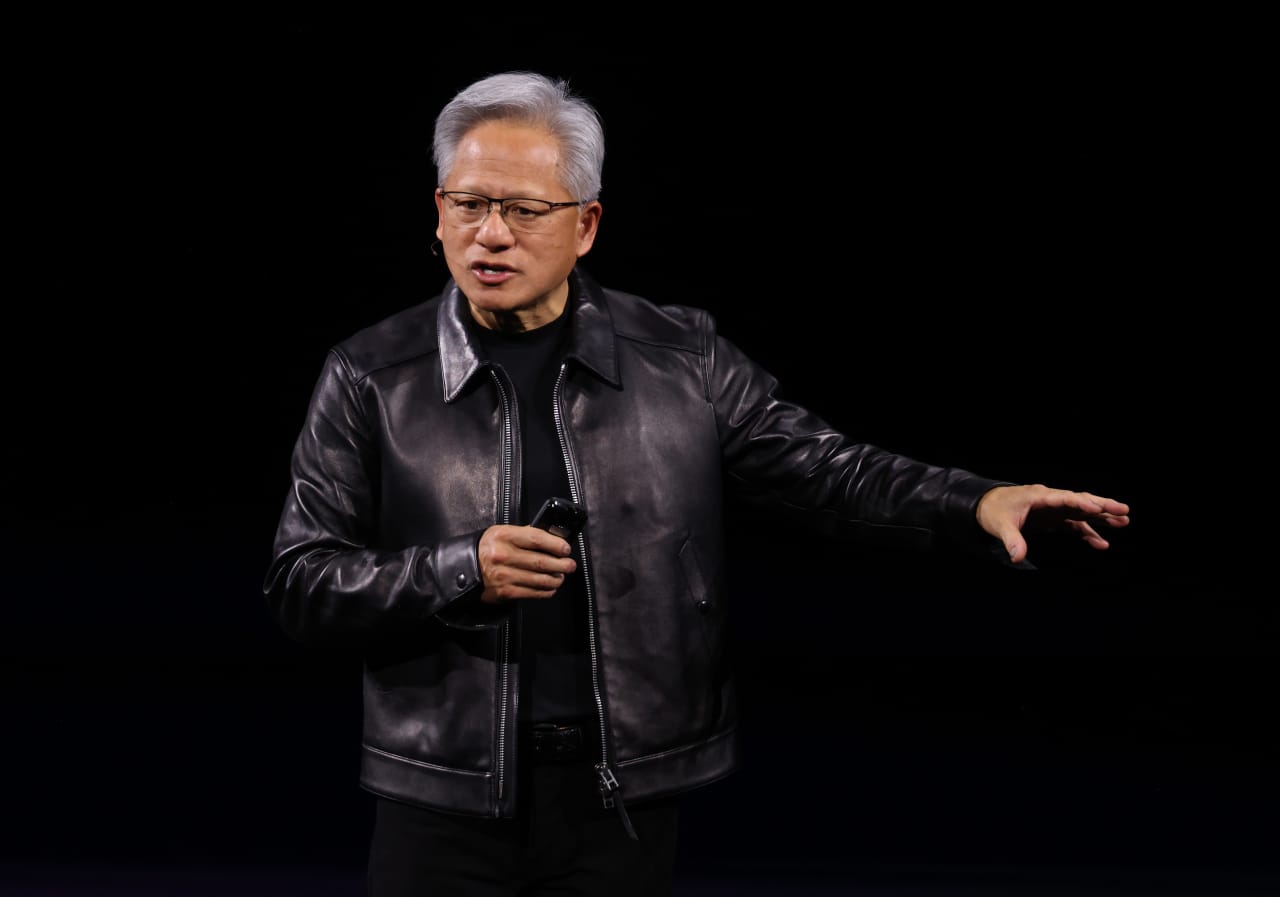
Image via MarketWatch
Huang heckled in Berlin: noise, not signal—but it tells you where the political risk is building
Nvidia CEO Jensen Huang had his Berlin conference speech disrupted by a heckler about 20 minutes in before the person was removed. The livestream couldn’t make out what was shouted, but the incident itself is the point: big tech, big compute, big energy draw, big geopolitics—those are now public-friction topics.
Markets care because Nvidia sits at the center of the AI capex cycle, and the next phase of that cycle runs through permitting, power grids, export controls, and “who gets to build what, where.” The more visible Nvidia becomes as the face of AI infrastructure, the more it becomes a target for activists, politicians, and regulators—especially in Europe, where industrial policy and data politics move faster than earnings seasons.
📈 Fred's Take: This doesn’t change next quarter’s numbers, but it’s a reminder that AI winners are also policy magnets. The real risk isn’t a heckler—it’s a sudden rule on exports, procurement, or data-center energy constraints that hits demand visibility. Stay focused on orders, backlog, and hyperscaler capex; treat the headline theater as a read-through on future regulatory noise.

Image via Washington Examiner
California election safeguards: the DOJ cases are small—until the credibility premium breaks
A Washington Examiner piece argues California lacks meaningful safeguards for voting and voter registration, citing Justice Department charges against several immigrants in voter fraud cases. The claim is less about the number of cases and more about the system design: if verification is weak, the political fight shifts from policy to legitimacy.
Investors should care because legitimacy fights change fiscal behavior. When election integrity becomes a national wedge, you get more litigation, more delayed outcomes, and more incentive for politicians to buy votes with spending promises instead of governing for growth. That bleeds into municipal finance risk, state-level budgeting, and national policy gridlock—especially in years where markets need clarity on taxes, regulation, and debt issuance.
📈 Fred's Take: Markets price stability, and legitimacy disputes are instability with a suit and tie on. If this story grows, it adds a small but real “credibility premium” to U.S. political risk—meaning higher term premium at the margin and more demand for hedges like gold and short-duration cash. Don’t trade the headline; track whether it becomes a sustained federal-state confrontation that drags into 2027 budgeting and court calendars.

Image via Forbes
Middle East wants new-build F-16s: defense demand stays sticky, and Washington holds the keys
Forbes reports substantial Middle East demand for modern, new-build F-16 Block 70/72 aircraft, underscoring that the platform still has a role and that newer variants remain attractive purchases. This is the quiet reality of defense markets: proven aircraft with upgraded avionics, sensors, and sustainment ecosystems win contracts because they deliver capability with manageable training and logistics.
The market implication runs through approvals, production slots, and sustainment tails. Foreign military sales are political instruments, and timing can swing with Washington’s mood, regional security dynamics, and human-rights optics. But once deals are approved, the cash flows are long, service-heavy, and resilient—exactly what the market pays up for when macro growth is uncertain.
📈 Fred's Take: Defense isn’t just a geopolitical story—it’s a duration story. New-build jets create multi-year visibility, and sustainment is the annuity investors underestimate. The only real wildcard is Washington: approvals and conditions can delay revenue timing, but the strategic demand signal is clear and it keeps a bid under prime contractors and key subs.
📎 Forbes
That’s the tape: regulation cleared a plane, hype bid a rocket, politics tested credibility, and defense kept printing demand. Trade what matters—cash flow, approvals, and duration.
— Fred Frost
