Today’s Sponsor
History shows a clear pattern: the investors who recognized the exact inflection point in the dot-com boom pocketed 400–800% gains in 18 months. Those who spotted the same moment in cloud computing saw 300–600% returns. Based on 50 years of market data, that same moment is happening right now — and the acceleration phase has already begun.
This free 7-page report reveals where we are in the current megatrend cycle, why the next 18 months are critical, and how to position yourself before the window closes. Don't be the investor who enters too late.
Get the Free ReportBy clicking 'Get the Free Report' you are automatically subscribing to Darwin Investor Network and will receive a free subscription to the Chaikin PowerFeed newsletter. Unsubscribing is easy. Privacy Policy

Deregulation is the new global sales pitch, desks are quietly de-risking, Apple and OpenAI turn their feud into a legal war, the Pentagon gets another leadership shuffle, and climate-linked disasters keep hitting the real economy.
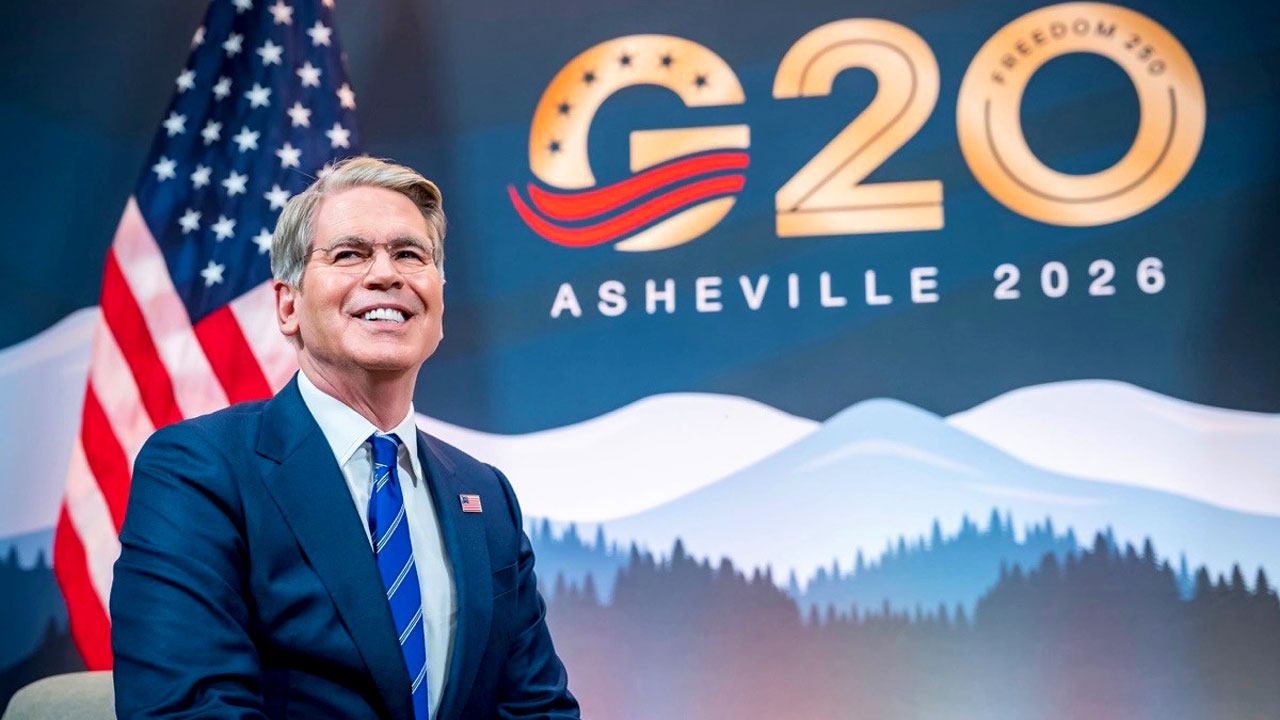
Image via Fox Business
Bessent to the G20: Cut the Tape, Chase Growth
Treasury Secretary Scott Bessent went to the G20 with a simple message: stop pretending complexity is competence. He pitched a growth-first agenda built on deregulation and faster permitting, holding up the Trump administration’s red-tape rollback as the model.
This is also currency diplomacy. If the U.S. can lift trend growth while other blocs stay stuck in compliance-heavy slow motion, capital flows follow the growth differential. That means a stronger dollar bias, more pressure on export-heavy economies, and a higher bar for risk assets globally that are priced off cheap liquidity rather than real earnings.
The market takeaway is not “deregulation is good” in the abstract. The takeaway is policy competition is back, and it pushes countries to choose between productivity reforms or financial repression. In that world, winners are U.S. domestics tied to capex, energy, industrials, and banks; losers are jurisdictions that answer weak growth with higher taxes and tighter rules.
📈 Fred's Take: This is an overt bid to reprice global risk around real growth instead of central-bank put fantasies. If Washington actually pairs deregulation with stable fiscal math, U.S. equities keep their premium and long-end rates can stay elevated without killing multiples. Position for dispersion: own productivity and cash flow, avoid “policy-dependent” trades that only work when regulators look the other way.

Image via MarketWatch
The Street’s Not Panicking. It’s Getting Tighter.
Strategists at Citadel Securities and JPMorgan are flagging near-term caution. Nobody’s ringing the bell on the bull market, but the tone shift matters: liquidity feels thinner, positioning is crowded, and the tape is more sensitive to bad surprises.
When big desks say “temporarily cautious,” what they mean is the next air pocket could be fast and mechanical. Volatility doesn’t need a recession to spike; it just needs everyone leaning the same way when an auction, a CPI print, or a geopolitical headline hits.
Two practical paths show up in this kind of setup: reduce gross exposure and clean up concentration, or keep exposure but buy time via hedges. The key is you do it before the downdraft, not after the first 3% down day when protection is already repriced.
📈 Fred's Take: Treat this as a regime of sharper pullbacks, not the end of the cycle. Trim the junk beta, raise a little cash, and stop pretending you can hedge after the fact. If you’re long, own your protection now and keep dry powder for forced selling days.

Image via Axios
Apple vs. OpenAI: From Partnership Theater to Courtroom Combat
Apple and OpenAI’s legal fight is escalating over allegations that OpenAI used Apple employees to obtain closely guarded hardware secrets. The dispute has moved past corporate chest-thumping into the kind of litigation that drags discovery, device roadmaps, and partner relationships into daylight.
This matters because AI is no longer “software on top.” The next leg is hardware-integrated inference, privacy architecture, and distribution at the OS level. If Apple believes its hardware advantage is being siphoned, it will defend the moat aggressively, even if it means torching what the market assumed would be a smooth AI alignment between platforms.
Investors should read this as a supply-chain and product-cycle risk, not just legal noise. Litigation can delay launches, constrain collaborations, and force expensive redesigns. It also raises the odds of tighter rules around employee mobility and trade secret enforcement across the whole AI stack.
📈 Fred's Take: This is a moat war dressed up as a lawsuit. Apple’s edge is control of the device and the user; OpenAI’s edge is model mindshare and velocity. The trade is dispersion again: hardware-integrators with distribution get stickier margins, while “API-only” AI stories pick up platform risk and headline volatility.
📎 Axios
Army Secretary Steps Down, Another D.C. Swap in the Middle of a Spending Fight
Army Secretary Dan Driscoll is stepping down after 18 months, per the White House. Turnover in defense leadership is not rare, but the timing is never neutral: the Pentagon is juggling modernization priorities, procurement politics, and budget pressure all at once.
Markets should care because defense is one of the cleanest transmission mechanisms from Washington decisions to corporate revenue. Leadership changes can mean shifts in program emphasis, contracting tempo, and how aggressively the department pushes cost controls versus speed.
For primes and critical suppliers, the near-term risk is process friction: delayed awards, re-scoped requirements, and a slower signature chain. For the broader tape, defense usually acts as a ballast during macro volatility, but that ballast weakens if budget negotiations turn into stop-start continuing resolutions.
📈 Fred's Take: This isn’t a “sell defense” headline, but it’s a reminder that policy execution risk is real. Keep exposure to defense cash-flow machines, but be picky on names dependent on one or two Army programs. In a choppy market, you want contractors that can live through paperwork and still print earnings.

Image via ABC News
Grand Canyon Flash Flood: Tragedy First, Then the Insurance Bill
Deadly flash flooding at the Grand Canyon killed two people and left one missing, with more dangerous weather expected. The human cost is the headline, but the economic ripple is predictable: tourism disruption, emergency response costs, and infrastructure stress in a high-traffic corridor.
From a markets lens, these events keep stacking into a slow-motion repricing of climate risk. Catastrophe frequency pushes up claims volatility, which feeds into premium hikes, tighter underwriting, and pressure on municipal and infrastructure budgets.
You also see second-order effects: regional businesses lose revenue, public agencies accelerate repair projects, and insurers and reinsurers re-map exposure. It’s messy, local, and cumulative—exactly the kind of risk the market underprices until it can’t.
📈 Fred's Take: Climate risk is no longer an ESG slogan; it’s a cash-flow variable. Expect insurance costs and infrastructure capex to keep grinding higher, which is inflationary at the margin and supportive for select engineering and services names. The losers are the businesses and localities that assumed yesterday’s weather map still applies.
📎 ABC News
Trade the policy. Respect the tape. Keep your hedges boring and your risk tight. Fred
— Fred Frost
