Today’s Sponsor
One CEO just put $19 million of his own money into his company's stock — on the open market, reported to the SEC, fully verifiable. He's not alone. While most investors watched headlines, a handful of CEOs were quietly making seven-figure bets on their own companies. We dug through SEC Form 4 filings and verified the largest CEO stock purchases of 2026 — real names, real dollar amounts, real dates, every one linked to the actual filing so you can check it yourself.
The free report includes six confirmed purchases, the CEO who bought his own stock five separate times this year, and the small-cap insider buying aggressively while his stock was getting crushed. No rumors. No vague teasers. Just the paper trail insiders are legally required to leave behind — and what it could mean for your next trade.
Get the Free Report Now →Clicking the link above subscribes you to future messages from Equiscreen, LLC and provides instant access to two additional bonus subscriptions from our marketing partners. Unsubscribe anytime. View Privacy Policy.

Happy Labor Day to everyone reading Morning Bullets. The holiday exists because generations of workers organized for things we now take for granted - the weekend, the eight-hour day, a paycheck you can plan around - so whether you're spending today off the clock or still on it, we appreciate you.
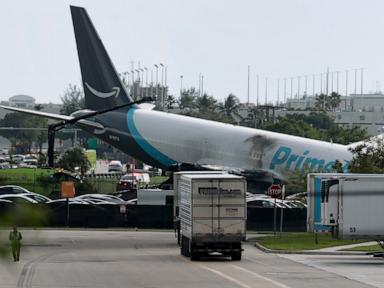
Image via ABC News
Amazon Air Crash at Miami: Human Tragedy, Operational Risk, and Insurance Math
An Amazon Air cargo plane overran the runway at Miami International Airport, leaving five people dead and five injured. The immediate focus is the investigation: runway conditions, braking, load, and the chain of decisions that turns a routine arrival into catastrophe.
For Amazon, this isn’t just a headline risk story. It’s a supply-chain resiliency test. A single incident won’t dent Prime demand, but it does tighten the conversation around air-freight safety protocols, third-party carrier oversight, and the real cost of “two-day” when aviation capacity is already constrained.
Expect insurers and lessors to do what they always do after high-casualty incidents: reprice risk, harden terms, and push costs downstream. That hits margins in logistics-heavy businesses first, then shows up as “higher fulfillment expense” in earnings calls later.
📈 Fred's Take: This is a reminder that the most underpriced risk in mega-cap retail isn’t demand, it’s operational fragility. If you own AMZN, this doesn’t change the long-term thesis, but it does raise the odds of incremental cost creep in fulfillment and air network redundancy. The trade isn’t panic-selling; it’s tightening expectations on near-term margin expansion and watching how quickly Amazon standardizes safety and oversight across its air partners.
📎 ABC News

Image via Daily Caller
Trump Team Floats Stay-at-Home Parent Subsidies: Pro-Family Politics, Pro-Deficit Reality
The Trump administration is floating a policy idea to subsidize parents who raise children at home. Call it a direct payment for household labor, a cultural signal, or a new entitlement in a different outfit.
Markets don’t care about the label. They care about the funding mechanism. If it’s deficit-financed, it’s another bid under consumption and another pebble in the shoe for the Treasury market. If it’s offset by cutting other childcare supports, it reshuffles winners and losers across the childcare complex without reducing the political appetite for spending.
This also collides with labor force participation. Paying a subset of parents to stay home can tighten labor supply at the margin, especially in lower-wage service jobs. That’s wage pressure, not productivity, and the Fed reads that as sticky inflation.
📈 Fred's Take: Anything that looks like a new cash benefit program is a bond story first and a culture story second. If Washington chooses checks over offsets, duration gets hit and rate-sensitive equities should expect volatility, especially housing and unprofitable growth. The winners are basic consumption and possibly automation enablers; the losers are long bonds and any sector priced for a clean disinflation glidepath.
AfD Landslide in Germany: Political Gravity Shifts, and Bunds Won’t Stay Immunized Forever
Germany’s far-right AfD notched a landslide state-election win, piling pressure on Chancellor Merz. This is less about one state and more about a continental pattern: voter frustration with migration, energy costs, and living standards is translating into sharper political outcomes.
Europe’s markets have been living on the assumption that Germany remains the stabilizing anchor: predictable coalition arithmetic, fiscal restraint when convenient, and EU cohesion when necessary. A stronger AfD presence strains that assumption and widens the set of tail risks investors have been ignoring.
If Berlin’s political center weakens, you get messier fiscal debates, slower decision cycles, and more policy volatility around energy, defense, and EU-level funding. That’s not “end of the euro” stuff, but it is “risk premium should not be zero” stuff.
📈 Fred's Take: European risk assets have been priced like politics is background noise. It’s not. If this trend continues, expect wider spreads on the periphery, more FX sensitivity in the euro, and a higher hurdle rate for European equities versus the U.S. If you need Europe exposure, own the globally diversified franchises and hedge the currency; don’t pretend domestic political stability is a free option.
📎 AP News
Ohio Campaign Attack: Political Violence Premium Comes for the Ground Game
Ohio Democrat gubernatorial candidate Amy Acton was reportedly attacked at a campaign event. Whatever the motive and whatever the final details, this is another datapoint in a broader pattern: campaign trail security is becoming a core operational cost.
When politics gets physical, campaigns change behavior. More closed-door events, fewer spontaneous interactions, and heavier security footprints. That doesn’t just affect optics; it changes turnout strategies, messaging, and the cost structure of running for office.
Markets shouldn’t dismiss this as local drama. Political violence raises uncertainty, and uncertainty feeds risk aversion. It also nudges donors and institutions toward candidates seen as “order and stability,” which can move policy outcomes at the margin.
📈 Fred's Take: Investors price instability with a lag until it’s unavoidable. If this trend accelerates into the midterms, expect a higher volatility bid around U.S. political dates and more demand for hedges into election-season catalysts. The clean way to think about it: more security, more polarization, less legislative bandwidth, and a wider distribution of fiscal outcomes.
Iran Raises Fuel Prices for Heavy Users: A Domestic Fix with Global Oil Optics
Iran’s government plans to raise fuel prices for heavy users. That’s a targeted tightening: keep broad subsidies politically survivable while forcing higher consumption buckets to pay more.
Domestically, fuel pricing is always a stability lever in Iran. Push too hard and you risk protest; do nothing and the budget bleeds. This move signals fiscal stress management and a desire to curb demand without sparking nationwide outrage.
Globally, it’s not an immediate supply shock. But it matters for the oil tape because it highlights how fragile domestic energy politics are across producers. When producers start tightening internal subsidies, it’s often a sign they’re preparing for tougher external conditions or budget math that no longer works at current assumptions.
📈 Fred's Take: This isn’t a reason to chase crude higher today, but it’s a reminder that energy inflation can reappear from the policy side, not just the supply side. If you’re positioned for a straight-line disinflation story, keep some protection: energy equities as a hedge, or at least avoid being naked short inflation via long duration. Oil doesn’t need a war headline to surprise you; it just needs politics to break.
📎 Reuters
That’s the grid. Keep it tight, respect the risk, and don’t let political noise distract you from the cash-flow and rate math. Fred Frost, Morning Bullets
— Fred Frost
