Today’s Sponsor
Palantir, Micron, SanDisk — stocks like these move fast, but the real opportunity is catching them before the crowd does. We've identified 7 under-the-radar stocks worth putting on your radar right now — no mega-cap hype, just names that could be next to move.
This premium report is still free — but that won't last. If you're looking for what the market may notice next, see the full list now before it's gone.
Get the Free Report NowBy clicking the link above you agree to receive emails from StockEarnings and our affiliates. You can opt out at any time. Privacy Policy.

Five headlines, one tradeable question: where does risk move next — rates, energy, defense, and the private-space bid.
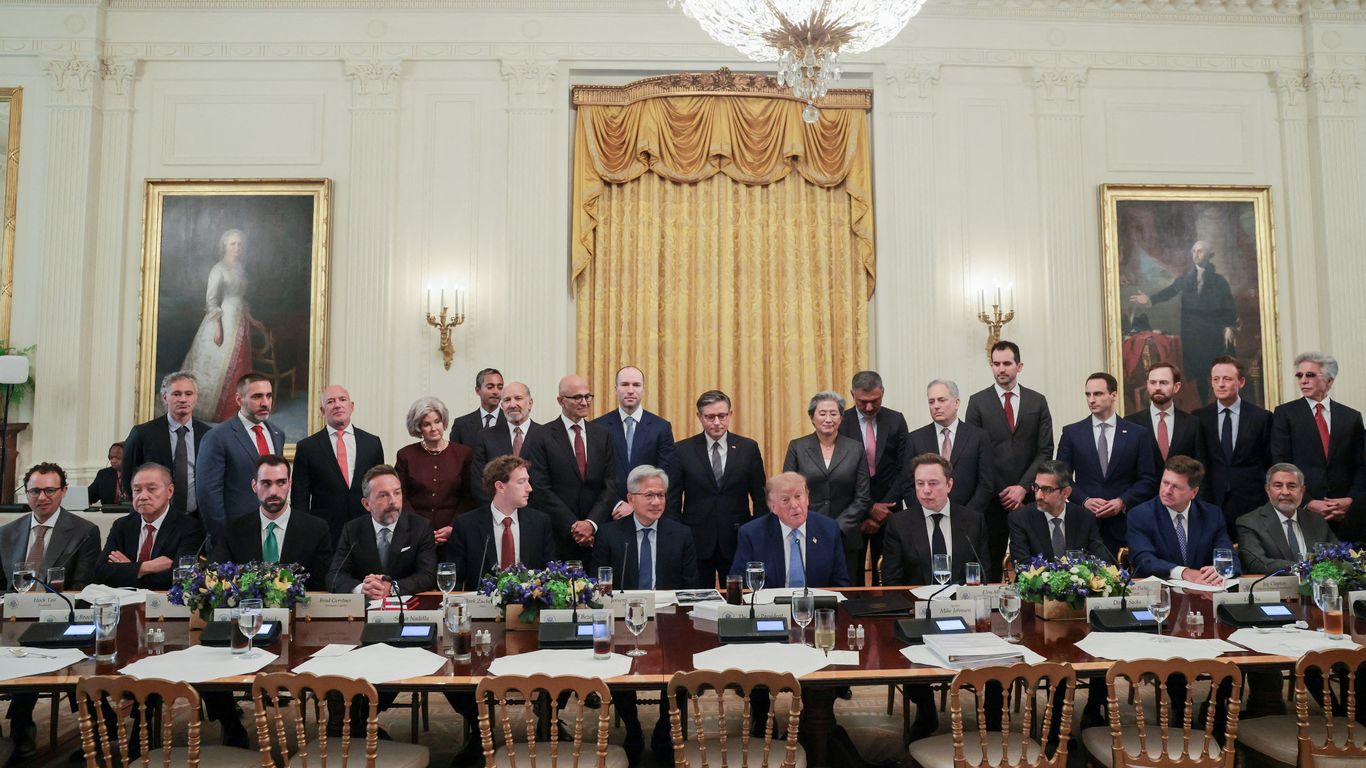
Image via Axios
Trump’s AI “constitution”: Big Tech signs, markets shrug, lawyers sharpen knives
Trump staged a White House table shot with tech CEOs and called the result a “morally binding” AI safety compact. That phrasing is the tell. It’s politics trying to outrun policy: get the headline today, fight about enforcement tomorrow.
If this stays voluntary, it’s basically marketing copy plus a permission slip for scale. If it morphs into procurement standards, liability hooks, or model-licensing gates, then it becomes real regulation by another name — and that’s where costs land: compliance, audit trails, and slower shipping.
The market implication is timing. The near-term winner is still the infrastructure stack (compute, power, data center capex). The medium-term risk is that “safety” becomes a toll booth that entrenches incumbents and kneecaps the second tier.
📈 Fred's Take: This is optics with a direction-of-travel: Washington wants to be seen driving the bus while letting the megacaps keep the keys. The trade isn’t to fade AI because of a photo op — it’s to price a wider moat for the biggest platforms and higher compliance burden for everyone else. Watch for this to show up first in federal contracting rules; that’s where “voluntary” turns into mandatory.
📎 Axios
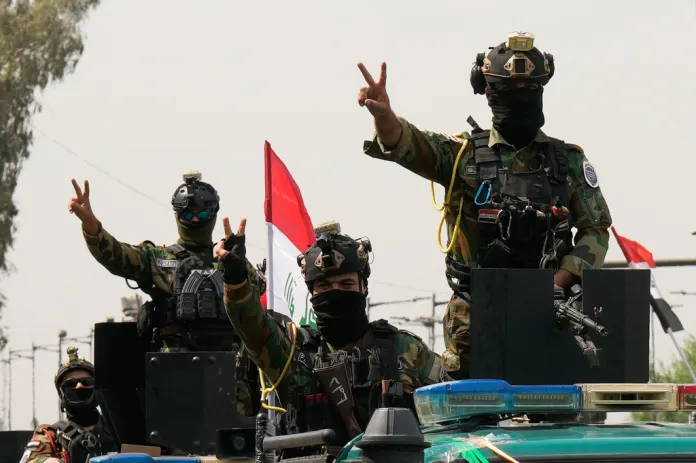
Image via Washington Examiner
U.S. out of Iraq: lower headline risk, higher drone-and-missile optionality
The U.S. announced all forces are withdrawn from Iraq, closing the 12-year anti-ISIS mission and ending a long chapter of boots-on-ground exposure. It’s a clean headline and an obvious political win for anyone selling “no more forever wars.”
But markets don’t price speeches — they price supply disruption and escalation paths. Iraq is still a map-adjacent risk node for pipelines, bases, and proxy traffic. Removing U.S. personnel reduces one kind of risk (casualties, hostage scenarios) and increases another (miscalculation because deterrence now happens over the horizon).
Energy cares about what replaces presence: ISR coverage, quick-strike capacity, and how local factions read the exit. If the region interprets it as a vacuum, the probability distribution for an oil spike fattens.
📈 Fred's Take: This trims one tail risk for U.S. equities (a sudden “bases hit, troops killed” shock) but it adds convexity to crude because the deterrence posture gets less visible. I’d rather own energy volatility than chase defense beta on this headline alone. If Brent starts grinding higher on “security vacuum” chatter, that’s when inflation expectations and rate cuts get pushed out.

Image via ZeroHedge
Argentina threatens the UK over Falklands drilling: it’s small barrels, big signal
Argentina is threatening court action against the UK over oil drilling around the Falklands. This is old sovereignty friction meeting new economics: higher-for-longer energy pricing turns every marginal basin into a political football again.
Don’t overstate the immediate supply impact. The Falklands isn’t a swing producer. The tradeable piece is the precedent: legal and diplomatic harassment is the modern way to tax projects without calling it expropriation.
For investors, this is another reminder that “jurisdiction risk” is back as a first-class input. Political leverage is being applied upstream, not downstream, and that changes project hurdle rates and who gets financed.
📈 Fred's Take: This won’t move global oil tomorrow, but it can move capital costs for frontier exploration and any company that needs clean title to book reserves. The market keeps underpricing how fast governments reach for lawyers when budgets are tight. If you’re in small-cap E&P or frontier development, jurisdiction is now part of your discount rate, not a footnote.

Image via TheStreet
Starship keeps hitting milestones: SpaceX just widened the gap to every would-be competitor
SpaceX delivered another Starship proof point that makes the vehicle harder to dismiss as a science project. Starship isn’t just a rocket. It’s a manufacturing system, a logistics platform, and the lowest-cost path to putting mass in orbit at a cadence nobody else can match.
That matters because SpaceX’s valuation isn’t a simple multiple on today’s launch business. It’s a call option on margin expansion (reusability at scale), market expansion (new payload classes), and Starlink defensibility (cheaper, faster replenishment).
Public markets feel this in two ways: private valuations keep resetting what “growth” costs, and every aerospace/defense name gets benchmarked against a company that iterates like software and builds like a factory.
📈 Fred's Take: Starship success is deflationary for space access and inflationary for SpaceX’s moat. If you’re betting on anyone else in launch without a credible cost curve, you’re effectively short Starship. The spillover trade is selective: suppliers tied to high cadence win; legacy primes relying on cost-plus launch economics lose pricing power over time.
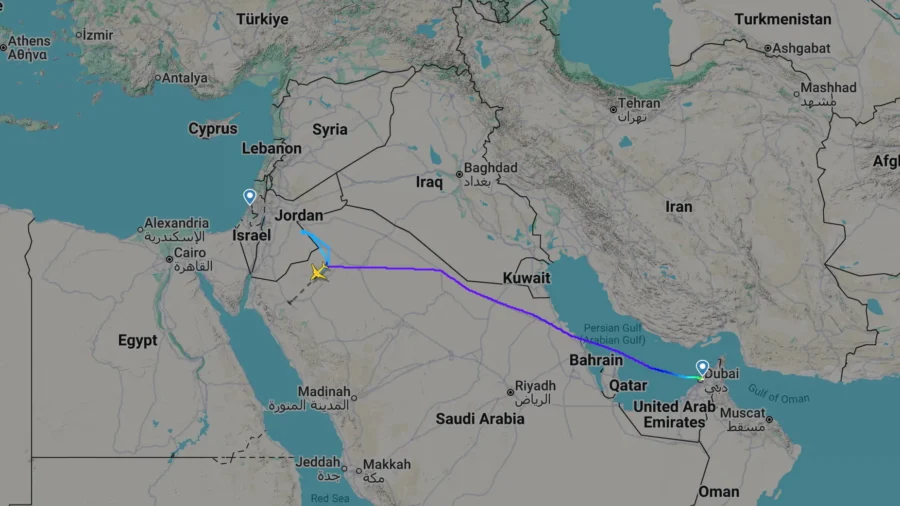
Image via NTD
Israel-bound flight diverts after cockpit brawl: aviation security is back in the tape
An Israel-bound flight made an emergency landing after a reported brawl between pilots, prompting an investigation into whether it was a terrorist incident. Even if this ends up being a human-factor meltdown, not terrorism, the market reaction channel is the same: tighter procedures, higher friction, and renewed security posture.
Airlines live on operational stability. Any event that triggers new screening rules, cockpit controls, or route disruptions hits costs first and revenue second. And for Israel-linked routes specifically, rerouting and insurance pricing can change quickly on perceived risk, not confirmed facts.
The broader macro tie-in is travel demand versus travel hassle. Consumers don’t stop flying overnight, but they do respond to uncertainty with shorter booking windows and fewer discretionary trips, especially when ticket prices are already doing heavy lifting.
📈 Fred's Take: Treat this as a risk-premium headline for airlines and travel, not a one-day news spike. If investigators lean toward terrorism, you’ll see security vendors bid and airline margins get pinched through compliance and routing. The smart move is to watch insurance chatter and route changes — that’s where the real P&L impact shows up.
📎 NTD
That’s the board. Trade the second-order effects, not the press conference. See you before the bell tomorrow.
— Fred Frost
