Today’s Sponsor
America's national debt has blown past $40 trillion — and we're adding another trillion every five months. Interest payments alone now top $1 trillion a year, meaning borrowed money is paying interest on borrowed money. Economists call this a debt death spiral, and your retirement savings could be caught in the middle.
A new free report reveals the three ways governments escape a debt spiral, how purchasing power quietly erodes, and exactly how to move a portion of your savings into a financial safe haven before it's too late. No cost. No obligation. Delivered to your inbox in minutes.
Get the Free Debt Death Spiral ReportThis is an advertisement from American Alternative Assets. If you no longer wish to receive these promotions, unsubscribe here. American Alternative Assets | 21700 W Oxnard St, Suite 850, Woodland Hills, CA 91367.

Five moves to price before the bell: Anthropic files, SpaceX borrows big for chips, Serbia flips, Le Pen reloads, and AI-driven cybercrime becomes one integrated trade.

Image via NBC News
Anthropic files: the AI IPO window just got a battering ram
Anthropic dropped its first public IPO filing, setting up what’s being framed as one of the biggest tech debuts in history. Translation: the market is about to get a live, audited look at the unit economics of frontier-model AI at scale, not the pitch-deck version.
This matters because AI has been trading like a story, not a cash-flow stream. The moment a flagship model company prints real numbers on revenue concentration, compute costs, long-term cloud commitments, and retention, every AI multiple in public markets gets a new anchor.
Expect a loud re-rating across the stack: semis, cloud, data-center power, and the second-derivative software names riding “AI” in the ticker description. IPOs don’t just raise money; they reprice narratives.
📈 Fred's Take: This filing is a stress test for the whole AI bubble and the whole AI boom at the same time. If the gross margin story is real and compute spend is controllable, risk-on gets another leg and the IPO calendar unclogs. If the numbers look like a black hole of capex and cloud bills, you’ll see multiple compression first in the weakest “AI-adjacent” equities, then in the megacap enablers.
📎 NBC News
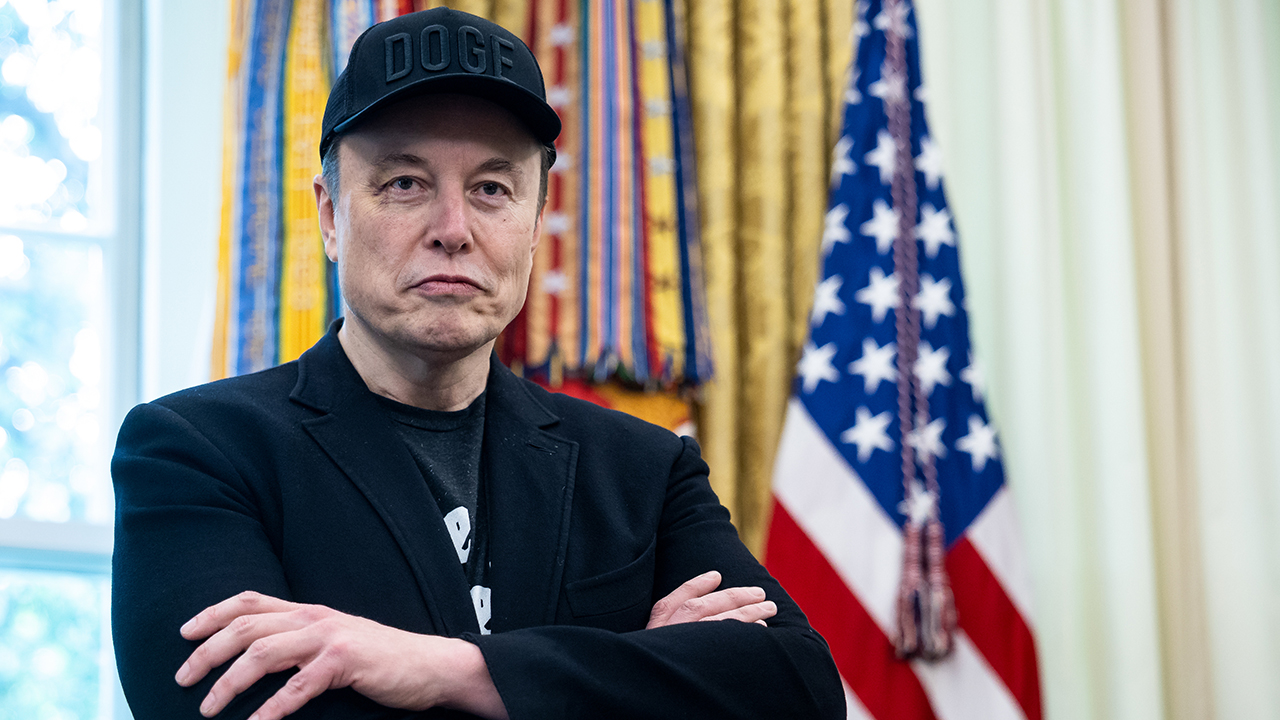
Image via Fox Business
SpaceX borrows $40B for GPUs: AI capex isn’t slowing, it’s levering up
SpaceX reportedly secured $40 billion in debt financing earmarked for GPU purchases, with Musk warning that the AI debt window has effectively closed for most companies. That’s not just a chip-buying headline; it’s a capital-markets headline.
The AI buildout is shifting from equity-funded growth to balance-sheet warfare. When the largest players can lock financing and everyone else can’t, you don’t get a broad innovation wave. You get consolidation, vertical integration, and pricing power concentrating in fewer hands.
Markets should read this as a two-track economy inside AI: winners with funding pipelines and supply allocation, and everyone else paying spot prices and begging for capacity. That split feeds directly into cloud margins, semiconductor demand visibility, and credit spreads.
📈 Fred's Take: This is the part of the cycle where leverage replaces hype, and leverage always ends with a shakeout. The trade is to favor the capacity owners and the toll collectors: the GPU supply chain, power and cooling, and the clouds that can ration compute. I wouldn’t chase unprofitable AI app layers here; financing is becoming the moat, and most of them don’t have one.

Image via Axios
Serbia flips the table: a student revolt just rewired Balkan risk
A student-led movement toppled Serbia’s longtime ruling party, ending 14 years of right-wing control after former President Aleksandar Vučić conceded. This is a regime-change style event, not a normal rotation, and it drops straight into a region where EU alignment, Russia exposure, and energy politics still matter.
The immediate market read is risk premium and funding conditions. Political resets can bring reform and capital inflows, or they can bring instability, street pressure, and policy paralysis. What investors will watch first is the coalition math: who controls the finance ministry, what happens with central bank posture, and how fast the new leadership signals on EU integration.
Balkan politics doesn’t usually move global indices, but it does move project finance, cross-border banks, and regional FX sentiment. It’s also another data point in a broader European theme: incumbents are vulnerable when inflation scars and youth unemployment stay hot.
📈 Fred's Take: This is a local event with regional spillovers, but it’s part of a continental pattern: politics is turning into a macro variable again in Europe. If the new leadership leans pro-EU and credible on fiscal governance, Serbian assets and regional banks catch a bid and spreads tighten. If it’s fractured and reactive, you’ll see capital sit on the sidelines and volatility leak into neighboring risk trades.
📎 Axios
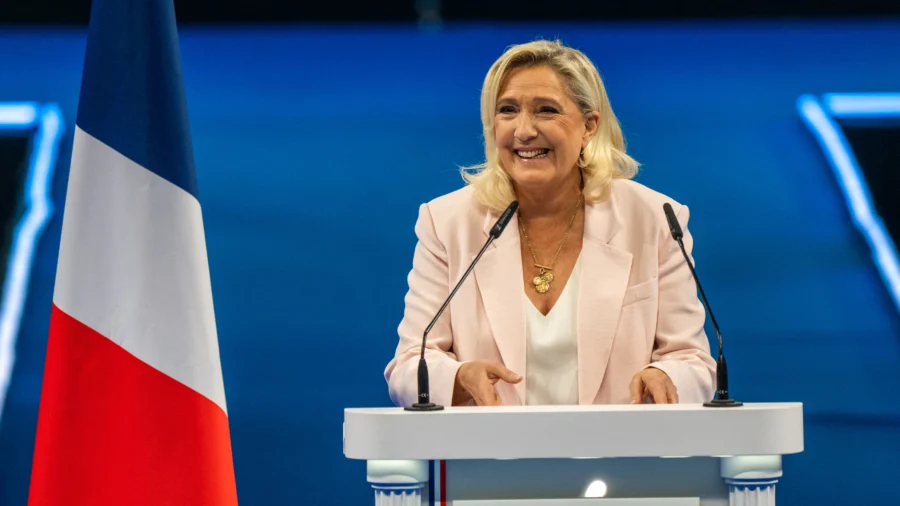
Image via NTD
Le Pen is back: France just put redenomination risk back on the tape
Marine Le Pen launched her presidential run for France’s 2027 election, kicking off the early phase of a campaign that markets will treat like a slow-moving shockwave. France is not a small country with a small bond market; it’s the core of European credit plumbing.
Even before polls harden, the trade starts with expectations: fiscal stance, EU posture, and the probability of policy conflict with Brussels. That goes straight into OAT spreads versus Bunds, bank funding costs, and the euro’s political risk premium.
If you’re long Europe, this is your reminder that the euro isn’t just a currency, it’s a treaty. Campaigns that challenge the rules raise the cost of capital, and the bond market reacts faster than voters do.
📈 Fred's Take: Watch OAT-Bund spreads like you watch VIX: it’s the early warning system. The euro can absorb noise; it can’t absorb a sustained credibility hit in French fiscal governance layered on top of higher-for-longer rates. If polls tighten, I’d expect wider spreads, weaker EUR, and pressure on French banks before you see any panic in equities.
📎 NTD

Image via Fortune
AI cybercrime is converging: fraud, hacking, and laundering are becoming one trade
Fortune reports that AI is giving cybercrime a makeover, and a startup called Overwatch just raised $15 million to fight back. The key point isn’t the funding size; it’s the threat model: AI is collapsing formerly separate criminal lanes into one integrated attack chain.
That means the cost of an incident goes up, the speed of an incident goes up, and the line between cybersecurity and financial crime compliance gets erased. For enterprises, it’s not just “prevent breaches” anymore. It’s “prevent breaches that instantly become fraudulent transfers and clean exits through laundering rails.”
Markets should treat this as a tailwind for security spend that doesn’t depend on GDP growth. When attackers automate, defenders standardize, and budgets shift from nice-to-have tools to core risk management.
📈 Fred's Take: Cyber is back to being non-discretionary capex, and AI makes the ROI math brutal: spend now or pay later, bigger. The winners won’t be the noisiest AI security demos; they’ll be the platforms that integrate identity, payments risk, endpoint, and response with low friction. This is bullish for scaled security vendors and any infrastructure player that becomes a choke point for verification.
📎 Fortune
That’s the board. Price the IPO tape, respect the leverage, and keep one eye on Europe’s bond market — it’s where politics hits portfolios first.
— Fred Frost
