Today’s Sponsor
Oil markets are shifting as Venezuela's disruption removes critical barrels while spare capacity shrinks. Supply pressure is building before headlines catch up — and smart traders are positioning now.
Our exclusive briefing reveals three energy stocks emerging from this supply shock, plus the key signals to monitor as this setup evolves. This is about preparation, not prediction.
Get the Free Oil Trading ReportBy following the links above, you're opting in to receive valuable updates from Wealthiest Investor News plus 2 bonus subscriptions. Your privacy is important to us. You can unsubscribe anytime. See our privacy policy for details.

Tuesday, August 11, 2026: Security theater in the skies, real missiles on the ground, and real rates on the screen. Here’s what moves money before the open.
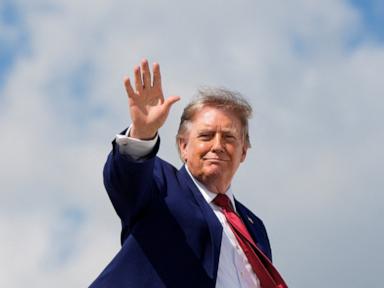
Image via ABC News
Catering-truck exit from Air Force One: the risk premium is back in the travel schedule
ABC reports Trump used an elaborate workaround to conceal his movement from Turkey to the U.K., including slipping off Air Force One via a catering truck and transferring to a military aircraft. The backdrop: Iranian threats and a security environment that’s getting less predictable by the week.
This isn’t gossip. It’s a reminder that high-level travel, diplomacy, and deterrence are now trading inputs. When leaders move like targets, the market starts pricing disruption as a base case: tighter security, tighter routes, and a higher probability of misread signals.
The immediate tell won’t be in equities headlines. It’ll show up in energy convexity, defense bid, and risk-off flows on any hint the Iran file is slipping from managed tension into operational accidents.
📈 Fred's Take: Geopolitical risk is re-entering portfolios through the back door: logistics, travel, and decision-making speed. If your book assumes “Middle East calm unless proven otherwise,” you’re mispriced. Own some insurance: energy exposure that benefits from spikes, selective defense, and a little gold optionality, because the tape won’t warn you before the next headline hits.
📎 ABC News

Image via BBC News
Russia’s North Korea missile pipeline: escalation by supply chain
Zelensky says Russia used North Korean ballistic missiles in strikes on Zaporizhzhia that killed at least six and injured 19. If accurate, it’s not just another grim data point in the war; it’s evidence the conflict is being industrialized through allies.
Markets care about two things here: sustainability and spillover. External missile supply extends Russia’s strike capacity and signals sanctions friction is being routed around, not through. That drags the timeline out and raises the odds of broader enforcement actions, shipping restrictions, and secondary sanctions noise.
Energy and freight are the first transmission channels. The second is defense procurement: longer wars mean longer orders, bigger budgets, and less political appetite to “normalize” risk premiums.
📈 Fred's Take: A war that can reload is a war that doesn’t fade from the risk stack. The trade is not a one-day spike; it’s persistent uncertainty that keeps term premiums sticky and supports defense and cybersecurity revenue visibility. If you’re hunting “peace dividend” trades, stop — this is the opposite signal.
📎 BBC News
BNY says 60% of code is AI-generated: the cost curve just snapped
On Bloomberg’s Tech Disruptors, BNY CIO Leigh-Ann Russell says roughly 60% of the bank’s code is AI-generated, framing AI as central to modernization and engineering throughput. That’s an eye-popping number from one of the most plumbing-heavy institutions in finance.
Translation: the bank tech stack is moving from multi-year refactors to rolling releases. If large incumbents can compress dev cycles and reduce run-the-bank spend, operating leverage shows up quietly in efficiency ratios, not flashy product launches.
The market implication isn’t “buy anything with AI in the name.” It’s that winners will be the firms that turn AI into lower unit costs, faster compliance changes, and fewer outages. Also: more code shipped means more need for controls, auditability, and security tooling.
📈 Fred's Take: This is bullish for the best-run financials and the picks-and-shovels vendors that sell governance, testing, and security around AI-generated software. The easy trade is chasing model makers; the durable trade is owning the platforms that keep banks compliant while they ship faster. Efficiency gains are the underappreciated catalyst for bank multiples when the rate tape stops whipping around.
Hormuz “deal” turns into dueling reparation demands: oil volatility stays bid
CNBC reports the U.S. and Iran are trading reparation demands as hopes fade for a Hormuz-related de-escalation framework. Publicly, both sides talk about winding down hostilities. Practically, they’re staking positions that don’t overlap.
When negotiations move into “you pay first” territory, the market stops expecting a near-term release valve. That keeps a geopolitical premium embedded in crude, products, and shipping insurance, and it reinforces the idea that supply risk can return overnight.
This matters for inflation prints and central bank reaction functions. If energy drifts higher into the next CPI/PCE windows, it complicates any dovish turn and keeps real rates from falling cleanly — a headwind for duration and a tailwind for cash-flow-now businesses.
📈 Fred's Take: Stop pricing a clean glide path. Hormuz risk is not a forecast; it’s an option, and the premium is rising. I’d stay long quality energy and avoid getting cute with long-duration assets until the Middle East stops feeding inflation surprises into the data.
📎 CNBC

Image via Yahoo Finance
Crypto backs off into inflation week: liquidity is the only catalyst that matters
Yahoo Finance notes bitcoin and ethereum opened lower ahead of this week’s inflation reports. That’s the usual setup: risk assets trade the macro calendar, not the whitepaper.
Crypto is still a high-beta expression of liquidity expectations. If inflation comes in hot, yields pop, the dollar firms, and levered risk trims first — crypto included. If inflation cools, you’ll see the bid return fast, but it will be macro-driven, not narrative-driven.
Watch the cross-asset tells: real yields, the front-end path, and equities breadth. Crypto doesn’t need a “crypto event” to move; it needs the market to decide whether financial conditions are easing or tightening.
📈 Fred's Take: This is a rates trade wearing a blockchain costume. If CPI surprises higher, expect downside continuation and ugly liquidations in the fringe. If CPI behaves, buy strength in majors only — bitcoin and ethereum — and leave the long-tail tokens for tourists until liquidity actually turns.
That’s the board. Trade the data, respect the geopolitics, and don’t pay peak multiples for stories when the rates tape is still the boss.
— Fred Frost
