Today’s Sponsor
Nuclear energy stocks surged 40%+ this year as the next buildout cycle accelerates toward 2026. One uranium producer just generated nearly $200 million in quarterly free cash flow, while other nuclear companies locked in massive government contracts—all driven by real earnings and exploding demand as U.S. capacity is projected to triple.
Our analysts identified 7 nuclear stocks positioned to capitalize on this trend right now. Some offer explosive upside tied to uranium prices, others provide steady growth from infrastructure contracts. Get the complete list with names and tickers free today—but this report moves behind the paywall soon.
Get the Free ReportBy clicking the link above, you will get this free report and a free subscription to MarketBeat's daily email newsletter. You are also agreeing to the terms of our privacy policy. Unsubscribe at any time.

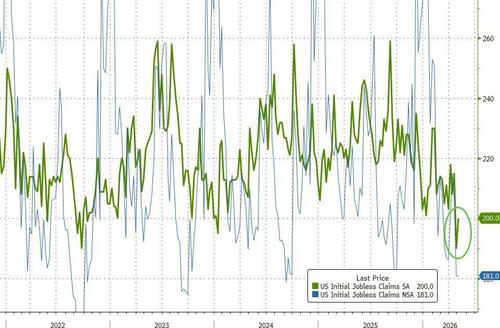
Image via ZeroHedge
Jobless Claims & JOLTs Confirm the “Higher Hire, No Fire” Tape
Jobless claims stayed calm and JOLTs is still screaming one thing: employers are hiring and they’re not cutting. Openings may churn, but separations aren’t spiking — the classic “keep the staff, pay the bill” posture you see when demand is sticky and managers still remember 2020–2022 whiplash.
That’s a problem for anyone waiting on a clean growth rollover to drag inflation down for the Fed. A labor market that won’t crack keeps services inflation alive, keeps wage bargaining firm, and keeps the “soft landing” narrative intact longer than bears want.
✍ My Take: This is bullish for cyclicals in the near term but bearish for rate-cut fantasies. If labor won’t break, the 2-year stays bid and “multiple expansion” in long-duration tech gets capped. Trade it like this: boring economy = higher-for-longer rates = buy quality cash flow, fade the speculative froth when it pops.
China Farmland Buying Moves From Local Weirdness to National Security File
The bipartisan push to block Chinese purchases of U.S. farmland is gaining momentum because the numbers — and the locations — spook people. This isn’t just “foreign capital buying dirt.” It’s strategic assets near infrastructure, bases, water rights, and food supply chains getting pulled into a geopolitical contest that Washington is finally treating as real.
Expect more screening, more forced divestments, and more “state-by-state” restrictions that make the U.S. property market even more fragmented. The political path here is easy: nobody loses elections by being tough on Beijing, and “food + land” is the kind of headline that wakes voters up.
✍ My Take: This is quietly bullish for domestic ag supply chains, farm REITs with clean ownership, and U.S.-based fertilizer/logistics plays — and bearish for any China-linked rural development capital trying to operate under the radar. The bigger tell: we’re expanding “national security” into everything, which means more regulatory risk premium across real assets.

Image via National Review
Data Centers Aren’t “Industrial Blight.” They’re the New Defense Budget.
The case for data centers is straightforward: compute is now a strategic resource. AI training, cloud workloads, defense applications, and enterprise modernization all funnel into one constraint — power + land + permitting. America’s edge isn’t just chips; it’s the ability to deploy infrastructure faster than rivals.
But the friction is rising: local backlash, zoning fights, water usage scrutiny, and grid interconnection queues that move at DMV speed. The policy fight is turning into a question of whether the U.S. can build at scale without strangling itself in process.
✍ My Take: Long AI infrastructure isn’t a meme — it’s the picks-and-shovels trade of the decade: grid equipment, switchgear, transformers, gas peakers, nuclear optionality, and the boring firms that actually connect power to racks. If permitting reform doesn’t happen, scarcity just makes the incumbents even more valuable — and pushes prices higher for everyone else.

Image via The Hill
Rubio Meets Pope Leo: Diplomacy Theater, Real Signal on Iran Optics
Secretary of State Marco Rubio met Pope Leo XIV at the Vatican, landing in the middle of a public Trump-versus-Pope feud tied to the Iran war. The Vatican doesn’t move markets by itself — but it influences global public opinion, coalition politics, and the “moral narrative” around conflict, refugees, and sanctions.
When religious diplomacy gets pulled into war messaging, it usually means the administration is managing legitimacy abroad while keeping domestic politics from splitting into factions. That matters because legitimacy is what keeps sanction coalitions together — and coalitions are what make energy markets behave.
✍ My Take: Watch oil, not incense. If this is groundwork to keep Europe aligned on enforcement and shipping controls, crude risk premium stays elevated and volatility remains tradable. The moment coalition discipline cracks, you’ll see it in freight, insurance spreads, and a fast drop in geopolitical bid — until the next headline hits.
📎 The Hill
Cuba Oil Backchannel Drama: Sanctions Risk Is Back in the Tape
Sen. Rick Scott is hammering House Democrats after Rep. Pramila Jayapal said she’s been trying to help Cuba secure oil via conversations with ambassadors from Mexico and others. This is the kind of story that turns into a sanctions knife-fight fast: Cuba policy is a Florida accelerant, and Florida politics drives Washington behavior more than people admit.
Even if nothing legislatively changes tomorrow, the signal is clear: enforcement posture and secondary-sanctions rhetoric can tighten quickly when the narrative becomes “helping a sanctioned regime get energy.” That pulls banks, shippers, and refiners into compliance mode — and compliance mode breaks deals.
✍ My Take: This is small-barrel geopolitics with outsized enforcement consequences. Expect higher perceived risk for any LATAM energy logistics that even smells like Cuba exposure — and don’t ignore Florida-driven policy swings heading into election season. The trade is volatility: headlines create spreads, and spreads create opportunity if you’re disciplined.
That’s the tape. Stay liquid, stay hedged, and don’t argue with price.
— Fred Frost
