Today’s Sponsor
Three under-the-radar small-cap stocks are showing early signs of unusual market activity. Our research team has identified emerging changes in volume patterns and momentum that typically precede broader market attention.
These lightly covered companies are just starting to appear on institutional watchlists. Get our complete analysis covering where the activity is happening, what's driving participation, and our criteria for tracking these emerging setups — releasing in the next 24-48 hours.
Get the Free Research UpdateThis material is shared strictly for educational and informational purposes. We encourage readers to perform their own research and due diligence. By clicking the link you will automatically be subscribed to the Stock News Trends Newsletter. Privacy Policy

Guidance misses, geopolitical anchors, margin math disguised as AI, oil-risk rhetoric, and EV platform reality checks.

Image via MarketWatch
PayPal: Good Quarter, Bad Setup — Guidance Miss Is the Whole Ballgame
PayPal printed a decent “here-and-now” quarter, but Wall Street doesn’t pay for yesterday’s numbers. The June-quarter guide came in light and that’s what hit the stock. In payments, the market is allergic to any hint that volume, take rate, or transaction margin is rolling over.
This is the same old PayPal problem wearing a new suit: growth is fine until it isn’t, and the Street wants proof the re-acceleration is durable — not promo-driven, not one-quarter timing, not cost-cutting optics. When guidance lags, investors immediately handicap tougher competition (Apple Pay, Shopify, wallets), higher churn in checkout, and a tougher consumer as student-loan/credit stress reappears.
✍ My Take: This isn’t “PayPal is broken.” It’s “PayPal has no margin for error.” If you own it, you’re renting it — you need the next guide-up to get paid. If you don’t, let it base: payments multiples don’t re-rate until guidance stops disappointing.

Image via National Review
Don’t Pull Out of Germany — Markets Still Need the Anchor
The argument: German politics are messy, Berlin can be infuriating, and Washington is tempted to “punish” allies by pulling troops and dialing back posture. That’s a rookie move. Europe’s security architecture isn’t a feelings contest — it’s a leverage system.
Germany is still the logistical spine of U.S./NATO operations on the continent. You don’t yank the spine because the patient won’t do physical therapy fast enough. A drawdown would read as U.S. retreat, invite opportunism from Russia, and force Europe into a rushed defense-capex cycle that’s inflationary and bond-negative at the margin.
✍ My Take: Stay in Germany. The market trade is simple: credibility lowers risk premia. A visible U.S. pullback pushes EUR risk up, widens European credit spreads, and keeps global defense spending sticky — good for primes, bad for duration.
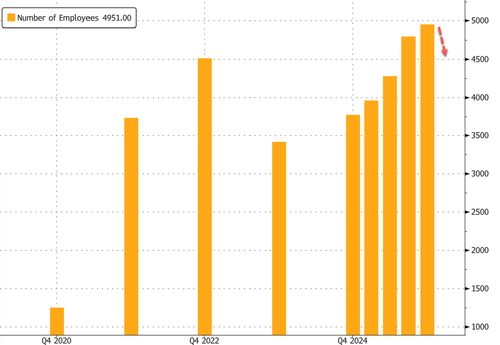
Image via ZeroHedge
Coinbase Cuts 14% — “AI Agents” Is the Headline, Margin Math Is the Story
Coinbase is cutting headcount by 14% and framing it as an AI-agents productivity leap. Maybe. But the timing screams operating leverage management: Coinbase knows crypto volumes are fickle, fee compression is structural, and regulators remain a permanent tax on the business model.
AI will absolutely eat white-collar workflows — compliance triage, customer support, fraud ops, basic analytics — and exchanges have more automatable process than almost anyone. Still, in this sector layoffs are usually a volatility hedge: reduce fixed costs so you can survive the next volume air pocket without tapping markets.
✍ My Take: Treat this as “Coinbase protecting EBITDA,” not “Coinbase reinventing work.” It’s supportive for near-term margins, but it also tells you management doesn’t trust activity levels to stay hot. Bullish crypto doesn’t always mean bullish COIN — watch volumes, take rates, and regulatory headlines, not the AI marketing.
Trump Says Iranians Need Guns — Rhetoric That Moves Oil Before It Moves Votes
Trump’s comment that Iranians “need guns” and “I think they’re getting some” is political dynamite with market consequences. The Middle East risk premium doesn’t require a policy change — it only needs traders to believe escalation odds are rising, or that covert channels are getting noisier.
Any whiff of U.S. encouragement of internal Iranian unrest (or arming) increases tail risk: shipping disruptions, proxy flare-ups, and miscalculation. That doesn’t guarantee higher oil, but it widens the distribution — more upside spikes, more volatility, more hedging demand.
✍ My Take: The immediate trade is optionality: crude vol, energy equities as a hedge, and a bid under gold on headline risk. If you’re long growth and short inflation, this is exactly the kind of tape bomb that ruins your week.
Ford’s EV Skunkworks Comes Clean — Breakeven 2029 Is a Long Time in Car Years
Ford is pulling back the curtain on its “Universal Electric Vehicle” platform — the internal bet that can take the EV unit from billions in losses to breakeven by 2029. That timeline tells you everything: the EV market slowed, pricing is brutal, and Detroit is done pretending scale arrives on schedule.
Platforms matter. If Ford can standardize software, battery packaging, and manufacturing, it can cut cost per unit and reduce the “every model is a science project” problem. But the market is now conditioned to punish promises: it wants evidence in gross margin, warranty trends, and inventory discipline — not another PowerPoint roadmap.
✍ My Take: This is the right strategic move, but the stock won’t pay you for 2029 without proof in 2026–27 numbers. The tradable angle is discipline: fewer EV vanity projects, more platform economics. Until margins inflect, Ford remains a cyclical value name with an EV call option — not an EV compounder.
📎 CNBC
That’s the map. Trade the incentives, not the headlines.
— Fred Frost
