Today’s Sponsor
The biggest AI wins come from companies you don't hear about every day. Like the database provider now embedded into all three major cloud platforms with access to 90% of the market, or the chip giant holding 80% of the AI data center market.
Our 10 Best AI Stocks to Own in 2026 reveals these hidden winners plus a plucky challenger with 28% revenue growth forecasts, a multi-cloud operator with analyst targets near $440, and 6 other AI stocks set to explode. Get the complete list while it's still free.
Get the Free ReportBy clicking the link, you agree to join MarketBeat emails and unlock complimentary insights from select partners. Privacy Policy

Treasury Secretary Scott Bessent warns AI-driven account takeovers are accelerating as crude jumps on renewed Iran-linked tensions, Oppenheimer argues the quiet bull case is wealth + fees, “stagflation” rhetoric heats up beyond the data, and primary politics could reprice policy risk.

Image via Fox News
Bessent Flags AI Bank Hacks — Washington Finally Notices the Obvious
Treasury Secretary Scott Bessent is warning Americans that AI-driven account takeovers are accelerating. The pitch: new models can mimic voices, defeat weak authentication, and scale phishing into something closer to automated fraud factories.
This is less “consumer warning” and more “systemic risk memo.” If fraud losses jump, banks tighten onboarding, increase verification friction, and push more spend into cybersecurity and identity rails — all of which hits margins before it helps risk. Expect more noise around real-time payments, SIM-swap defenses, and liability rules.
✍ My Take: This is bullish for cybersecurity, identity verification, and fraud analytics — and quietly bearish for banks with thin tech stacks and heavy consumer exposure. The market will ignore it until a headline breach hits a top-10 bank, then it’ll gap. If you’re long financials, you want the quality franchises with real security budgets — not the “regional value” names playing 2012 defense in a 2026 offense.
📎 Fox News
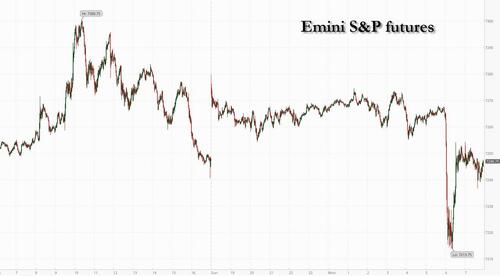
Image via ZeroHedge
Futures Chop, Oil Pops — Iran Risk Premium Back On The Tape
Futures were whipsawed while crude jumped as Iran-linked tensions flared again. This is the same movie: markets sell first, then decide whether it’s “real” when shipping, insurance, or actual barrels get affected.
Oil doesn’t need a shooting war to move — it needs uncertainty that forces refiners, shippers, and inventories to pay up. That feeds straight into inflation expectations, which feeds straight into rates. If crude holds a bid, the bond market stops easing and the “rate-cut daydream” gets pushed out again.
✍ My Take: Energy is the cleanest hedge against geopolitics and policy incompetence — and it’s still under-owned. If oil keeps rising, high-multiple growth gets a valuation haircut, while cash-flow energy and defense hold up best. Treat equity dips as tradable until crude starts pushing consumer inflation back up — then it stops being a dip and becomes a regime.
Oppenheimer Says “Everything’s Fine” — The Quiet Bull Case Is Wealth + Fees
Oppenheimer Holdings’ angle: despite the noise, the setup still looks constructive. Translation: markets are functioning, fee pools aren’t collapsing, and a lot of “bad news” is already priced into expectations.
If rates stay higher-for-longer but not chaotic, broker-dealers and wealth platforms can still grind: net interest income holds up, advisory fees stay sticky, and any reopening in IPO/M&A is pure upside torque. The risk is not “recession tomorrow” — it’s volatility spikes that freeze issuance and hit risk assets in client accounts.
✍ My Take: I like the sector when the narrative is grim but the plumbing is fine. Financials tied to wealth and advisory do best when markets churn but don’t break — and that’s the base case right now. You buy them for operating leverage to a thaw in deals, not for heroics in trading revenue.
Image via RealClearMarkets
“Stagflation Is In the Air” — The Politics Are Hotter Than The Data
RealClearMarkets takes aim at Elizabeth Warren-style stagflation warnings, pointing to a less-doomy read of conditions (think “misery index” framing). The broader point: “stagflation” is becoming a political weapon again — useful for campaigns, not always useful for portfolio construction.
Actual stagflation is a market regime: growth down, inflation up, and policy trapped. That’s when long-duration assets get smoked and real assets win. But labeling every sticky-price month as stagflation is how you mis-position, chase headlines, and miss rallies.
✍ My Take: Watch the bond market, not the stump speech. If inflation expectations re-accelerate while growth rolls, you own energy, value cash flows, and gold — and you avoid long-duration tech. Until then, “stagflation talk” is mostly marketing copy with a side of fear premium.

Image via National Review
Democrats’ “Tea Party” Energy? Watch The Primaries, Then Watch The Donors
National Review flags a surge candidate in Maine (Graham Platner) and asks if Democrats are getting their own Tea Party-style internal revolt. The market question isn’t ideology — it’s whether the party’s center loses control of nominations, committees, and ultimately fiscal priorities.
If primaries start punishing incumbents, you get faster swings in policy risk: taxes, healthcare pricing, bank rules, energy permitting, defense posture. Markets hate uncertainty more than they hate any single policy — because uncertainty widens discount rates and delays capital spending.
✍ My Take: A party civil war is bearish for “regulated winners” that rely on stable rulemaking — banks, managed care, big pharma, and parts of energy. It’s bullish for volatility and for companies selling compliance, lobbying, and legal shovels in a political gold rush. If this trend spreads, price a higher policy-risk premium into U.S. equities — especially into election-season liquidity.
Fred Frost — Morning Bullets. Stay liquid, stay skeptical, and don’t confuse headlines with trend.
— Fred Frost
