Today’s Sponsor
Markets are shifting — and most investors are missing it. The free Market Shift Report + Real-Time Watchlist breaks down exactly what's moving right now: policy impacts on economic trends, the return of supply-chain concerns, and what mixed consumer signals mean for the next quarter.
This complimentary report is only available for a limited time while these patterns are still developing. Don't get caught flat-footed — access it now before it's gone.
Get the Free Market Shift ReportWe encourage readers to perform their own research and due diligence on any information provided. By clicking the link above, you will automatically be subscribed to the Market Crux Newsletter. Privacy Policy


Image via Axios
Washington Has a New Anthropic Problem
The White House is trying to thread a needle: Anthropic is being framed as both a national-security risk and a national-competitiveness necessity. That’s not a talking-point contradiction — it’s the actual policy box they’re building for themselves in real time as AI rules harden.
The practical issue: the government wants tighter controls on frontier-model training, compute, and deployment, while also needing a small number of “trusted champions” to keep the U.S. ahead of China. Anthropic sits right in that blast radius because it’s big enough to matter, safety-branded enough to be “partnerable,” and powerful enough to scare regulators who don’t fully understand what they’re regulating.
Expect more “voluntary commitments” that quietly become mandatory, more procurement carrots, and more export-control language that leaks into domestic compliance. The market hears one thing: policy risk is now part of the AI business model, not a tail event.
✍ My Take: This is how you get an AI oligopoly by accident — then pretend it was governance. Public equities love the winners (megacap platforms + a couple model shops), but the long tail of AI startups gets a compliance tax they can’t pay. Trade it like defense: the moat is regulation, not code.
📎 Axios
Trump Says the U.S. Made $3B on Intel Stock — Read That as Industrial Policy, Not a Trade Ticket
Trump is touting a $3B haul in 90 days tied to Intel stock. The headline is profit. The subtext is Washington advertising it can “invest” alongside industrial policy and claim a scoreboard win.
That’s a regime shift: semiconductors are no longer just a business cycle — they’re a political asset. When politicians start marking P&L to market, you’re closer to implicit guarantees, not farther. It also signals more willingness to use equity-market optics to justify subsidies, procurement, and “strategic” capital support.
The immediate market implication is not “buy INTC.” It’s that the whole U.S. fab complex (equipment, advanced packaging, specialty chemicals, power/utility infrastructure) stays politically protected even if margins wobble.
✍ My Take: When the government starts bragging about trading gains, you should price in more intervention — and more volatility around announcements. This is bullish the ecosystem, not necessarily the stock being name-checked. If you want exposure, I’d rather own the toll collectors (equipment/suppliers) than the political football.
Reuters: Iran’s Top Crypto Exchange Allegedly Became an IRGC Cash Rail — Sanctions Risk Just Went Up
Reuters reports one of Iran’s most powerful families founded the country’s largest crypto exchange, and that it’s been used by the IRGC to move millions. That’s the kind of fact pattern that doesn’t end with a memo — it ends with designations, seizures, and pressure campaigns on offshore intermediaries.
Translation: compliance is about to tighten again across crypto on-ramps, stablecoin rails, and cross-border liquidity venues. Even if the alleged activity is concentrated in one jurisdiction, regulators use these episodes to justify broader surveillance, stricter KYC/AML expectations, and “de-risking” by banks that already hate this sector.
For markets, the first-order hit is to exchange tokens, thin-liquidity alts, and any venue relying on sketchy cross-border flow. The second-order effect is bullish for the most compliant incumbents and for regulated stablecoin issuers that can show clean pipes.
✍ My Take: Every time crypto gets tied to a military-intelligence actor, the compliance perimeter expands — and the trade gets more barbelled. You want BTC/ETH exposure and the cleanest regulated rails; you don’t want “growth” exchanges with opaque flow. This is how liquidity migrates to the boring players.
📎 Reuters
Raskin Says SCOTUS “Has Been Gerrymandered” — Translation: Court Legitimacy Is Now a Tradeable Risk
Rep. Jamie Raskin is escalating the post-ruling rhetoric, arguing the Supreme Court itself has been “gerrymandered” and calling for transformation of the institution. That’s not just cable-news heat — it’s signaling a Democratic posture shift toward structural court reform as a campaign and governing priority.
Markets care because institutional legitimacy fights don’t stay rhetorical. They bleed into rulemaking, enforcement aggressiveness, and the durability of major economic decisions — from election-law disputes to agency power to corporate regulation. When the Court becomes an openly contested political arena, the discount rate rises on anything dependent on stable administrative law.
The immediate impact is subtle but real: higher policy volatility premium in rates and in sectors that live and die by federal agencies (healthcare, energy permitting, financial regulation, Big Tech antitrust).
✍ My Take: Investors ignore “court reform” talk until it’s 3 a.m. and futures are limit-down on an election dispute. This is not an S&P story today — it’s a volatility story over the next 6–18 months. Pay attention to hedging costs and don’t underprice governance risk in regulated sectors.
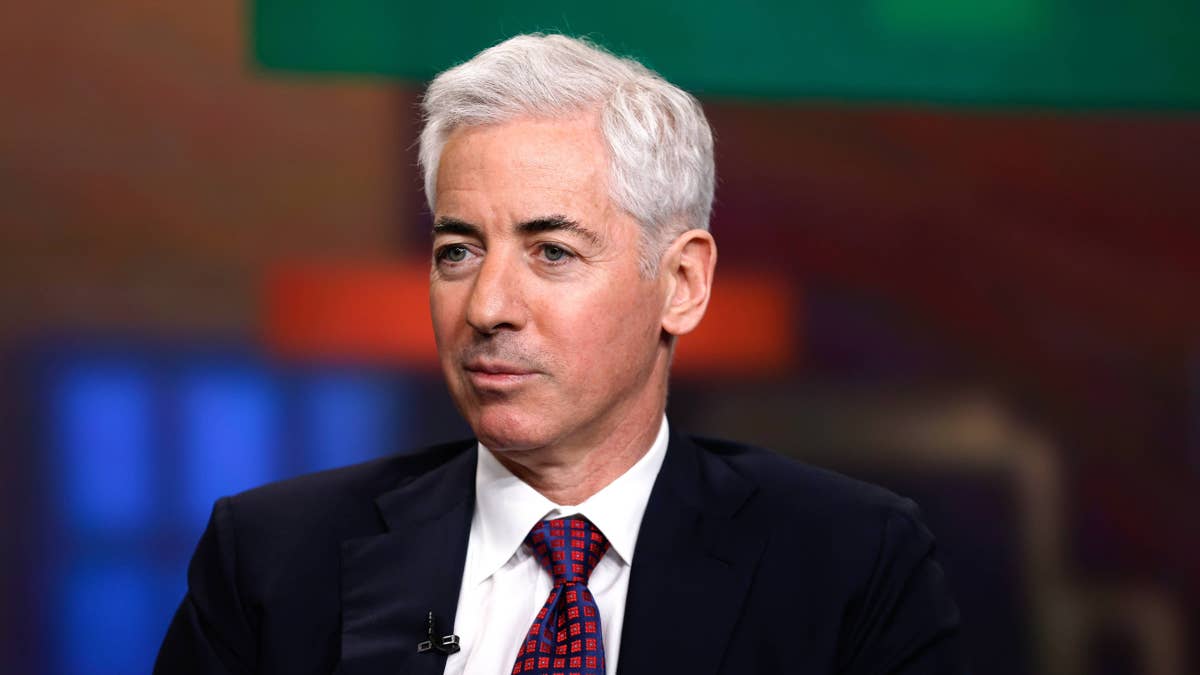
Image via TheStreet
Ackman’s IPO Debut Didn’t Pop — That’s the Market Saying “Fees Don’t Count as Alpha”
Bill Ackman’s new closed-end fund, Pershing Square USA, debuted and the reception wasn’t the triumph the branding implied. The message from the tape: the public market is not going to pay private-market-style terms for a story it can already approximate through cheaper vehicles.
Closed-end structures live or die by two things: sustained performance and a stable premium-to-NAV narrative. If the early days trade flat-to-down, you risk the classic CEF problem — a persistent discount that becomes the headline, not the holdings. And in this market, investors are demanding liquidity, transparency, and low fees — not hero-manager mythology.
The broader read-through is IPO appetite is back, but only for clean structures and clean math. Anything that smells like financial engineering gets punished.
✍ My Take: This is a gut-check for the entire “celebrity manager” complex trying to repackage hedge-fund economics for retail. If the discount opens and sticks, it becomes self-fulfilling dead weight. The better trade is the second-order beneficiary: exchanges, market makers, and plain-vanilla asset managers that win when investors choose cheap beta over expensive promises.
That’s the tape. Protect your downside, let the winners pay you.
— Fred Frost
/
