Today’s Sponsor
Get ahead of Wall Street with Elite Trade Club's free 5-minute morning brief. Over 170,000 readers rely on it for market-moving stories in plain English, key numbers to watch, and SMS alerts delivered straight to your phone before the bell rings.
Sign up today and unlock exclusive partner insights — handpicked opportunities designed to give you an extra edge. Completely free, one-click signup gets you started instantly.
Get the Free Market BriefBy clicking the link, you agree to join Elite Trade Club emails and unlock complimentary insights from select partners. Privacy Policy

Four stories: U.S. moves to choke Iran port trade; futures complacency near highs; mobility’s new “Big Three”; Georgia governor race disruption.

Image via The Hill
Hormuz Hardball: U.S. Turns Back Ships, Squeezes Iran’s Port Trade
The U.S. military says it has turned around six ships and is aiming to “completely” halt trade flowing out of Iran’s ports. This is a meaningful escalation from targeted interdictions to something that looks and feels like a blockade by another name.
Markets don’t need missiles flying to reprice risk — they just need shipping to stop. If cargo can’t clear Iranian ports (or insurers won’t touch the route), crude and refined products price in a fatter disruption premium. That ripples into inflation prints, airline margins, and the Fed path.
✍ My Take: This is bullish energy and bearish everything that lives on cheap fuel. I’d expect oil volatility to stay elevated and defense to catch steady bids while “soft landing” narratives get brittle. If you’re heavy growth, you’re implicitly short energy risk — hedge it or reduce it.
📎 The Hill
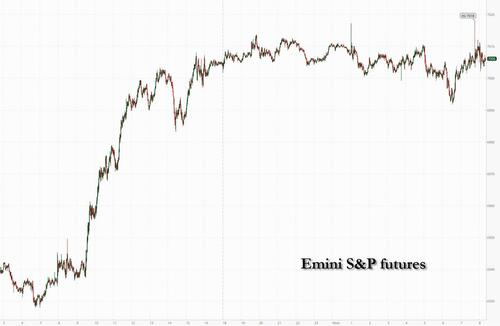
Image via ZeroHedge
Futures Stuck Near Highs: Peace Headlines vs. War Logistics
Equity futures are flat, sitting just below all-time highs, with traders leaning on “peace hopes” and solid earnings to justify staying long. That’s the tape: good news gets amplified, bad news gets waved off as “contained.”
But the Iran situation is not a vibes-driven story — it’s plumbing. Shipping, insurance, and supply chains are the mechanisms that hit CPI and margins, even if the S&P tries to levitate on AI optimism and buybacks. A market priced for perfection doesn’t handle surprise costs well.
✍ My Take: This is a complacency setup. When indexes hover near highs with geopolitical tail risk rising, you don’t add beta — you add discipline: tighter stops, more cash than feels “optimal,” and exposure to pricing power (energy, defense, select industrials). Peace hopes are not a strategy.

Image via Axios
The New “Big Three” Isn’t Detroit — It’s Tesla, Waymo, Uber
Axios argues the next U.S. mobility “Big Three” will be Tesla, Waymo, and Uber — a shift from manufacturing muscle to software, data, and network distribution. The fight isn’t just who builds cars; it’s who controls autonomous miles, mapping, and the rider relationship.
This matters because autonomy turns transportation into a platform economics game: high fixed costs, winner-take-most routes, and brutal pressure on late movers. It also threatens legacy auto margins (already thin) and re-rates insurers, advertisers, and even commercial real estate tied to parking.
✍ My Take: Don’t confuse “autonomy headlines” with investable cash flow. Tesla is still the only one with scale and consumer hardware distribution, Waymo has the tech credibility, and Uber has the demand funnel — but valuations will swing on regulation and unit economics, not demos. I’d avoid legacy autos as a “value” play here; it’s value-trap territory if autonomy adoption accelerates.
📎 Axios

Image via Politico
Georgia’s Air War: Billionaire Candidate Scrambles GOP Money and Messaging
Politico reports Rick Jackson’s sudden cannonball into Georgia’s governor race is already distorting the state’s political market — dominating airwaves, irritating other Republicans, and forcing reallocations across campaigns. When a self-funded player shows up, everyone else either gets louder or gets squeezed out.
For investors, state politics isn’t just culture-war theater — it’s taxes, incentives, permitting, and regulatory posture. Georgia is a logistics and manufacturing hub; changes in leadership can move the needle on tort climate, energy siting, and corporate relocation math.
✍ My Take: Watch the second-order effects: business-friendly governance is an asset, but chaotic primaries can produce riskier nominees and policy whiplash. If you’re exposed to Southeast industrials/real estate, the base case is still pro-growth — but don’t assume political turbulence is “free.” It can delay projects and distort incentives.
📎 Politico
Stay hedged, stay liquid, and don’t outsource your risk management to headlines.
— The Morning Bullets Desk
